

Hundreds of people commemorated the 30th anniversary Wednesday of Myanmar’s revolt at a ceremony at Yangon University, the culmination of three days of events to observe the deadly struggle for democracy in the Southeast Asian country.
Some 2,000 former activists and students gathered on the campus where the flag of the rebellion, a fighting peacock, was on display as they listened to speeches and viewed exhibits about the mass uprising.
The rebellion began on August 8, 1988, after more than a quarter century of military rule and isolation reduced the once-prosperous country to poverty.
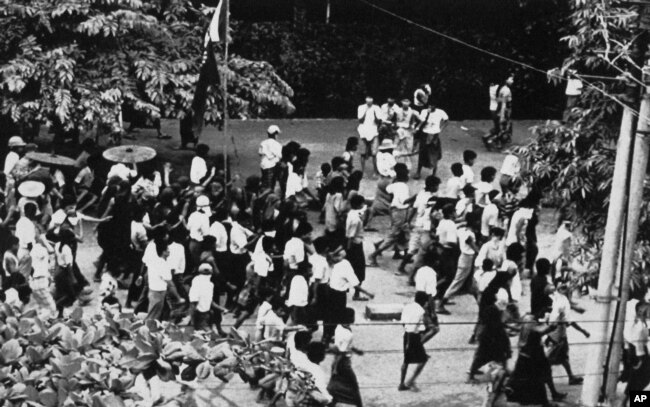
More than one million people were thought to have taken to the streets throughout the country after the government suddenly demonetized its currency, eliminating many people’s life savings.
Longtime dictator Ne Win was ousted in the revolt, but the army violently crushed it in the following weeks, killing as many as 3,000 people.
Another group of oppressive military leaders assumed control as the pro-democracy movement of Aung San Suu Kyi began to emerge.
Suu Kyi, the daughter of independence General Aung San, became the de facto leader of the country in 2016 under a constitution that forces her to share power with military.
While many citizens viewed Suu Kyi as a beacon of hope, the military looked at her with scorn.
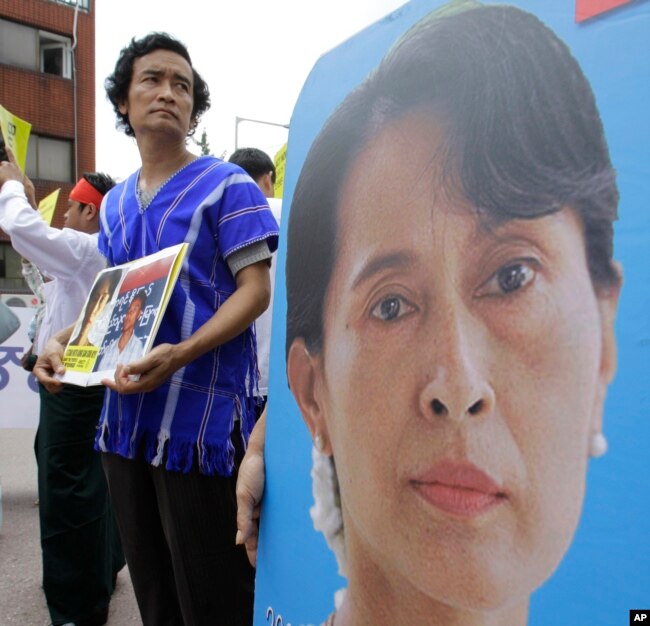
Suu Kyi was placed under house arrest for a combined total of 15 years.She was released in 2010 and led the National League for Democracy party to victory in 2015.
Suu Kyi’s sterling reputation as an international icon for human rights has been greatly diminished by her handling of the country’s Rohingya crisis, which was triggered by discriminatory government policies that led to the mass migration of hundreds of thousands of Muslim Rohingya from the predominately Buddhist country.
Improving relations with the military has been one of Suu Kyi’s priorities since she came to power, but many citizens remain angry about the military’s ongoing involvement in political affairs.
Seventy-one-year-old Cho Aye, who said he participated in the rebellion, said the NLD doesn’t “have the capacity to run a country.
“He added: “They broke their promises.” (VOA News)

