
By Aerol John Pateña/PNA
MANILA — Officials of the Department of Transportation (DOTr) are in Japan to inspect equipment that will be used for the construction of the Mega Manila Subway System.
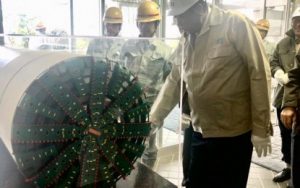
Transportation Secretary Arthur Tugade and other officials of the department went to Osaka and inspected the tunnel boring machines manufactured by Hitachi Zosen’s Sakai Works (HZSW) in Sakai City last February 20.
“We have already inspected the tunnel boring machines from Japan. And in just 2-3 months, months you will see the real thing,” Tugade said during the Philippine Economic Briefing in Osaka on Friday.
A 6.9-meter diameter tunnel boring machine weighing over 600 tons is being considered for the construction of the Metro Manila Subway. On February 27, the DOTR will hold groundbreaking ceremonies for the country’s first subway system.
“The machine has to be assembled in Japan for a test run. Upon passing the tests, the machine has to be disassembled, shipped to the Philippines in parts, where it will be assembled again for construction use,” the DOTr said in a statement.
Transportation officials also met with Japan’s Special Advisor to the Cabinet Shigeru Kiyama, Japan International Cooperation Agency (JICA) Philippines Chief Representative Yoshio Wada, and JICA Senior Vice President Yasushi Tanak to discuss updates on the delivery of the tunnel boring machines last Thursday.
They discussed the signing of the first part of the design and build contract with the joint venture of Shimizu-Fujita-Takenaka-EEI Corporation.
The start of its construction was supposed to be in December last year but was moved to February due to scheduling issues of the parties involved.
The Metro Manila Subway System from Mindanao Avenue in Quezon City to the Ninoy Aquino International Airport (NAIA) in Parañaque City is seen to ease traffic congestion in Metro Manila.
It aims to have partial operations with three stations: North Avenue, Mindanao Avenue, and Tandang Sora by 2022 and have its full operations in 2025.
The Philippine and Japanese governments signed a loan agreement for the subway project, with an initial tranche amounting to PHP51.37 billion (104.5 billion Japanese yen), in March last year.
The first phase of the 25-kilometer underground railway, which has an estimated cost of PHP356.96 billion, will have a total of 14 stations from Mindanao Avenue to NAIA.
The succeeding phases will involve extending the subway system to San Jose del Monte, Bulacan and Dasmariñas, Cavite.
Tugade also said during the same event in Osaka that an agreement has been signed between the Philippines and Japan for the train simulator for the first Philippine Railway Institute.

