
By Joyce Ann L. Rocamora/Philippine News Agency
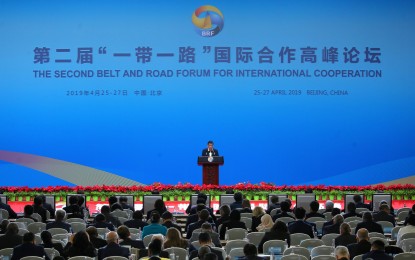
MANILA — The Chinese Embassy in Manila on Friday rejected the so-called China debt trap, which it described as “groundless”, saying that the Belt and Road Initiative (BRI) is not a “geopolitical tool” to seek a Chinese sphere of influence in the region.
During the BRI Forum in Pasay City, Tan Qingsheng, the embassy’s deputy chief of mission, underscored that “consultation and cooperation for shared benefits” are the guiding principles of the initiative and that all projects are not imposed on anyone or designed to frame any other country.
“The BRI is a public good, not a private property. China initiated the very idea, but the BRI as a platform is owned and equally participated by all participating countries,” Tan said.
“The so-called ‘China debt trap’ is completely groundless. The BRI is a ‘pie’ for everyone to share, not a ‘pitfall’ that hinders development,” he added.
In his speech, Tan noted that Beijing established the BRI, not as a source of confrontation but as a means to foster mutual understanding.
“Our strategic goal is to connect diverse cultures and different civilizations for peaceful coexistence. The countries along the Belt and Road are encouraged to step up friendly cooperation in the Silk Road tradition by promoting extensive cultural, academic, media and other people-to-people exchanges,” he said.
Some sectors in the Philippines have expressed apprehension over the country’s aggressive push to tap Chinese loans, fearing it may fall into a debt trap with China.
However, no less than finance chief, Carlos Dominguez III, allayed fears that the Philippines would default on its concessional loans with the Asian power.
In 2017, China took ownership and control of Sri Lanka’s two major ports after the latter failed to pay back loans.
Dominguez said the Philippines has never provided collateral for its Chinese loans.
“There (is) no collateral provided and all the loan terms are available on our website. Anybody can read it. Just read it on our website. The loan documents are there,” he said.
Data from the Department of Finance showed that the government’s estimated debt is about 0.66 percent to China and 9 percent to Japan as of 2018.
When most of the financing for Manila’s infrastructure program has been accessed, the country’s projected debt to Beijing will account for 4.5 percent, while that of Tokyo’s will be twice as large at 9.5 percent of the total debt.
For the latest updates about this story, visit the Philippine News Agency website

