
By Joyce Ann L. Rocamora | Philippine News Agency
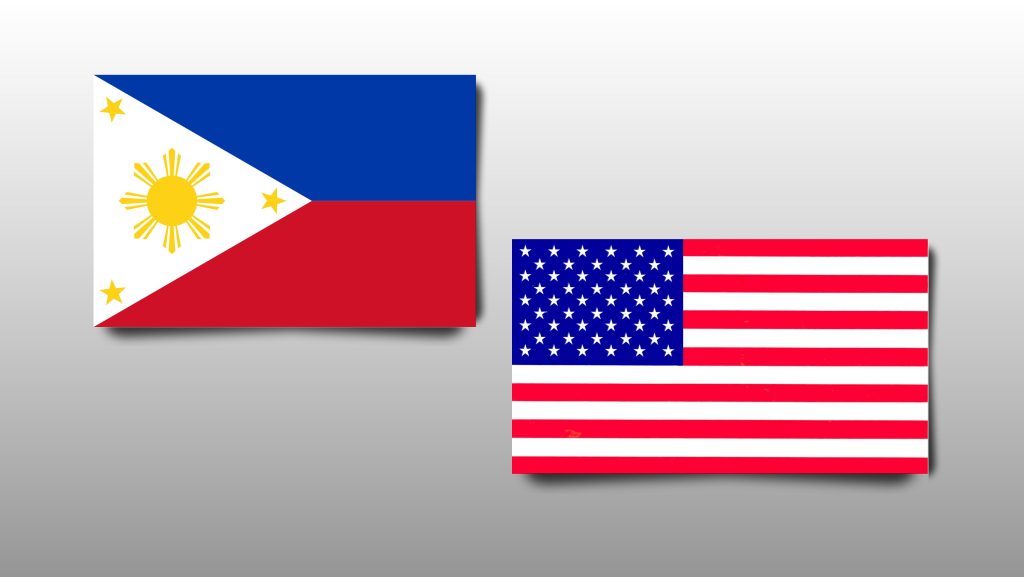
The United States Senate has approved a bill authorizing the allocation of $2.5 billion in Foreign Military Financing (FMF) grant assistance to the Philippines for 2026 to 2030.
Under the proposed Philippines Enhanced Resilience Act (PERA), which is now up for President Donald Trump’s signature, the US will earmark up to $500 million annually to help develop the country’s capabilities for a span of five fiscal years.
The bill was passed by the US Senate on Dec. 17 as part of fiscal year 2026 National Defense Authorization Act (NDAA) and is seen to deepen US-Philippines defense cooperation while strengthening interoperability “to meet growing threats in the Indo-Pacific.”
“As the United States and the Philippines face growing challenges to security and prosperity in the West Philippines Sea and the wider Indo-Pacific, it’s critical for our two nations to deepen cooperation and raise our decades-long Alliance to even greater heights,” said US Senator Bill Hagerty (R-TN).
“This bipartisan bill will significantly increase US security assistance to the Philippines and profoundly strengthen and modernize the defense and deterrence capabilities of our Alliance. I’m pleased to see the Senate pass this bipartisan legislation, and I look forward to President Trump signing this bill into law,” he added.
US Senator Tim Kaine (D-VA), for his part, said he looks forward to a significant boost in the Philippine-US security partnership once the measure is enacted into law.
“The Philippines is a key ally of the United States, and we must strengthen cooperation with our partners across the region to counter China’s aggression and help ensure freedom, security, and prosperity in the Indo-Pacific,” he said.
Under PERA, the Secretary of State, in consultation with the Secretary of Defense and other appropriate department/agency heads, will submit an annual report to the US Congress on steps taken to enhance the United States-Philippines defense relationship.
This includes a report on capabilities needed to modernize Philippine defense capabilities, including with respect to coastal defense, long-range fires, integrated air defenses, maritime security, manned and unmanned aerial systems, mechanized ground mobility vehicles, intelligence, surveillance, and reconnaissance, defensive cybersecurity, and any other defense capabilities that the Secretary of State determines.
Strong military ties
Meanwhile, Philippine Army (PA) chief Lt. Gen. Antonio Nafarrete and the United States Army Pacific (USARPAC) commander Gen. Ronald Clark reaffirmed the strong Army-to-Army relationship and interoperability during a bilateral meeting at the Sanban-cho Conference Hall, Chiyoda City, Tokyo, Japan on Thursday.
A statement from the PA on Friday said the two ranking officials discussed various topics related to the armies’ bilateral activities, including territorial defense training, humanitarian assistance and disaster response (HADR) efforts.
It can be recalled that the PA and USARPAC recently concluded the 14th Steering Committee Meeting (SCM), which is a planning activity in preparation for the Executive Steering Group (ESG) Meeting at PA headquarters in Fort Bonifacio, Taguig City last November.
The PA is committed to strengthening its ties with the US Army and maintaining peace in the Indo-Pacific Region alongside other like-minded nations. (with reports from Priam F. Nepomuceno/PNA)

