
By Brian Campued
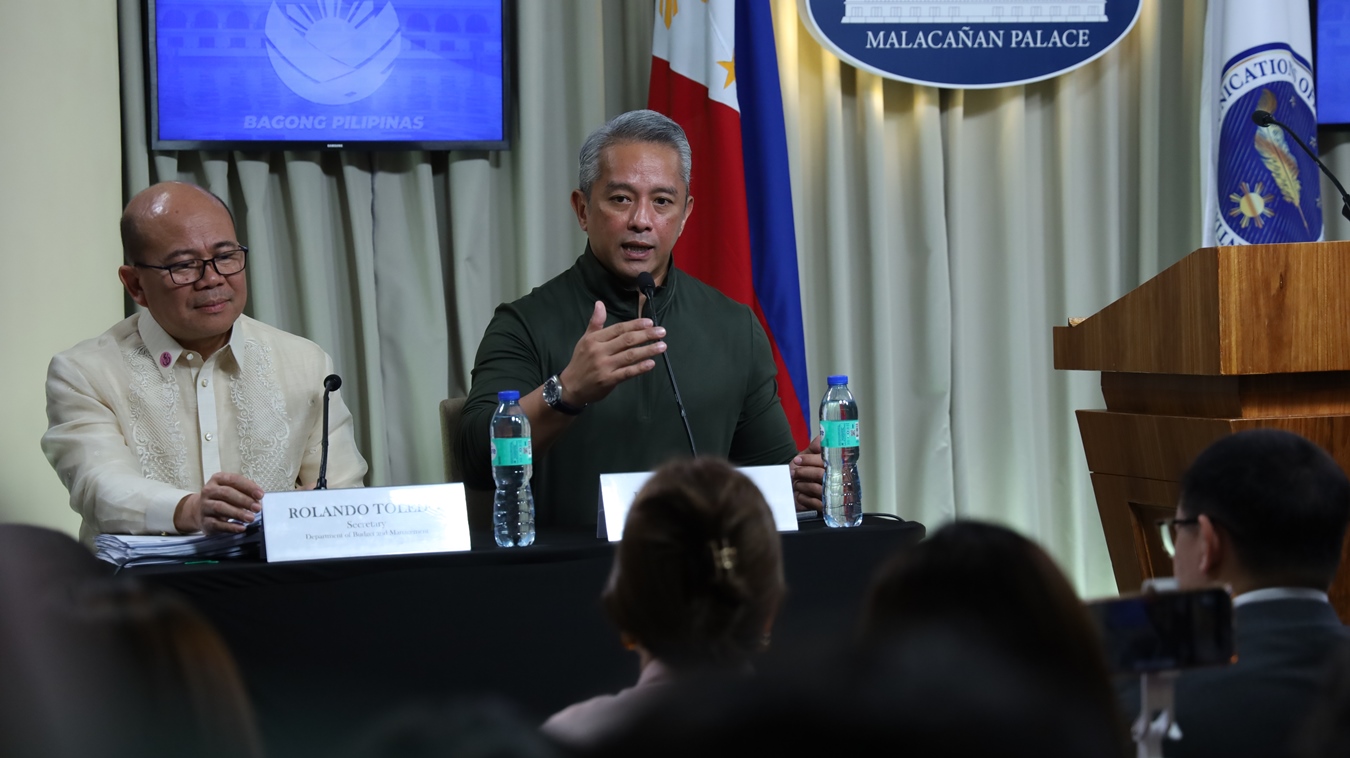
Politicians who would violate the anti-epal guidelines may face preventive suspension and administrative cases, Department of the Interior and Local Government (DILG) Sec. Jonvic Remulla said.
In a Malacañang press briefing on Tuesday, Remulla reiterated that government-funded projects must only indicate the project title, date of contract award, start and completion dates, and the source of funds.
“The anti-epal guidelines are enshrined already in the rules of the DBM and the rules of the Office of the President. Ang anti-epal guidelines naman ay klaro na… bawal ilagay ang pangalan na sila ang nagpagawa; bawal ilagay ang kanilang logo; bawal ilagay ang kanilang picture,” he said.
Cases of repeat offenders may also be escalated to the Office of the Ombudsman, the DILG chief noted.
Remulla also called on the public to report “epal” politicians, even through social media, so that they can be investigated.
“Mag-post lang naman sila, makikita kaagad namin iyan eh. Siguro pag-aaralan namin iyong buhayin iyong ‘Sumbong sa Pangulo’ pero DILG level para doon nila puwedeng i-report talaga kung sino iyong nag-i-epal nang husto,” he said.
Under the 2026 General Appropriations Act (GAA), politicians are barred from participating in the distribution of cash aid and other forms of financial assistance to intended beneficiaries, such as the social protection programs of the Department of Social Welfare and Development.
LGU support
Remulla’s remarks came as President Ferdinand R. Marcos Jr. wants to empower local government units with greater resources and authority in the implementation of key projects, such as classroom construction and housing programs.
He said the Marcos Jr. administration aims to reduce inefficiencies in government operations.
“Ang ating Pangulo ay nagbigay ng bagong prayoridad para sa local government. Hinggil ito sa sigaw ng tao para maibalik ang tiwala ng mga mamamayan para sa ating mga pamahalaan,” the Interior chief said.
Under the P6.793-trillion national budget for 2026, LGUs will get P1.19 trillion from the National Tax Allotment on top of more than P31.7 billion special shares from the national government and P1.41 billion from fire code fees.
LGUs also received P57.87 billion in Local Government Support Fund (LGSF), P39.82 billion in National Disaster Risk and Reduction Management Fund (NDRRMF), and P15.33 billion for rehabilitation and construction works.
Around P10.685 billion was also allotted for the quick response fund (QRF), which can be replenished once the LGUs have spent 50% of their QRFs.
Acting Department of Budget and Management (DBM) Sec. Rolando Toledo emphasized that reforms will be implemented to allow LGUs to actively implement programs in their respective communities.
“Ang paniniwala ng administrasyon ay simple at direkta—kung local ang problema, sa lokal na pamahalaan din dapat manggaling ang diskarte o desisyon,” Toledo said.
“Kaya sa 2026, hindi lamang natin dinagdagan ang pondo ng mga LGU, binago natin ang mismong paraan ng paglalagay ng pondo sa budget. Mas malinaw ang papel ng lokal na pamahalaan, mas buo ang kanilang kapangyarihan, at mas malinaw ang pananagutan,” he added.
-av

