
By Dean Aubrey Caratiquet
“This achievement sends a clear message to the whole world. The Philippines is ready to lead in the global transition towards low carbon and sustainable maritime transport.”
Realizing the vision born from high-level discussions between top executives of Tsuneishi Holdings Corporation and President Ferdinand R. Marcos Jr. during the latter’s working visit to Osaka, Japan in June 2025, Hull No. SC443 breaks new ground in Balamban, Cebu.
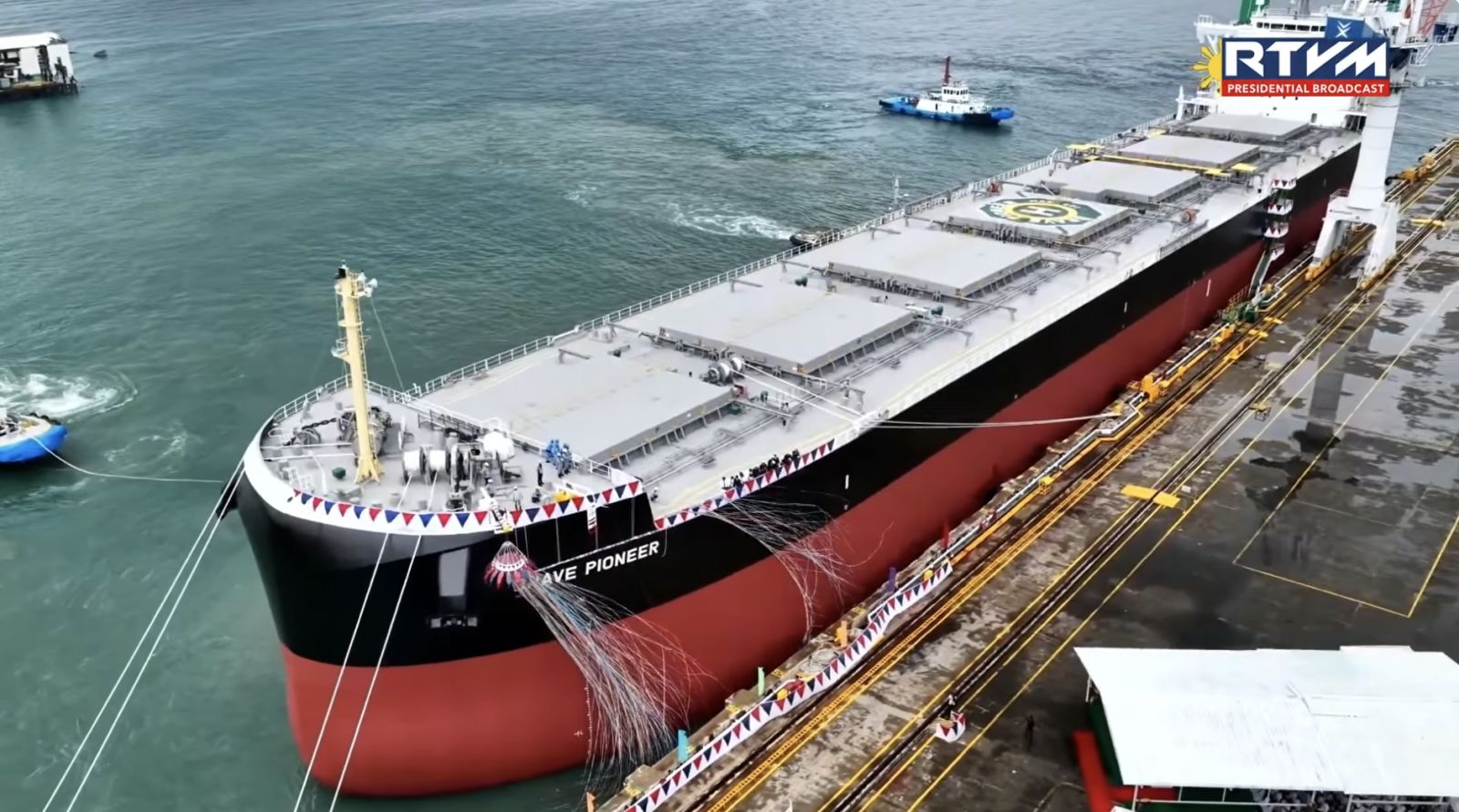
In the naming and delivery ceremony of this 81,200 metric ton dual-fuel methanol-powered KAMSARMAX bulk carrier on Thursday, President Marcos Jr. hailed the launch of “Brave Pioneer” as a significant milestone in the domestic shipbuilding industry.
The completion of this bulk carrier is a byproduct of the collaboration between the Tsuneishi Group and the Aboitiz Group—a fusion of the former’s expertise in ship design and marine technologies with the latter’s skilled labor workforce and an established manufacturing base.
The President said in his speech, “While this project is a product of bilateral cooperation, it is also and very importantly, a showcase of Filipino craftsmanship, ingenuity, and competitiveness. It proves once again that what is made in the Philippines can stand shoulder to shoulder with the best in the world.”
Brave Pioneer’s use of the latest advancements in shipbuilding facilitates fewer emissions of carbon dioxide, nitrogen oxide, and sulfur oxide, in line with the global transition towards better energy efficiency and sustainable shipping corridors.
President Marcos Jr. moreover hailed this achievement as pivotal in the country’s journey towards becoming a future-ready maritime manufacturing hub, with the manufacture of green vessels paving the way for sustainability-linked loans, green bonds, and climate finance.
“And beyond shipyards, this transition fuels growth in our ancillary industries—advanced marine components, coatings, materials, and energy-efficient systems, strengthening the entire manufacturing ecosystem.”
The Chief Executive concluded his remarks by lauding the success of the Corporate Recovery and Tax Incentives for Enterprises (CREATE) Law, which enables the country to hold its ground as one of the world’s largest shipbuilding nations.
The Philippines is home to over 130 registered shipyards, providing employment to over 11,000 workers—70% of whom are skilled professionals such as welders and fitters. In 2024, 484 vessels emerged from these manufacturing facilities, ranging from fishing boats to passenger and cargo ships.
jpv

