
By Dean Aubrey Caratiquet
Recognizing the plight of commuters who must endure the daily struggles and inefficiencies of public transportation, President Ferdinand R. Marcos Jr. tasked transportation officials to focus on upgrading the country’s railway systems.
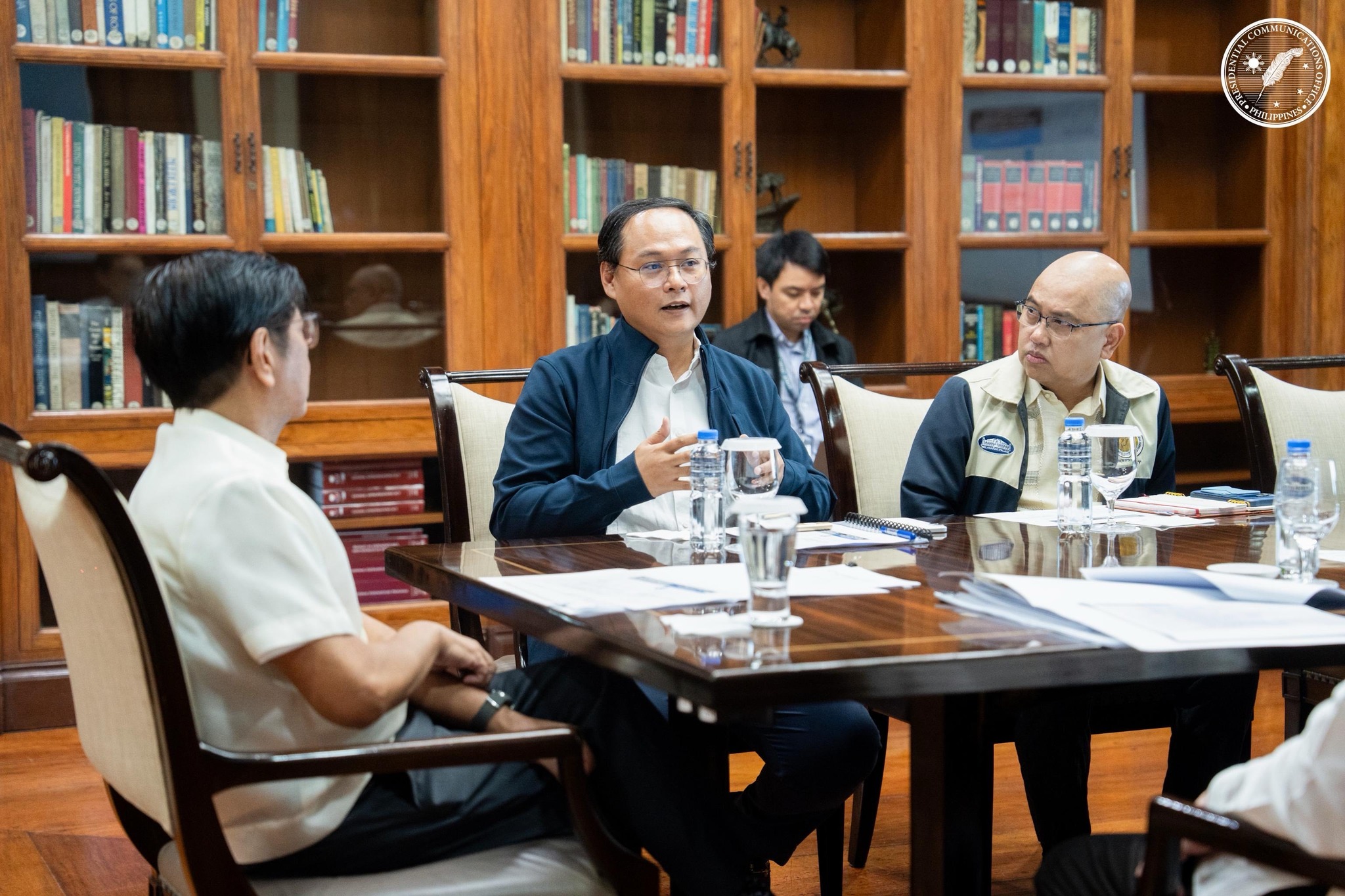
This, as the President met with Department of Transportation (DOTr) Acting Secretary Giovanni Lopez on Tuesday to check on the progress of ongoing improvements and rehabilitation efforts.
In a press briefing on Monday, Presidential Communications Office (PCO) Undersecretary and Palace Press Officer Claire Castro touted this initiative as pivotal in protecting the welfare of commuters through clean and comfortable facilities complemented by trains that arrive on time.
Usec. Castro told the media, “Nagbigay ng direktiba si Pangulong Marcos Jr. sa Kalihim na gawing prayoridad ang kapakanan ng commuters, panatilihing malinis at maaliwalas ang mga pasilidad at siguruhing reliable at on-time ang mga tren sa lahat ng oras.”
Meanwhile, Lopez reported to President Marcos Jr. the ongoing rehabilitation of the train facilities at MRT Quezon Avenue Station; ongoing implementation of the cashless payment system in MRT-3; preparations to introduce the cashless payment system in LRT-1 and 2 this year; and the rehabilitation of the remaining unused Dalian trains for MRT-3.
The Transport secretary moreover updated the President on the status of major transportation infrastructure projects.
The Malacañang mouthpiece, meanwhile, said that the Valenzuela-Malolos segment of the North-South Commuter Railway is set to begin partial operations in 2027, while the Malolos-Clark extension will open to the public in 2028.
MRT-7 linking Quezon City and Bulacan is set for partial operations in 2027, with the Metro Manila Subway’s demo run set for 2028, and full operations expected by 2032.
jpv

