
By Cleizl Pardilla / PTV News
The Philippines should not halt its transparency initiatives and must continue to expose China’s illegal intrusions into the West Philippine Sea (WPS), retired Associate Justice Antonio Carpio said.
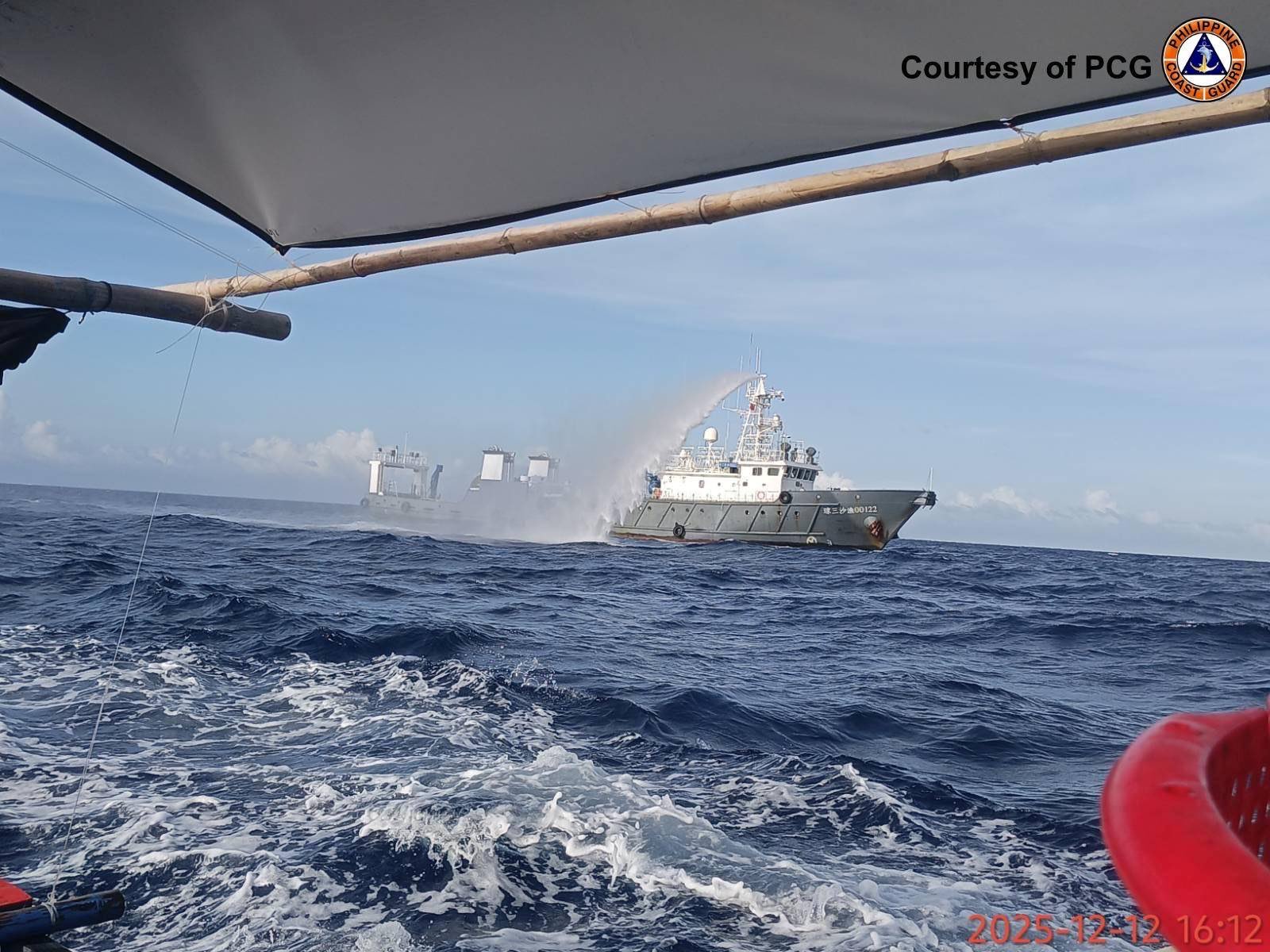
Carpio said transparency is key to gaining international support and allowing the global community to see what is happening at sea—from the driving away of Filipino fisherfolk to the ramming of Philippine vessels and other acts of harassment.
“The only way we can convince the world to help us is if we explain to the world we are being bullied at sea, we are being rammed at sea. You don’t want the law of the sea to be overturned by China. You don’t want China to say there are no high seas in the South China Sea. So you must support us. And the world will not support us unless we explain it to the world,” Carpio told journalists during the Southeast Asia Maritime Media Visits Program (SEAMMVP) in Manila.
Carpio remarked on Foreign Affairs Secretary Ma. Theresa Lazaro, in a letter dated Jan. 20, told Sen. Risa Hontiveros that “differences and disputes between states are best addressed through established diplomatic channels rather than in public.”
However, the former Supreme Court justice rejected the view that maritime issues should be confined to closed-door discussions.
“When they say that this must be discussed behind closed doors, the moment we do that, China wins. Because the world will not know, will not see what China is doing in the sea… and the world will not support us. That’s why I believe in this transparency,” he emphasized.
Educating and fighting disinformation
The National Security Council said the transparency initiative primarily aims to inform and educate the Filipino public.
National Security Council (NSC) spokesperson Cornelio Valencia Jr. said, “Filipinos have varied understanding of the arbitral ruling, what’s happening in the West Philippine Sea. There are different interpretations, so when we launch the transparency initiative, we also try to educate our politicians.”
Valencia said they are going to different universities to campaign for the government’s transparency initiative and to counter disinformation.
“First, to educate our own people. And second, to document exactly what is happening so it cannot be manipulated… Perceptions can be changed, but the truth you cannot. So even a hundreds of noise saying one thing, but if you are backed by international law and the rules-based order, then the truth shall prevail,” he said.
The landmark 2016 arbitral ruling, issued by the Permanent Court of Arbitration, invalidated China’s so-called “nine-dash line” claims in the South China Sea, which includes the Mischief Reef, Second Thomas Shoal, and Reed Bank, features within the Philippines’ exclusive economic zone (EEZ).
The ruling also found that Beijing violated Manila’s sovereign rights by harassing Filipino fisherfolk in the WPS and building artificial islands, resulting in widespread environmental damage.
Environmental damage
University of the Philippines – Marine Science Institute Prof. Deo Onda said China’s illegal activities in the West Philippine Sea are disrupting marine ecosystems across the region.
He explained the crucial role of the West Philippine Sea in fish production and regional connectivity.
“If it’s habagat or southwest monsoon, when the winds are blowing from the southwest, they would bring the eggs back to the shores of the Philippines. And then, therefore, they replenish the supply in the western coast of the Philippines. If it’s northeast monsoon (amihan), the eggs coming from the coastal area of the Philippines go to South China Sea into the Kalayaan Island Group. And then that’s where they settle. And then the eggs from the Kalayaan Island Group go to the coasts of Thailand, Vietnam, Malaysia, and Indonesia. So the South China Sea has become a stepping stone and it actually connects all of these regions,” he said.
He noted the effect of building artificial islands in the West Philippine Sea, “Because the corals are the main habitats or where these organisms live, you kill those corals, you disrupt the connectivity.”
In 2024, the Philippine Navy estimated that the total reclaimed area, both within and beyond the Philippines’ EEZ, is roughly 3,000 hectares, including China’s major bases. The Climate Change Commission described the environmental damage as “unimaginable” and “irreparable.”
—bjlc/jpv

