
By Ruth Abbey Gita-Carlos | Philippine News Agency
President Ferdinand R. Marcos Jr. on Friday (Canada time) positioned the Philippines as a “responsible” hub for mineral processing and a strategic partner in critical miners during a high-level discussion with key stakeholders in Canada.
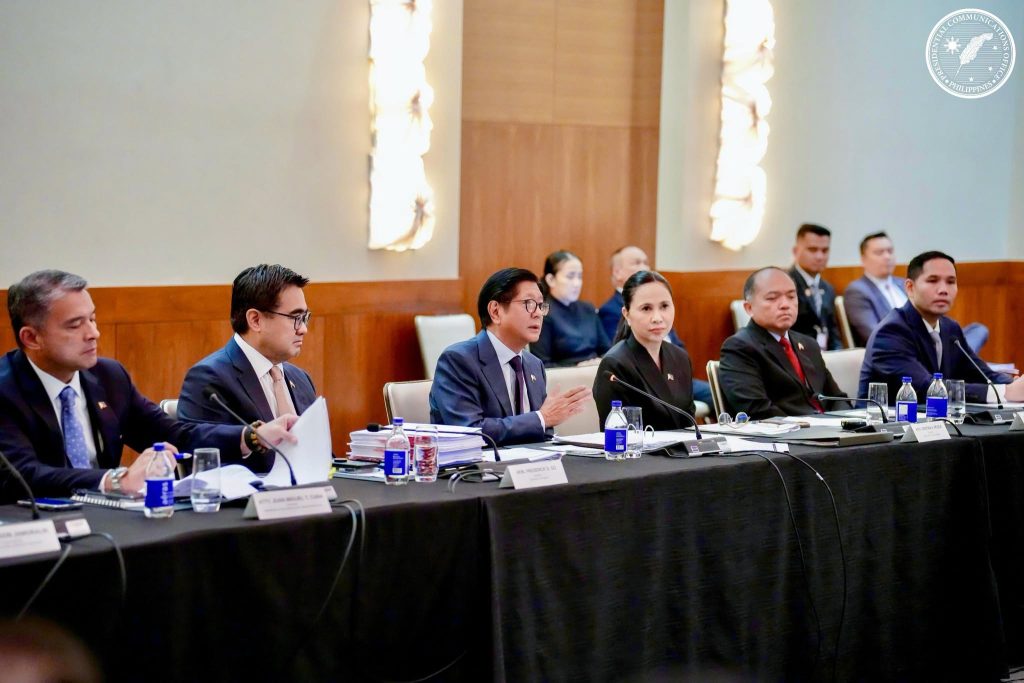
In a roundtable discussion held at Fairmont Pacific Rim Hotel, Marcos discussed investment opportunities and strengthened cooperation in mining, critical minerals, and energy sectors.
“President Ferdinand R. Marcos Jr. led the Philippines-Canada High-Level Discussion on Collaboration in Mining, Critical Minerals, and Energy in Vancouver to secure strategic partnerships in resource development and the clean energy transition,” the Presidential Communications Office (PCO) said in a statement.
“Organized by the Department of Trade and Industry (DTI), the high-level dialogue focused on positioning the Philippines as a sustainable, predictable, and socially responsible hub for mineral processing,” it added.
The PCO said the discussions centered on potential Canadian investments in eco-friendly extraction technologies and renewable energy integration in the Philippine mining sector.
The high-level dialogue also explored ways to strengthen corporate social responsibility (CSR) practices to ensure that mining activities contribute to the development of local communities and promote inclusive growth.
Marcos underscored the country’s goal of attracting investments in value-added mineral processing, citing the country’s rich reserves of nickel and copper as strategic assets in the global shift toward clean energy and digital technologies.
These minerals, the PCO said, are essential components in electronic vehicle batteries, renewable energy technologies, semiconductors, energy storage systems, and advanced electronics.
DTI Secretary Cristina Roque, in her remarks during the roundtable discussion, emphasized the importance of strengthening partnerships with Canada and other like-minded economies.
Roque said critical minerals have become “strategic inputs” that underpin clean energy systems, electronic mobility, advanced manufacturing, digital infrastructure, and modern, industrial economies.
“In the face of global uncertainties that constantly reshape modern trade, pursuing economic diversification and stability has become a shared priority for our industries,” she said.
She added that cooperation with Canada helps build a more secure foundation for strategic sectors and supports stable, competitive, and future-ready supply chains.
Roque also expressed confidence in opportunities for Canadian firms across the value chain, from exploration and extraction to engineering, processing, sustainability solutions, and clean technologies.
She noted that the Philippine government continues to implement reforms to improve the investment climate, including the CREATE MORE Act, the Public-Private Partnership Code, and Executive Order 18, which established green lanes for strategic investments.
“The Philippine government, under the Marcos administration, continues to implement bold and targeted reforms to strengthen our investment climate,” Roque said.
“We remain firmly committed to responsible and sustainable resource development, guided by environmental stewardship, strong governance, and meaningful community engagement to ensure long-term mutual growth,” she added.

