
By Darryl John Esguerra | Philippine News Agency
Malacañang on Thursday hit back at critics of the proposed P7.2-trillion 2027 national budget, telling lawmakers to study the spending plan first before declaring it either “all ayuda” or “anti-poor.”
Palace Press Officer and Undersecretary Claire Castro remarked as she responded to separate criticisms from lawmakers who offered contrasting assessments of the proposed budget.
Castro pointed to the remarks of Caloocan Rep. Edgar Erice, who reportedly described the government spending as focused too much on aid and lacking infrastructure, and ACT Teachers Party-list Rep. Antonio Tinio, who criticized the proposed 2027 budget as anti-poor for allegedly reducing social services while increasing allocations for infrastructure and defense.
“Sino ba sa kanila nagsasabi ng totoo? Siguro, dapat mag-usap na muna sila, sino ba sa inyo nagsisinungaling, ‘di ba? Sino sa inyong dalawa ang nagsisinungaling o pareho ba kayong nagsisinungaling,” Usec. Castro said in a Palace press briefing.
She defended the proposed budget, saying its priorities include education, infrastructure, disaster resilience and social protection, which she said should not be assessed in isolation.
“Kaya sabi nga po natin, bago magsalita, mag-aral po muna,” Usec. Castro said.
Castro cited programs such as the Department of Social Welfare and Development’s Walang Gutom Program, the government’s subsidized rice program, the Local Government Support Fund and financial assistance provided during disasters as examples of programs benefiting poor and vulnerable Filipinos.
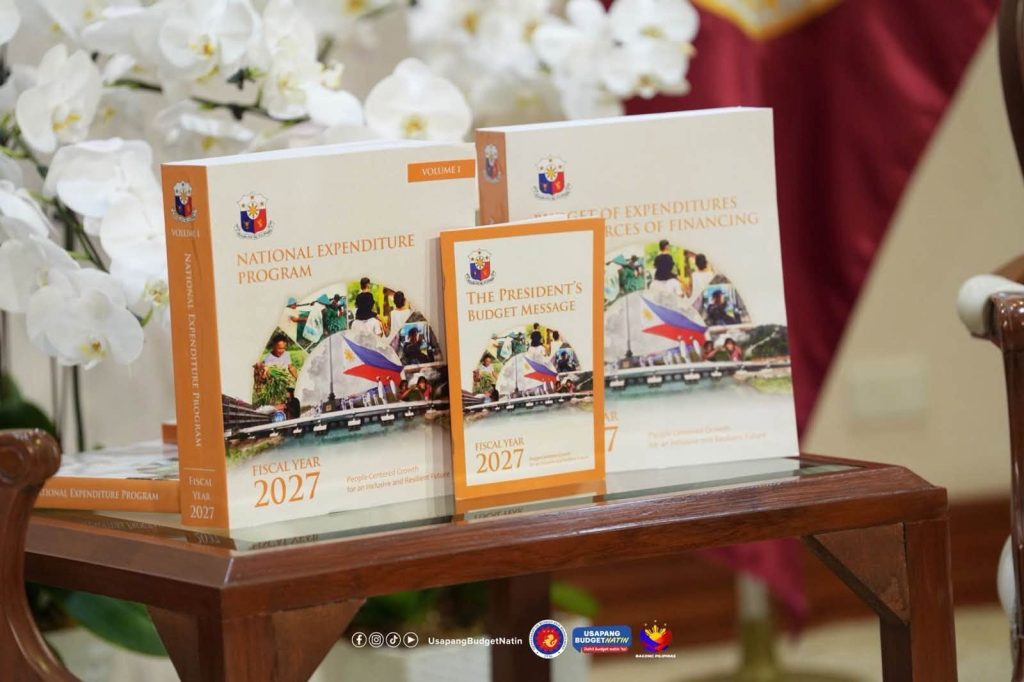
The Department of Budget and Management (DBM) formally submitted the proposed FY 2027 National Expenditure Program to Congress earlier this week with a total proposed budget of P7.2 trillion, or 6-percent higher than the 2026 budget.
Social Services has the largest sectoral allocation at P2.456 trillion, while Economic Services receives P1.833 trillion. The consolidated health sector budget is P1.06 trillion, while infrastructure spending under the Build Better More program is proposed at P1.467 trillion.
Education remains the biggest allocation among government departments, with the Department of Education receiving P976 billion.
Usec. Castro challenged critics who questioned the administration’s spending priorities to examine the entire budget rather than focusing on individual reductions or increases.

