
By Dean Aubrey Caratiquet
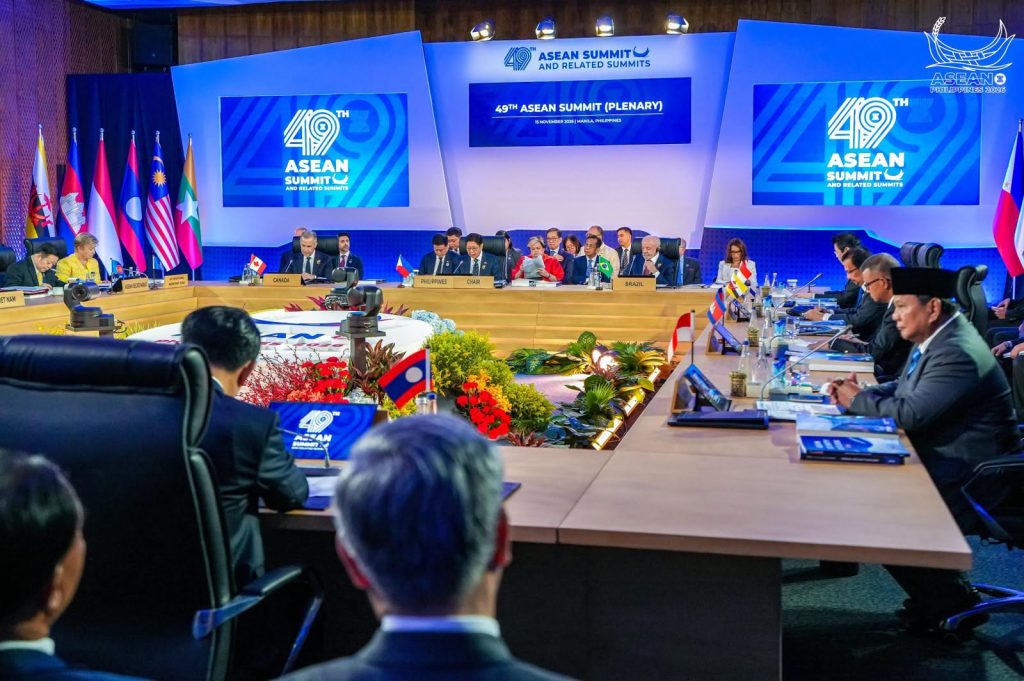
In recognition of the cumulative efforts by delegates to sustain regional progress, President Ferdinand R. Marcos Jr. opened the 49th ASEAN Summit Plenary Sunday with a focus on creating a blueprint from which the choices of today will help shape the future.
The breadth of this collaboration is epitomized in more than a hundred outcome documents that were generated under the Philippines’ chairship of the regional gathering.
President Marcos Jr. went on to cite how the decisions made at the series of meetings during the three-day event pose a challenge for every nation to give their best and help contribute toward the betterment of the region.
“It asks whether our institutions are prepared for a more complex security environment, whether our economies can remain competitive as technology, trade, energy requirements and supply chains evolve, and whether the gains of integration reach people at every stage of life, families and communities throughout our region.”
He went on to outline the importance of having a whole-of-ASEAN approach as a model that would guide the 11-member bloc as it continues to expand mechanisms that boost economic ties, people-to-people exchanges, and diplomatic relations among the member states.
19 priority economic deliverables are expected to be completed by the end of 2026, including the signing of the ASEAN Digital Economy Framework Agreement.
The Chief Executive addressed his colleagues, “We should therefore continue to deepen our partnerships on the basis of mutual benefit, translate comprehensive and strategic partnerships and plans of action into concrete cooperation, and build on the Asian outlook on the Indo-Pacific as a basis for open, inclusive and practical engagement.”
Building resiliency
Meanwhile, during the 49th ASEAN Summit Retreat Session, President Marcos Jr. welcomed world leaders at the Coconut Palace, citing the indigenous materials used in the venue’s construction that tell a uniquely Southeast Asian story fit for the occasion.
He proceeded with a speech that focused on calls to establish mechanisms that would help insulate the region from challenges emanating outside its borders that have global implications.
The President then pivoted to the regional response for one of its member states, Myanmar, which continues to suffer from a humanitarian crisis that affects its citizens and neighboring countries.
“In this regard, I hope our Session leads to practical and forward-looking discussions on how we can further advance the implementation of the Five-Point Consensus, make our efforts more responsive to the realities on the ground and support a peaceful, inclusive, Myanmar-owned, and Myanmar-led process.”
Also in attendance during both engagements were Canadian Prime Minister Mark Carney and Brazilian President Luiz Inácio Lula da Silva, as well as International Monetary Fund managing director Kristalina Georgieva. (with reports from Clay Pardilla and Angelika Abrogar | PTV News)
av

