
By Margaret Besheer/ VOA News

UNITED NATIONS — Leading international human rights group Amnesty International said Monday it is stripping Myanmar leader Aung San Suu Kyi of its top honor over her failure to speak out or halt grave atrocities against her country’s Rohingya Muslim population.
“As an Amnesty International Ambassador of Conscience, our expectation was that you would continue to use your moral authority to speak out against injustice wherever you saw it, not least within Myanmar itself,” Amnesty Secretary-General Kumi Naidoo wrote in a letter to Aung San Suu Kyi on Sunday notifying her of the decision. “We are profoundly dismayed that you no longer represent a symbol of hope, courage and the undying defense of human rights.”
From 1989 to 2010, Myanmar’s military-led government repeatedly confined Aung San Suu Kyi to house arrest for her role as a political opposition leader and pro-democracy activist. During that time, Western governments and human rights groups, including Amnesty, continuously advocated for her release.
During her detention, she was awarded the Nobel Peace Prize in 1991. In 2009, Amnesty gave her its highest honor, naming her an Ambassador of Conscience.
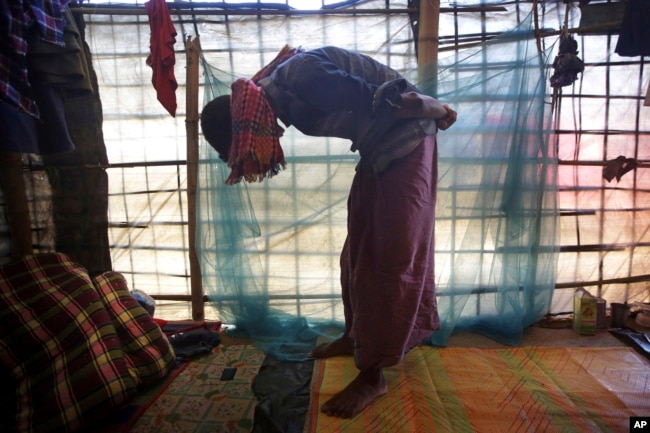
But since becoming the country’s de facto civilian leader in April 2016, Aung San Suu Kyi and her administration have failed to condemn or try to stop atrocities perpetrated by the military against minority Rohingya residents in Rakhine State.
In August 2017, the military unleashed a scorched-earth campaign on Rohingya villages in response to attacks by Rohingya militants that killed a dozen police officers. More than 700,000 Rohingya fled the violence to neighboring Bangladesh, where survivors have given accounts of horrific massacres, rape, murder and villages burned to the ground. The U.N. has called the atrocities “a textbook case” of ethnic cleansing.
Throughout, Aung San Suu Kyi has been internationally criticized for her silence. When she finally spoke out, she dismissed and downplayed the accusations and the military’s role.
“As we have seen with her own civilian government, they have been creating hostility against the Rohingya, labeling them as terrorists, accusing them of burning their own houses and faking rape,” Amnesty’s Asia Pacific Advocacy Manager Francisco Bencosme told VOA. “The state media, the civilian government that she has direct authority [over], has been very much complicit in publishing inflammatory and dehumanizing articles against the Rohingya.”
In his letter, Naidoo said the former human rights icon had not only abandoned the values she promoted for decades, but had “chosen to overlook the brutal oppression and crimes against humanity committed by the military against the Rohingya and minorities in Kachin and northern Shan States.”
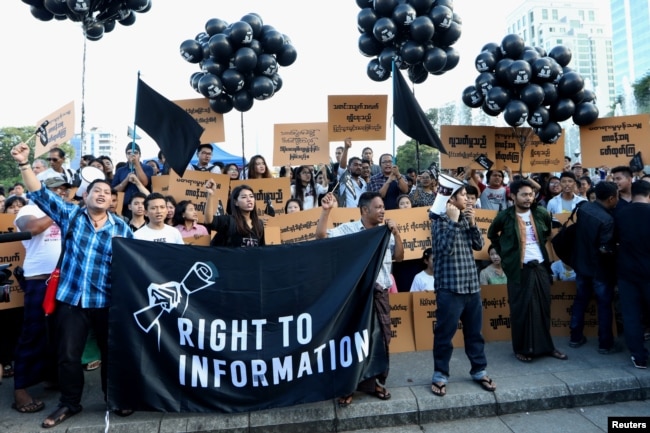
Amnesty has also criticized Aung San Suu Kyi’s administration for failing to repeal repressive laws, including some which were used to detain her and other pro-democracy advocates. “Instead, she has actively defended the use of such laws, in particular the decision to prosecute and imprison two Reuters journalists for the work documenting a Myanmar military massacre.”
Past winners of Amnesty’s Ambassador of Conscience award include South Africa’s Nelson Mandela, Pakistani education advocate Malala Yousafzai, and Chinese dissident Ai Weiwei.

