
By Dean Aubrey Caratiquet
Ironclad regional alliances form the backbone of a nation that can hold its own not only among its peers but also on the global stage, especially in the face of adverse domestic and international challenges.
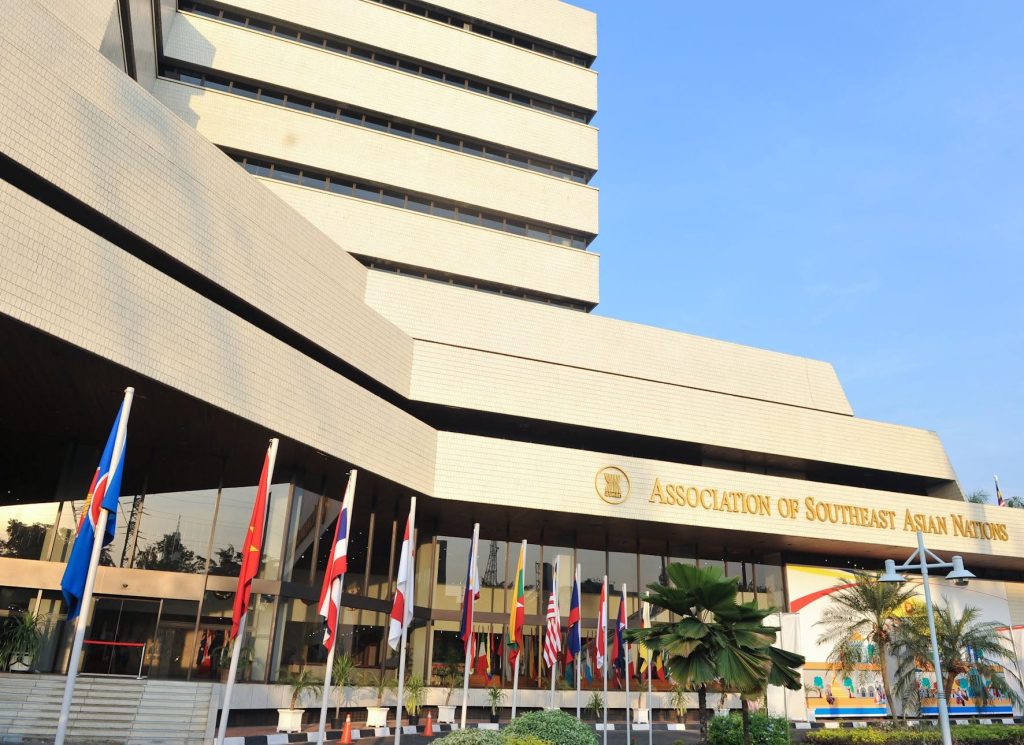
It was through this spirit of collaboration that the Association of Southeast Asian Nations (ASEAN) was established on August 8, 1967, by virtue of the signing of the Bangkok Declaration by the organization’s founding members: Indonesia, Malaysia, the Philippines, Singapore, and Thailand.
However, this was not the first time that Southeast Asian nations came together to form a group, as the origins of the regional bloc can be traced back to earlier iterations such as the Southeast Asia Treaty Organization (SEATO; 1955-1977) and the Association of Southeast Asia (ASA; 1961-1967, replaced by ASEAN).
These earlier attempts to form a regional organization were all established in good faith but were hampered by limitations in scope and membership.
But through the conception of ASEAN, the founding nations formulated the guiding principles that would set the tone for cohesion among the member states, as well as leaving the door open for other countries to join the fray.
An excerpt from the ASEAN website read, “These aims encompass cooperation in the economic, social, cultural, technical, educational, and other sectors, as well as the promotion of regional peace and stability through respect for justice, the rule of law, and adherence to the principles of the United Nations Charter.”
Nearly nine years after its creation, the inaugural ASEAN Summit was held in Bali, Indonesia from February 23-24, 1976 by Indonesian President Soeharto, Malaysian Prime Minister Hussein Onn, Philippine President Ferdinand E. Marcos, Singaporean Prime Minister Lee Kuan Yew, and Thai Prime Minister Kukrit Pramoj—a historic milestone by the founding fathers that would lay the foundation for the future of the region in the following decades.
Composition and expansion
Since its establishment in 1967, ASEAN has continued to welcome new members and has gone from strength to strength by adopting several formal and legally binding agreements, which include the 1976 Treaty of Amity and Cooperation in Southeast Asia and the 1995 Treaty on the Southeast Asia Nuclear Weapon-Free Zone.
The following countries subsequently joined the organization:
- Brunei Darussalam (January 7, 1984)
- Viet Nam (July 28, 1995)
- Lao PDR (July 23, 1997)
- Myanmar (July 23, 1997)
- Cambodia (April 30, 1999)
- Timor-Leste (October 26, 2025)
Before Timor-Leste joined the organization, the 10 member states inked the ASEAN Charter on November 20, 2007, which outlines the rules and values, as well as sets clear targets for the organization.
In charge of providing oversight and guidance to the development and implementation of the agreements signed by virtue of the ASEAN Charter is the ASEAN Coordinating Council (ACC), which also leads in the preparations for the ASEAN Summit, as well as collates issues and reports from the three community councils.
These sectoral bodies are the ASEAN Political-Security Community (APSC) Council, ASEAN Economic Community (AEC) Council, and the ASEAN Socio-Cultural Community (ASCC) Council.
Symbols of unity
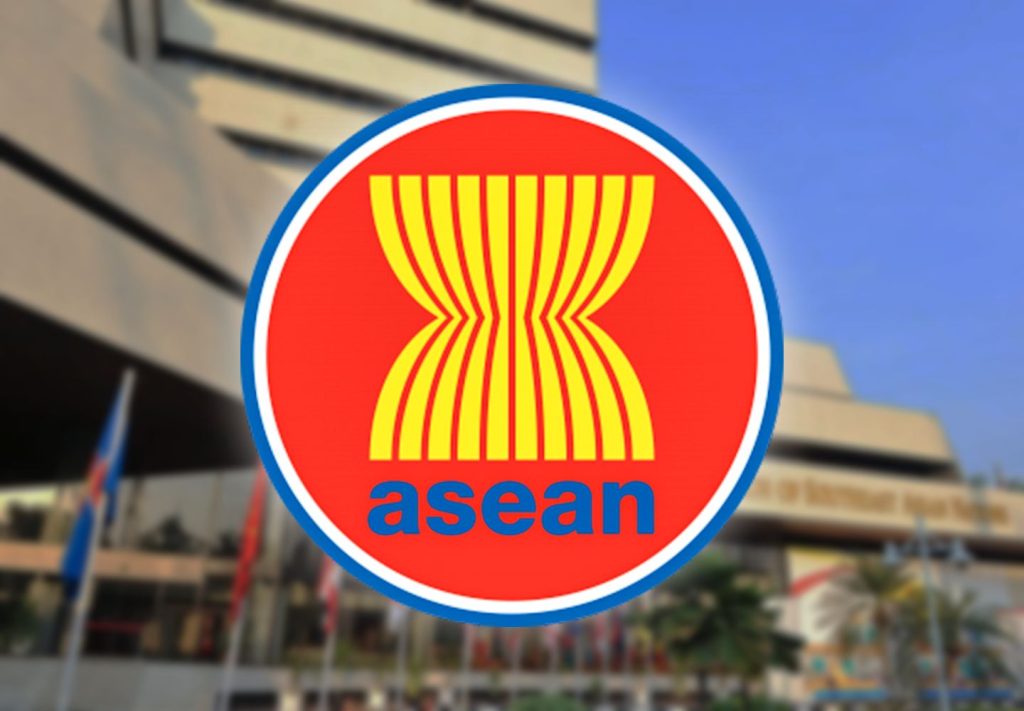
An often overlooked aspect of ASEAN is the organization’s logo, which was originally depicted by five brown sheaves of rice stalks that represent its founding members, with the word “ASEAN” in blue font placed beneath the sheaves.
These elements are set on a yellow background and encircled by a blue border, with the latter representing unity among member states.
This was updated during the 30th anniversary of the regional bloc in 1997, with the sheaves increasing in number to symbolize all ten Southeast Asian countries and changed to a yellow color, set on a red background and encircled with a white and blue border, with the word “ASEAN” as the lone element that remained unchanged.
An excerpt from the ASEAN website explains the color symbolisms, which also mirror the main palette of all member states, “The blue represents peace and stability. Red depicts courage and dynamism, white shows purity, and yellow symbolises prosperity.”
Apart from the logo, ASEAN has also adopted an anthem titled “THE ASEAN WAY,” played at formal meetings, ceremonies, and related activities of the organization.
The theme of unity also extends to the 11-member bloc’s motto: “One vision, one identity, one community,” which champions cohesion among member states while honoring diversity among member states and their peoples.
ASEAN Summit and the Philippines’ role
At this juncture, the focus pivots into the high-level meeting that showcases the Philippines’ active involvement and participation in regional (and by extension, global affairs).
The ASEAN Summit serves as the highest policy-making body that gathers the Heads of State or Government of ASEAN member states in a roundtable discussion to look into the challenges affecting the region, formulate new agreements in response to these, and establish new ways forward as the chairship is passed from one nation to another.
An excerpt from the ASEAN website explains, “As per regular practice, the ASEAN Summit Meetings shall be held twice annually at a time to be determined by the Chair of the ASEAN Summit in consultation with other ASEAN Member States, to be hosted by the ASEAN Member State holding the ASEAN Chairmanship.”
Apart from the main event itself, other interim meetings may also be held, with delegates and agency heads from member states serving as participants in these meetings.
Each Summit and its related meetings bring an opportunity for the host country to push forward its agenda that resonates with the underpinnings of regional developments, as well as gain valuable inputs from organizational peers on how that country can align itself with the bloc’s sensibilities and agreed-upon timelines.
For its part, the Philippines has hosted the ASEAN Summit for the fourth time in 2026, as it witnessed the 48th Summit in Cebu in May 2026, with the 49th Summit expected to take place in Metro Manila in November 2026.
The 3rd ASEAN Summit was held in Manila in 1987, making it the first time that the Philippines assumed chairmanship of the regional organization.
This was followed by the 12th ASEAN Summit held in Cebu in 2007; and the 30th and 31st ASEAN Summits held in Manila and Clark, Pampanga, respectively; which coincided with the 50th anniversary of the regional bloc.
Through its continued participation and leadership, the Philippines remains an active partner in shaping ASEAN’s regional agenda and advancing collective efforts toward a peaceful, resilient, and prosperous Southeast Asia. (with reports from Gab Villegas | PTV News and Jake Miculob | IBC News)
av

