
By Ruth Abbey Gita-Carlos | Philippine News Agency
The country’s economic team is taking steps to cushion the impact of global uncertainties on the Philippine economy, Malacañang said Wednesday.
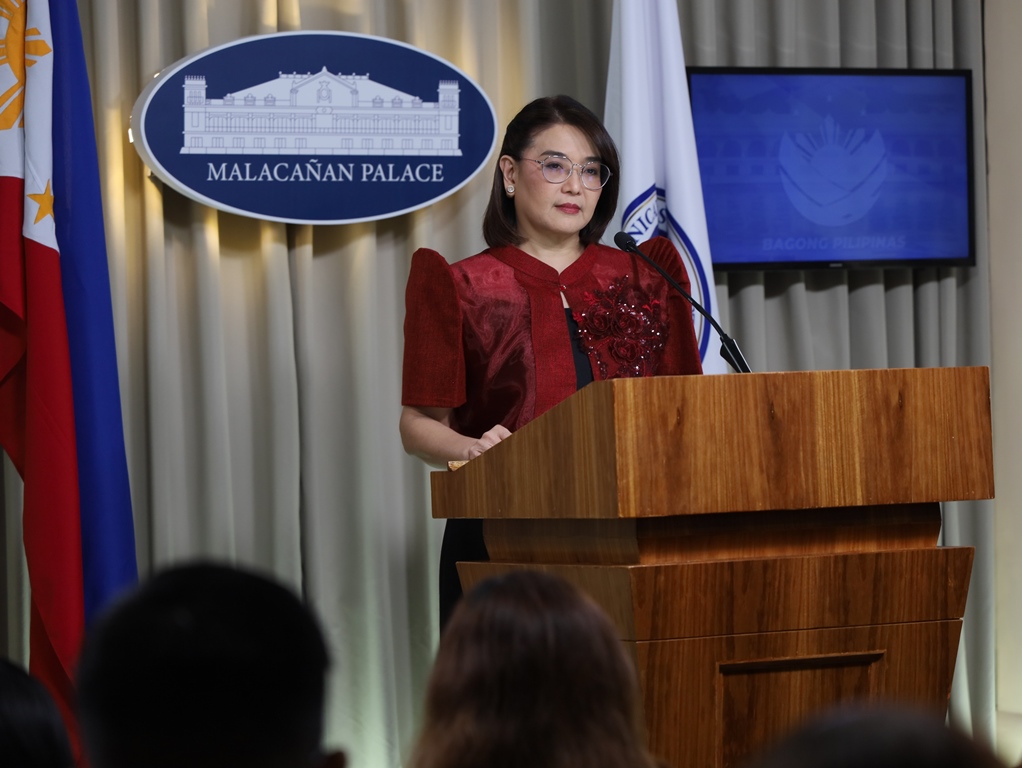
Palace Press Officer Claire Castro made the assurance, following a projection by the International Monetary Fund (IMF) on the Philippines’ growth targets.
Castro noted that external factors, including geopolitical tensions in the Middle East, continue to affect not only the Philippines but also other Asian economies.
“Hindi ginusto ng pamahalaan at Pangulo ang nangyayaring kaguluhan po sa Middle East,” she said in a Palace press briefing.
The IMF downgraded its 2016 growth forecast for the Philippines to 4.1% from 5.6% in January, based on its latest World Economic Outlook released on Tuesday.
The outlook for the Philippine economy is lower than the government’s 5% to 6% target and slower than the 4.4% full-year expansion in 2025.
The IMF noted that the latest growth forecast was revised downward “with the war shock compounding the negative base effects from a weaker-than-expected 2025 outturn related to a sharp decline in public investment and confidence” in the Philippines.
Castro said the government is working hard to hasten and sustain the country’s economic recovery.
Citing Department of Economy, Planning, and Development (DepDEV) Sec. Arsenio Balisacan’s statement, Castro said the government remains optimistic that the country will stay on track toward achieving upper middle-income status and sustaining poverty reduction despite challenges.
She cited the ongoing efforts of economic managers led by Balisacan to stabilize the economy and maintain growth momentum.
“Most Asian economies are likely to miss their growth targets this year due to global supply chain disruption and heightened uncertainty from the Middle East,” Castro said.
“We remain confident this will be achieved within the term of the Marcos administration. Despite geopolitical tensions and heightened uncertainty, we will stay the course in stabilizing the economy and strengthening social protection to sustain poverty reduction.”
Castro noted that by July, the World Bank will indicate whether the Philippines is able to reach the upper middle-income status based on its performance last year.
“Formal classification may require additional years of sustained results,” she said.

