
By John Rey Saavedra/PNA
CEBU CITY — Informal settlers to be affected by flood-control projects under the government’s “Build, Build, Build” program should be transferred to resettlement sites through a public housing program, the head of the regional public works office said Friday.
The government has a program called the Resettlement Action Plan (RAP) that will give housing to settlers in places where government projects are being carried out, Department of Public Works and Highways (DPWH) 7 (Central Visayas) Director Edgar Tabacon told the Philippine News Agency (PNA) in an interview.
During the public consultation for DPWH’s proposed programs, activities and projects for fiscal year 2020 last Thursday, Tabacon said he directed district engineers to explore the possibility of activating the RAP program if informal settlers will be affected by flood control projects in their respective jurisdictions.
“It’s really a challenge in flood control project whenever there are informal settlers in our projects,” he said. “There are LGUs (local government units) which could not provide resettlement sites for their IFS (informal settlers).”
Tabacon added that the government, through the DPWH, cannot just implement projects without taking care of informal settlers.
He recalled that informal settlers in Eastern Visayas received housing under RAP. Usually, informal settlers are found in riverbanks, he said.
DPWH-7 legal officer Brando Raya proposed that the fastest way to implement a resettlement program for informal settlers is to download the funds to local government units.
“Mandaue City, for example, is very fast in transferring their informal settlers to the relocation sites,” Raya said.
Tabacon said the government is very aggressive in implementing big-ticket projects that will affect residents who squat on the property.
“If we have a LAP (lot acquisition plan) before the DPWH can undertake certain projects. We should also have RAP for the IFS,” he said.
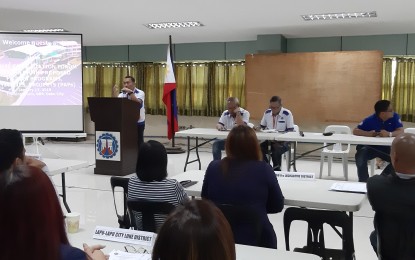
In the public consultation held at the DPWH-7 Training Room at the South Road Properties, district engineers from seven engineering districts in Cebu province presented their proposed projects that are implementable in year 2020.
Engineer Nonato Paylado, DPWH-7 planning officer, said the projects identified by the district engineers are funded through the 2019 national budget, which has yet to be approved by Congress.

