
By Stephanie Sevillano | Philippine News Agency
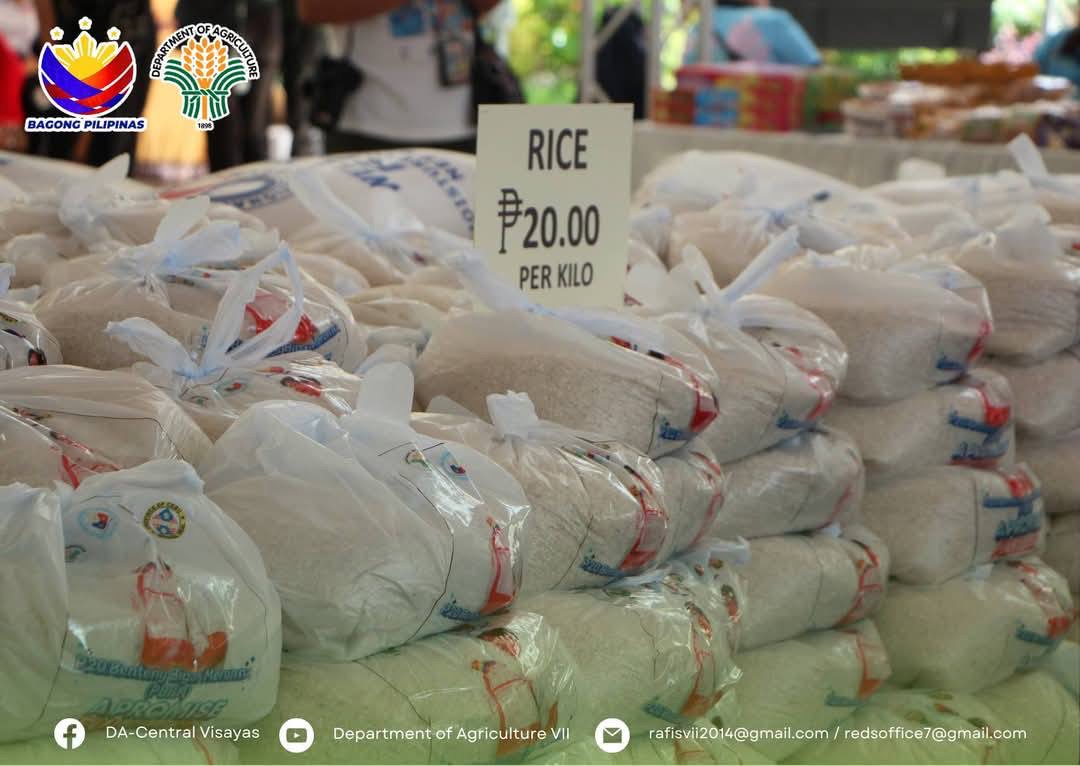
Lower-middle-income Filipinos may access rice at P20 per kilogram under the massive and accelerated rollout of Benteng Bigas Meron (BBM) Na across the country starting January 2026, according to the Department of Agriculture (D.A.).
This is part of President Ferdinand R. Marcos Jr.’s promise to provide Filipinos, particularly the poor and vulnerable members of society, with cheaper and higher-quality rice options.
Agriculture Secretary Francisco Tiu Laurel Jr., in a recent year-ender interview, said the intensified implementation seeks to reach 15 million households, in coordination with local government units (LGUs).
“Every week of the year next year, may ilalabas kami na schedule of implementation for P20 rice for the lower middle income class and below,” he said on Monday.
At least eight areas will be prioritized for the provincial-wide rollout from January to February, with Pangasinan being a key focus, he said. Other areas are yet to be disclosed.
To date, the BBM Na is available in all 82 provinces, with the completion of the nationwide rollout before the year ends. It has benefitted almost 2 million households.
Tiu Laurel, meanwhile, assured collaboration with LGUs, gaining positive feedback since costs will be fully subsidized or incurred by the national government, and the local governments will only be tasked to sell rice and ensure logistics.
He said the cheap rice may also be available in schools or companies for other sectors, in collaboration with the Department of Education (DepEd) and the Department of Labor and Employment (DOLE).
He assured the availability of supply, citing the procurement of palay to support local farmers.
“At the end of the day, kung malakas ‘yung uptick at maganda ‘yung takbo, then we will consume lahat ng rice ng NFA kasi bibili naman tayo ng bago,” Tiu Laurel said.
Provided that the 2026 General Appropriations Act (GAA) will be passed without a slash on the proposed budget, the DA can utilize funds from its P23 billion allocation, which is enough to purchase 1.5 million to 1.8 million metric tons (MT) of rice.

