
By Dean Aubrey Caratiquet
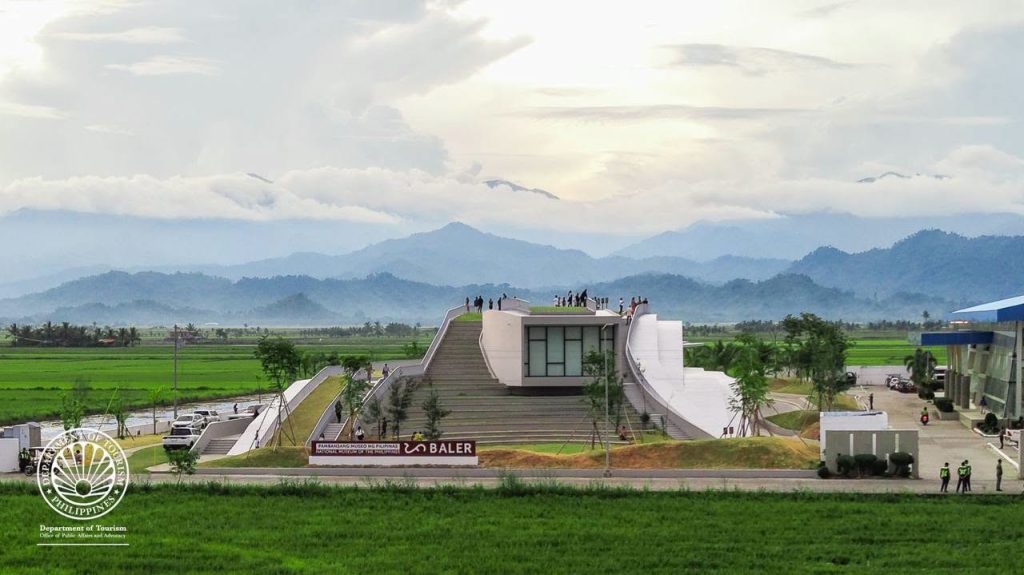
Surrounded by lush green plains with a backdrop of the mountains that form the Sierra Madre Mountain Range lies a structure that enshrines centuries’ worth of historical artifacts that showcase Aurora’s rich cultural heritage and how it ties together with the country’s storied past.
This, as the National Museum officially inaugurated its component museum in Baler, Aurora on June 30, bringing the total number of National Museums nationwide to 22.
The event was attended by Presidential son Vincent “Vinny” Marcos, Education Secretary Juan Edgardo “Sonny” Angara, Agriculture Secretary Francisco Tiu-Laurel Jr., Tourism Secretary Maria Bernardita Angara-Mathay, and Spanish Ambassador Miguel Utray Delgado, including national and local officials, cultural leaders, and members of the diplomatic community.
Nestled in the hometown of Filipino statesperson and first President of the Philippine Commonwealth Manuel L. Quezon, the contemporary architectural design of the Baler branch is conceptualized by Filipino architect Ed Calma—thus allowing the structure to represent Aurora’s distinctive environment that fuses heritage with its scenic landscapes.
What’s inside?
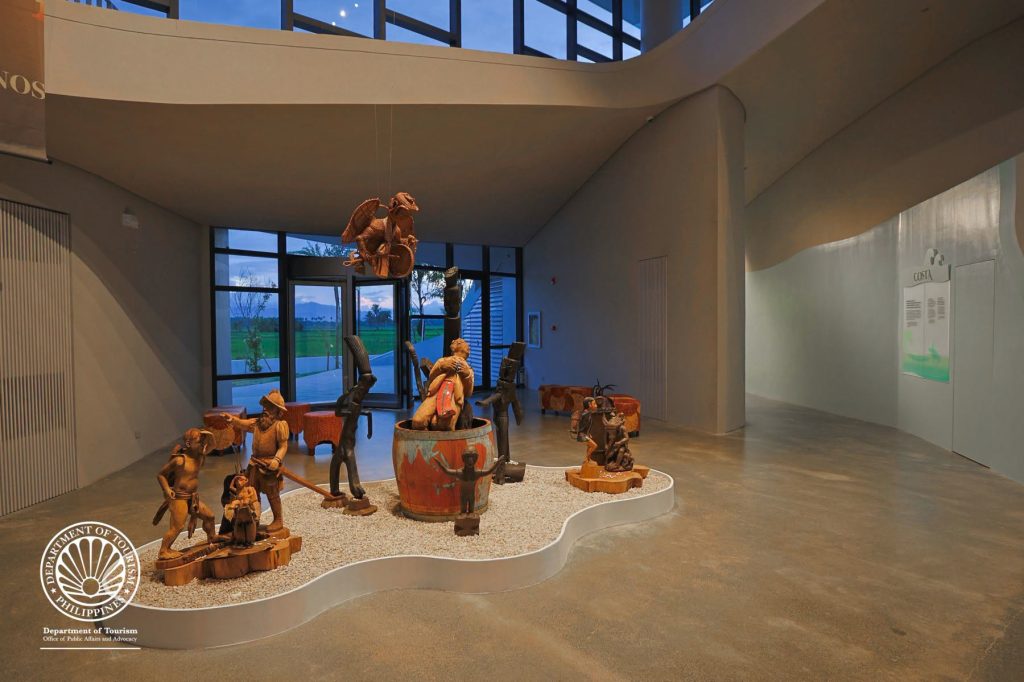
The National Museum of the Philippines–Baler features three permanent galleries that showcase history, culture, nature, and the arts.
The Cruce de Caminos Gallery explores the enduring historical and cultural ties between the Philippines and Spain through Encuentros Vivos (“Living Encounters”).
The Sierra, Tierra, Costa Gallery highlights Aurora Province’s natural environment, cultural heritage, biodiversity, Indigenous knowledge systems, and local ways of life.
Meanwhile, the Pagtatagpo/Encuentro Gallery presents works by renowned Filipino artists, celebrating the richness of Philippine artistic expression and providing a space for reflection and appreciation of the country’s visual arts traditions.
Some notable exhibitions that can be found at the museum include a reconstruction of how Baler looked at the turn of the 20th century, a recreation of a local living theater tradition (Komedya de Baler), and a preserved specimen of Bakauan-baler (scientific name: Kandelia candel (L.) Druce)—an indigenous species of mangrove that is native to Aurora province.
Starting Wednesday, National Museum’s Baler branch will open its doors to the masses from 9:00 a.m. to 5:00 p.m. daily, except on officially-declared government holidays. Admission is free for all visitors.
jpv

