
By Marita Moaje | Philippine News Agency
The National Commission of Senior Citizens (NCSC) is pushing for the passage of a Magna Carta for Senior Citizens as part of its Philippine Plan of Action for Senior Citizens (PPASC) to address the needs of the country’s rapidly growing elderly population.
At the National Consultation for the Promotion of Policies on Aging in the Philippines held in Pasig City on Tuesday, NCSC Acting Executive Director Ana Marie Calapit said the Magna Carta, currently under review in the Senate, aims to harmonize all laws affecting older Filipinos.
“So, it’s going to harmonize all of the laws related to senior citizens, yung benefits, pati yung mga discounts, pati yung mga related sa health and socioeconomic opportunities,” she said.
“Hoping na mas magkaroon din ng stronger implementation ng mga batas in relation to benefits of senior citizens. Sa ngayon kasi, yung mga batas in relation to senior citizens needs updating na,” she added.
Aside from benefits and incentives, Calapit said the Magna Carta would also cover social protection, healthcare, senior discounts, and economic opportunities.
In her presentation, she noted that the growing number of senior citizens should not be taken negatively, saying that they are assets.
Through the Magna Carta, she said the benefits for senior citizens would be enhanced.
“Mas mapataas pa yung incentives na pwede nating ibigay dun sa mga senior citizens. Plus, yung opportunities para sa mga senior citizens natin na makilahok sa labor force. Kasi, nakikita natin na medyo, paano ba, hindi ka man sinasabing may discrimination, pero kapag ka older person ka na, mas limited na talaga yung opportunities mo,” she explained.
Looking after the elderly
Meanwhile, Calapit said the PPASC, covering 2023 to 2028, positions aging as a development issue rather than solely a social concern.
Anchored on four key result areas, she said the plan focuses on strengthening inter-agency coordination, promoting seniors’ economic and civic engagement, improving health and welfare services, and creating age-friendly environments.
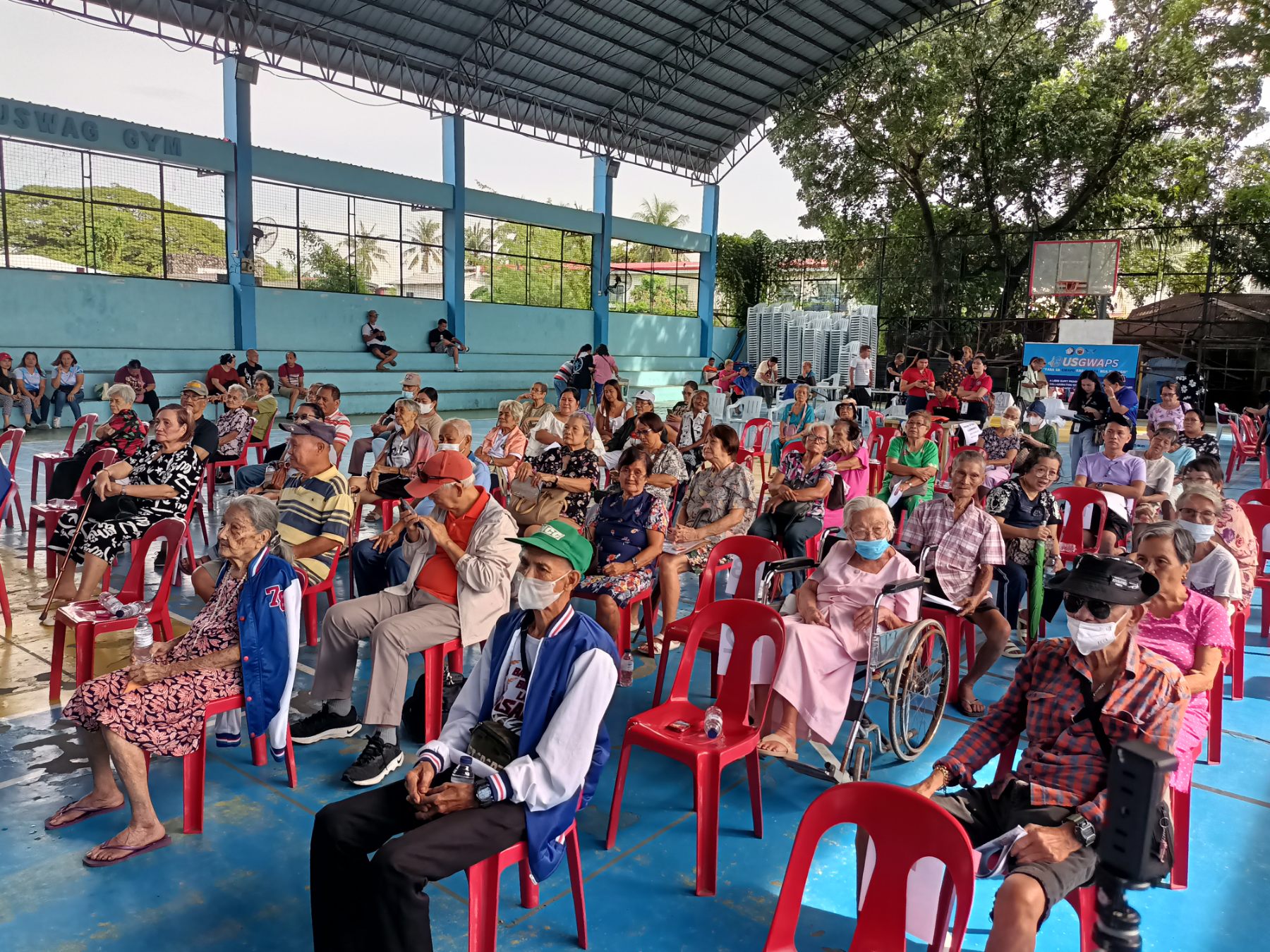
Calapit said there are more than 1,000 senior citizen centers nationwide, providing health screenings, livelihood training, and social services to older Filipinos.
However, with the number of elderly persons and local government units, she also acknowledged the need to build about 700 more centers.
Meanwhile, she also reported progress in implementing the Expanded Centenarians Act of 2024, which provides cash incentives to milestone and centenarian seniors.
As of Dec. 31, 2025, Calapit said more than 260,000 beneficiaries have received cash gifts, with the NCSC achieving a 96% budget utilization rate for the program.
Under the law, seniors receive P10,000 upon reaching ages 80, 85, 90, and 95, and P100,000 upon turning 100, with LGUs encouraged to provide additional support.
Despite these gains, Calapit flagged funding constraints as a major challenge, citing the P3.5 billion budget for 2026.
She said the agency needs fiscal support from the government.
“Kasi, kapag nakikita mo na pinaglalaanan ng pondo ng gobyerno ang isang ahensya, nakikita niya kung gaano siya kaimportante bilang sektor. So, we think that since we are already 11 million and growing, and we’re moving toward that number na pataasan ng pataas. I think it’s time really para mas mabigyan ng focus yung mga services and programs na pinoprovide ng agency,” Calapit said. (PNA)

