
By Dean Aubrey Caratiquet
Underscoring the importance of reliable water supplies in nourishing crops and improving agricultural yields, the government continues to double down on installing irrigation pumps that help contribute to the farmers’ livelihoods.
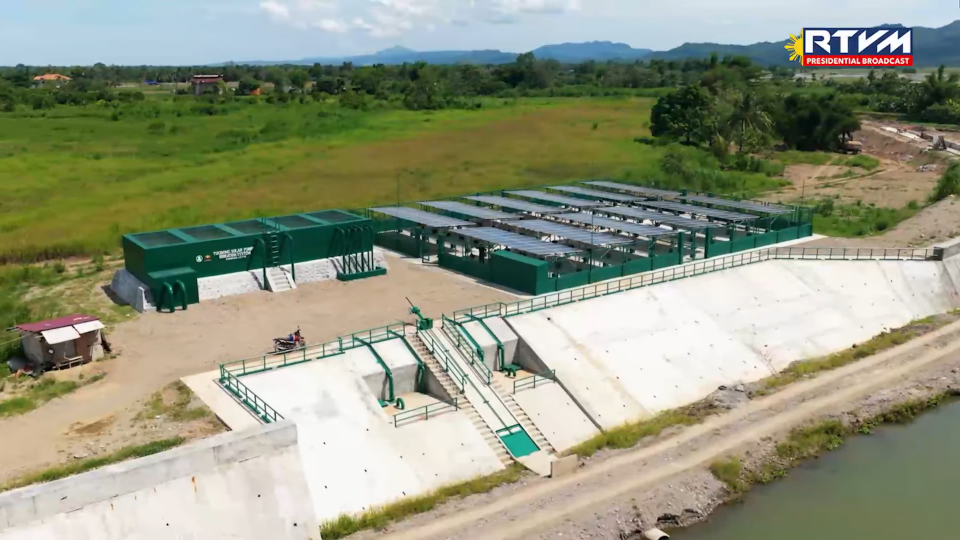
This, as President Ferdinand R. Marcos Jr. led the inauguration of the Tugbong Solar Pump Irrigation Project (SPIP) in Kananga, Leyte on Friday.
During the event, he engaged with farmers in the humble Leyte town and lent an ear to their experiences of hardship, especially as the country faces the effects of Super El Niño.
In his speech, the President underscored the importance of SPIPs in helping the agricultural sector transition towards sustainability by harnessing sunlight to power daily operations, especially during the planting and harvesting seasons.
“Kaya patuloy na ginagawa natin ito at sa ngayon, ang bilang ng nagawa na natin na Solar Pump Irrigation Projects sa buong Pilipinas—3000 na ang nagawa natin na ganito at umaabot na tayo sa 70% ng irrigable lands ay irrigated na.”
President Marcos Jr. shared that the inauguration of Tugbong SPIP comes at a critical moment as the Super El Niño makes its presence known nationwide, which would bring prolonged dry spells and occasional severe weather systems.
With the agriculture sector at the frontlines of this severe phenomenon, the administration vowed to double down on the rollout of SPIPs across all paddy fields, as well as accelerate the construction of water impounding structures and hydroelectric dams.
The Chief Executive concluded his speech by reassuring farmers that the government is more equipped to respond to the challenges posed by Super El Niño this year compared to the previous El Niño episode in 2024 that left agricultural lands dry for nine months.
Taking charge of the Tugbong SPIP’s operations is Tonay Solar Irrigators Association, Inc., comprising 66 farmer-beneficiaries. They will be in charge of maintaining two sites with 240 solar panels each, with each panel capable of generating up to 305 watts of power.
The facilities run without adding fuel expenses that eat into the farmers’ profits, as they harness solar energy to irrigate 115 hectares of farmland through four 15-horsepower submersible pump units, thus reducing dependence on fossil fuels.
jpv

