
By Brian Campued
President Ferdinand R. Marcos Jr. assured the public that the administration remains committed to implementing efforts to mitigate the impact of oil price hikes, including providing fuel subsidies and ensuring food security.
In a media interview in Mariveles, Bataan on Thursday, the President stressed that the government is continuously monitoring the volatile international oil market to assess its impact on domestic oil as well as food prices.
“We are trying to find different methods para makapagbigay ng subsidy, para makapagbigay ng tulong,” Marcos said.
“The problem is masyadong malikot ang presyo ng langis. Hindi natin ma-anticipate. So we are still adjusting right now. But I think so far kahit papaano, we will be able to soften the blow ika nga,” he added.
Aside from bringing down the cost of basic commodities, Marcos said the government is also seeking alternative sources of fuel to reduce the country’s dependence on importing from the Middle East.
“Basta’t we want to keep—as much as possible huwag pong mag-alala ang tao. We are securing the supplies of oil. We are securing the supplies of food. And so far, sapat naman ang ating mga supply, ang ating mga naka-stock na sa langis at saka sa pagkain,” he said.
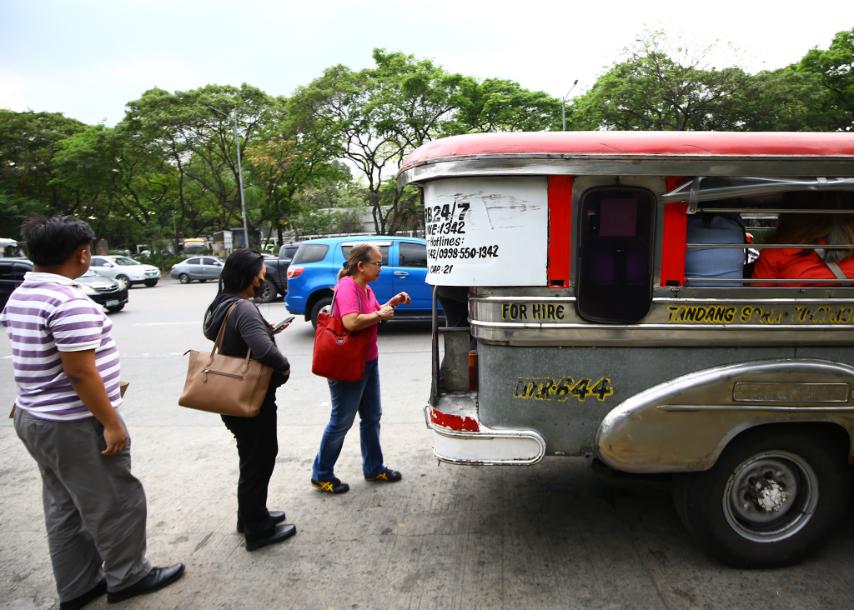
The Chief Executive likewise cited the ongoing distribution of P5,000 cash relief assistance to affected transport workers as well as his earlier directive to defer the fare hike, especially as an influx of passengers is expected ahead of the Holy Week.
“Ang talagang habol namin dito is to keep yung hanapbuhay ng tao, na mayroon silang pang-hanapbuhay,” he said.
Following the suspension of fare increase in public transport, the Department of Transportation (DOTr) announced that the MRT-3 and LRT-2 will implement a 50% discount for all passengers starting March 23.
Meanwhile, the President has ordered the Department of Agriculture (DA) to tap its P10 billion allocation under the Presidential Assistance for Farmers and Fisherfolk (PAFF) to help the agricultural sector cope with rising fuel prices.
“We know that fuel inflation can trigger food inflation. That is what we are trying to mitigate. If fishermen are spending less time out in the sea because they are limited by their gas supply, then it results in lower catch, which in turn makes fish expensive,” Executive Secretary Ralph Recto said in a news release.
-av

