
By Dean Aubrey Caratiquet
The vast expanse of space serves as the next frontier that the Philippines is yet to fully explore and, as such, forms part of the administration’s thrust to maintain parity with more advanced nations.
September 26, 2026 served as a noteworthy date in the quest to become acquainted with spaceflight and space technology, as an all-Filipino crew successfully completed the first Analog Habitat Waypoint (ANAHAW) mission of the Philippine Space Agency (PhilSA) at the Batangas State University.
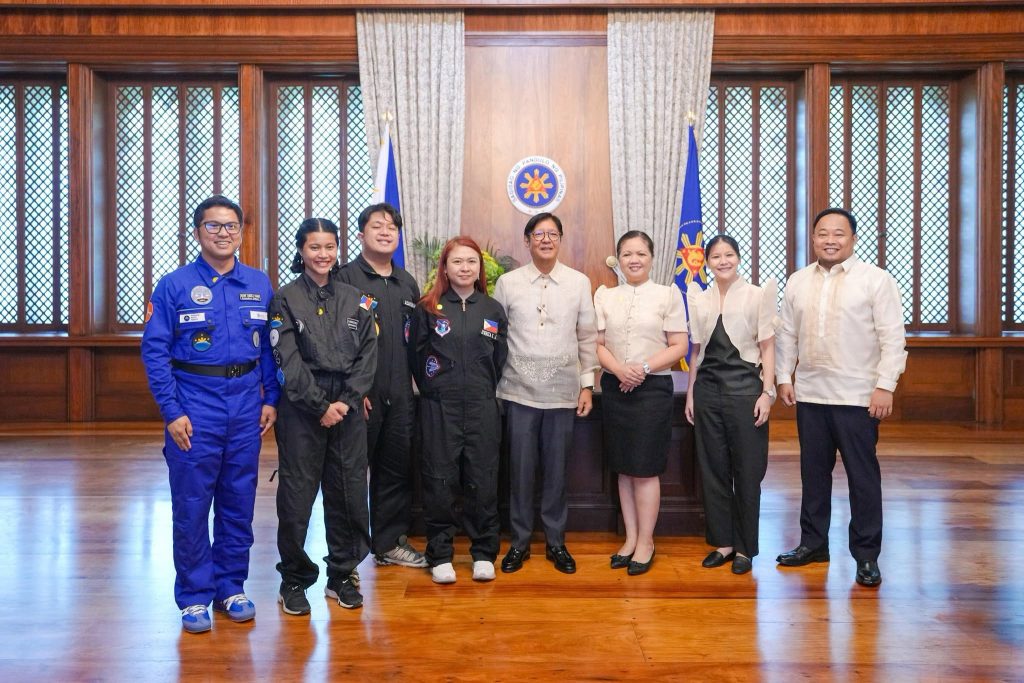
The crew is comprised of six members that bring together their expertise from various fields:
- Mission Commander Suguru Vaughn Hernandez
- Flight Engineer Nathaniel Macato
- Mission Scientists Bianca Angeline Alcantara and Yzhae Marrione Villaruel
- Communications Officer Jeremaine Ko
- Health and Nutrition Specialist Mary Audrey Amorao
They completed the mission inside the simulated habitat with support of the following personnel: Mission Control Center’s Flight Director Leemar Bonite, Capsule Communicator Cindy Lou Macahilos, and Science Technical Officers: Angelo Manigo, Catherine Raisa Mandigma, and Erica Mae Santos.
Sitting at the helm of the analog mission was Kristine Atienza—the first Filipino analog astronaut—who mentored the crew, led training sessions, and provided technical inputs in tandem with the PhilSA.
An analog mission simulates various aspects of spaceflight and replicates the conduct of various activities on lunar or Martian habitats, which provides the crew with an opportunity to test systems, improve coordination, and strengthen operational readiness in the face of conditions akin to those challenges in actual space missions.
During the mission, the crew conducted varied scientific experiments and technical demonstrations on human-rover collaboration, crew welfare mentoring system, crew dynamics during an emergency, surface microbial sampling, and ground-based germination screening of Philippine food crops.
Meanwhile, in a courtesy visit at Malacañang, President Ferdinand R. Marcos Jr. hailed the crew, whom he touted as pioneers in the development of capabilities required for Filipinos to participate in future space exploration.
“Our Filipino analog astronauts are already testing here on Earth what it takes to live and work beyond it. I look forward to the day when a Filipino takes that science all the way to space.”
The completion of the first ANAHAW mission marks an important milestone in the country’s quest to expand the Philippine space ecosystem through shared expertise, knowledge, and resources, thus helping to establish a framework for future analog missions.
av

