
By Brian Campued
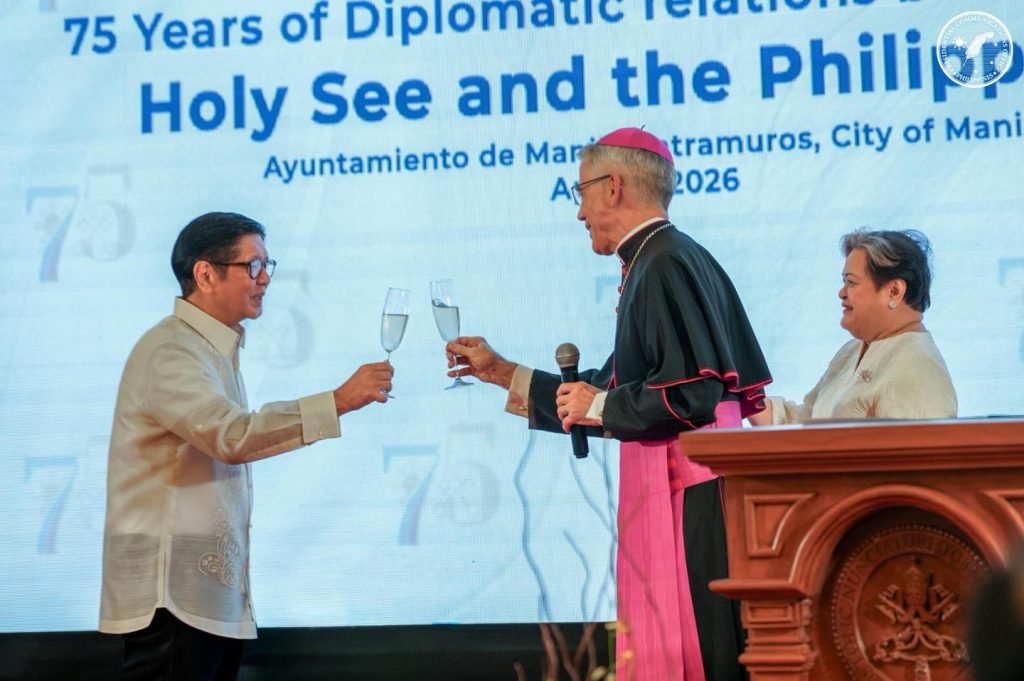
The Philippines and the Holy See on Wednesday marked 75 years of diplomatic relations, anchored not only on shared commitment to nation-building but also on values and faith.
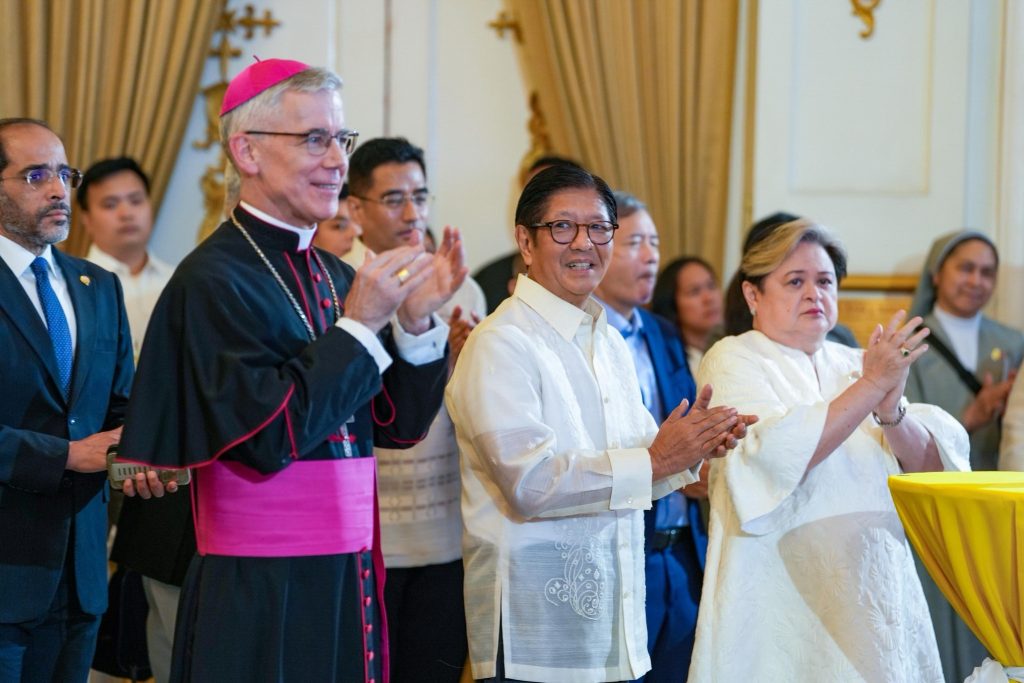
President Ferdinand R. Marcos Jr. highlighted this as he joined leaders of the Catholic Church, members of the diplomatic community, and government officials during the commemoration of the longstanding partnership between the Philippines and the Holy See at the Ayuntamiento de Manila in Intramuros, Manila.
While formal ties were only established on April 8, 1951, the Chief Executive noted that Catholic faith has been present in the country for more than four centuries, helping shape national identity, culture, and values.
“Tonight’s gathering is a reminder of what anchors us as a people. In times of uncertainty, Filipinos turn to prayer, to community and to a faith that continues to guide us forward,” the President said in a Facebook post.
“As we mark this milestone, we carry with us the same strength that has defined our nation through generations.”
During the reception, Marcos Jr. underscored the Philippines’ commitment to further strengthening its partnership with the Holy See through continued collaboration in promoting peace and advancing social development.
“Guided by our common values and grounded in a long history of collaboration, we look forward to strengthening this partnership over the next 75 years, and working together to meet both local and global challenges,” he said.
“We walk together in championing dialogue over division, reconciliation over conflict, and service over self-interest,” he added, citing the Catholic Church’s efforts in nation-building through its schools, hospitals, and charitable institutions across the country.
Marcos Jr. also highlighted the Holy See’s support for peacebuilding initiatives and interfaith dialogue in Mindanao to help bridge divides and foster reconciliation among communities.
Meanwhile, the President expressed his intent to enhance the Philippines’ cooperation with the Holy See in advancing migrant rights through the implementation of the Global Compact for Safe, Orderly, and Regular Migration (GCM).
According to Marcos Jr., the Philippines draws guidance from the encyclical Rerum Novarum in its efforts to uphold human dignity and promote the rights of workers and marginalized sectors.
He also acknowledged the hardships endured by the diaspora, including seafarers, in their pursuit of a better life for themselves and their families.
“In a world that has become increasingly volatile, uncertain, and complex, the Philippines cannot face today’s challenges alone,” Marcos Jr. said.
“We rely on steadfast partners—like the Holy See— who share our commitment to building more just, humane, and inclusive communities,” he added.
The Philippines has been a staunch advocate of the protection of the rights and promotion of the welfare of migrants, through the implementation of the GCM since its adoption by the UN General Assembly in December 2018.
According to a report from the United Nations Network on Migration, a new Chapter on international migration and development was added to the Philippine Development Plan 2017-2022.
“This new Chapter is primarily based on the GCM, developed through an inclusive, whole-of-government, whole-of-society approach, and aims to ensure the safety and protection of both Filipino migrants overseas and foreign nationals in the Philippines as they contribute to sustainable development,” the Presidential Communications Office (PCO) said in a news release.
-jpv

