
By Ruth Abbey Gita-Carlos | Philippine News Agency
The Permanent Court of Arbitration (PCA) played a crucial role in charting the Philippines’ independent foreign policy that is anchored on peace and international interest, President Ferdinand R. Marcos Jr. said Thursday.
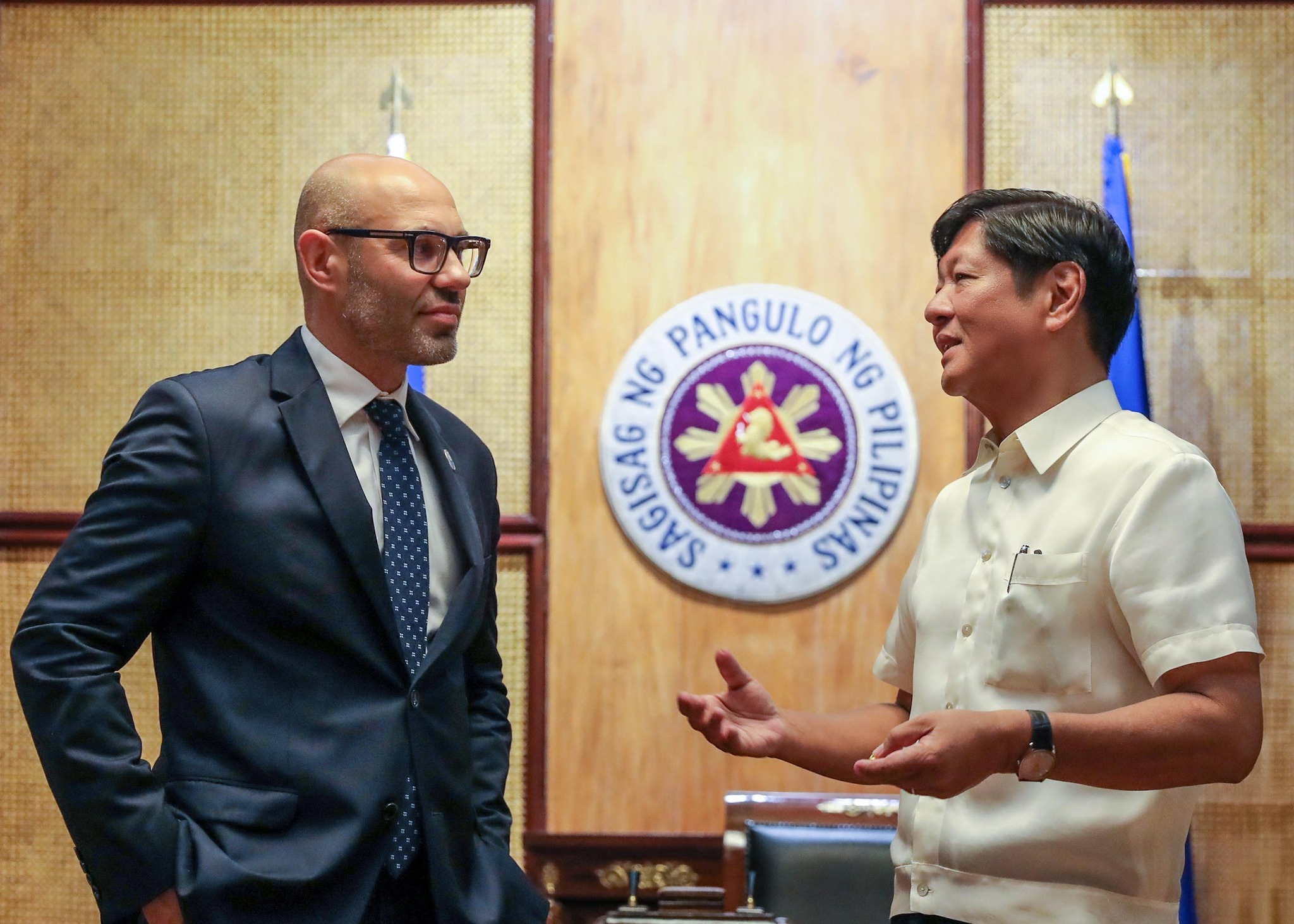
Marcos made the remarks when PCA Secretary-General Marcin Czepelak paid him a visit at Malacañan Palace in Manila.
“I’m very happy that you visited us this year because, of course, in the Philippines right now, the Permanent Court of Arbitration (PCA) is an important part of our foreign policy, considering all the challenges that we are facing right now, and our continuing adherence to international law,” he told Czepelak.
Czepelak said it was an honor to visit the Philippines for the first time and meet a lot of people during his stay in the country.
Czepelak assumed the post as PCA secretary-general in June 2022, the same period when Marcos also took oath as the Philippines’ 17th president.
Czepelak will serve as head of the PCA until May 31, 2027.
His visit to the Philippines comes amid the tensions in the South China Sea where Manila and Beijing have overlapping territorial claims.
China continues to assert its claim on almost the entire SCS, including waters that are within the Philippines’ exclusive economic zone.
The People’s Republic has also repeatedly rejected the PCA’s July 12, 2016 ruling on the SCS, which favors the Philippines’ petition to invalidate Beijing’s massive claims in the disputed waters.
The PCA was established in 1899 to facilitate arbitration and other forms of dispute resolution between states.
Since its inception, the PCA has developed into a modern, multi-faceted arbitral institution to meet the evolving dispute resolution needs of the international community.
‘Key player’
National Security Adviser Eduardo Año said the PCA has always played a key role in the peaceful resolution of international disputes, particularly in the South China Sea.
He cited as an example the tribunal’s decision affirming the Philippines’ rights to its exclusive economic zone under the United Nations Convention on the Law of the Sea (UNCLOS), rejecting China’s extensive claims based on historical grounds.
“The 2016 ruling by a tribunal organized by the PCA remains a significant milestone in our country’s assertion of the primacy of international law,” Año said.
Czepelak’s visit to the Philippines underscores the PCA’s dedication in engaging with member states to advance its objectives and foster dialogue on legal and diplomatic issues, he said.
“As a member-state, we look forward to engaging in meaningful dialogues to further the PCA’s mission of resolving disputes and advancing international law and the rules-based international order,” he said. (With a report from Priam F. Nepomuceno)

