
By Dean Aubrey Caratiquet
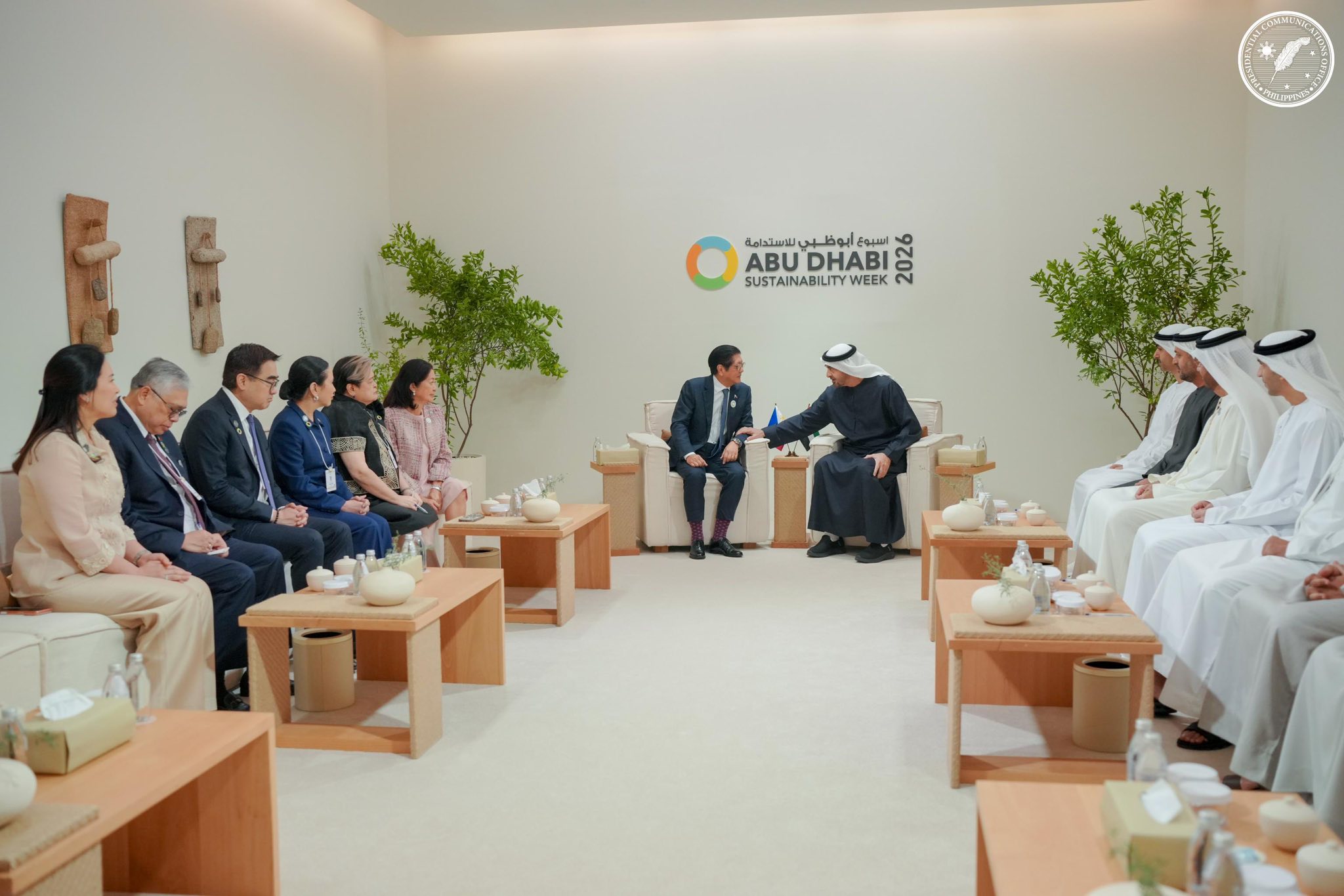
Expressing his oneness with world leaders, innovators, and investors towards sustainability, President Ferdinand R. Marcos Jr. participated in the opening ceremony of the Abu Dhabi Sustainability Week (ADSW) on Tuesday.
Along with First Lady Louise Araneta-Marcos and other Cabinet officials, he joined 14 other heads of state and government, including United Arab Emirates (UAE) President Sheikh Mohamed bin Zayed Al Nahyan at the Abu Dhabi National Exhibition Center.
The opening ceremony was followed by the Zayed Sustainability Awards, established in honor of the late Sheikh Zayed bin Sultan Al Nahyan, which recognizes small and medium enterprises, non-profit organizations, and global high schools that champion forward-thinking and scalable solutions to omnipresent challenges.
Camarines Norte Senior High School (CNSHS) represented the Philippines on the global stage after being hailed as one of the global finalists under the Global High Schools category for the East Asia and Pacific region.
The CNHS Research Club’s project, SALBAVIDA (“lifesaver”), introduces a one-tap rescue and response communication system designed for flood emergencies.
The innovation aims to strengthen community disaster preparedness by enabling rapid and reliable communication between civilians and first responders—an essential solution for a country frequently affected by extreme weather events.
After meeting with the awardees and winners, President Marcos Jr. proceeded to the forum proper with the other heads of state, engaging in high-level discussions on championing climate resiliency.
On embracing sustainability
In his keynote address, the Philippine President underscored the importance of deeper collaboration between nations as the true catalyst for meaningful change that would resonate with their respective constituencies.
Citing this year’s theme, “The Nexus of Next: All Systems Go,” Marcos Jr. reaffirmed the country’s commitment to achieving the Sustainable Development Goals (SDGs), likewise enshrined in the Philippine Development Plan 2023-2028 that revolves around inclusive growth built on resilient infrastructure and dependable institutions at its core.
The President moreover stressed the Southeast Asian nation’s vulnerability to the effects of climate change compounded by financial constraints, eliciting renewed calls on global financial institutions for more inclusive and responsive financing terms for climate and development subsidies.
“Borrowing costs for climate-vulnerable countries exceed growth rates, while debt burdens crowd out investments in health, education, and resilience. This is not simply a matter of finance. It is a matter of equity, stability, and shared responsibility.”
President Marcos Jr. also cited the People’s Survival Fund as a responsive financial weapon in the quest towards carbon neutrality, “The Philippines views the People’s Survival Fund as complementing the Green Climate Fund, Adaptation Fund, and the Fund for Responding to Loss and Damage—three global mechanisms where we are board members.”
On science-based solutions to climate change
The Chief Executive, meanwhile, pledged to invest in renewable energy expansion and nuclear safety, among others, as the government doubles down on the country’s transition to clean energy.
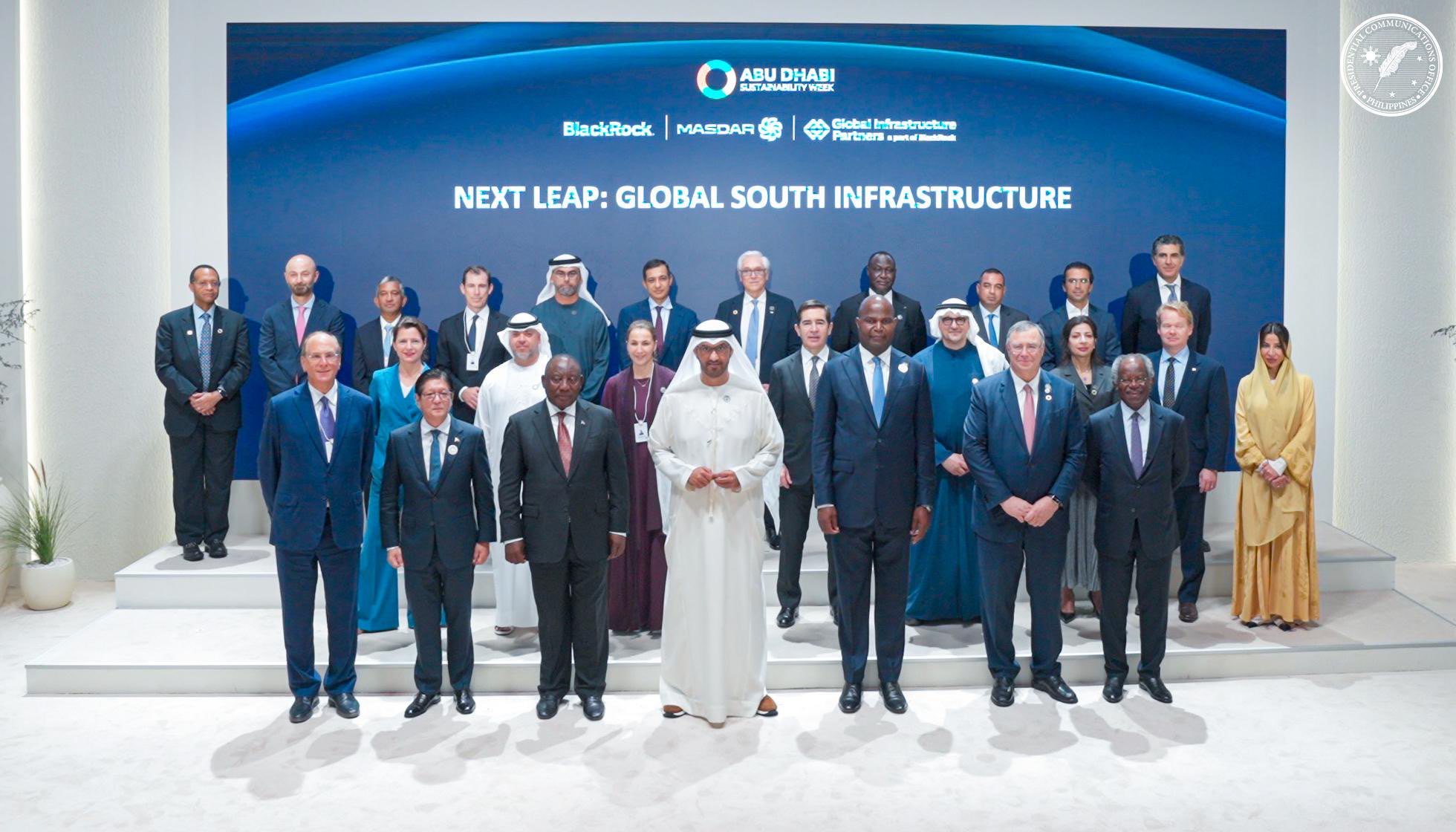
During the ADSW dialogue “Next Leap: Global South Infrastructure,” President Marcos Jr. outlined some of the notable initiatives that the Philippines has undertaken in unison with the global climate action.
In his keynote address, he cited the signing of the Philippine National Nuclear Energy Safety Act—the country’s first regulatory framework on ensuring safe, secure, and peaceful uses of nuclear technology.
“This provides a stable and predictable environment for scientists and industries to innovate safely and responsibly. It also signals the Philippines’ readiness to deepen science-driven cooperation with global partners.”
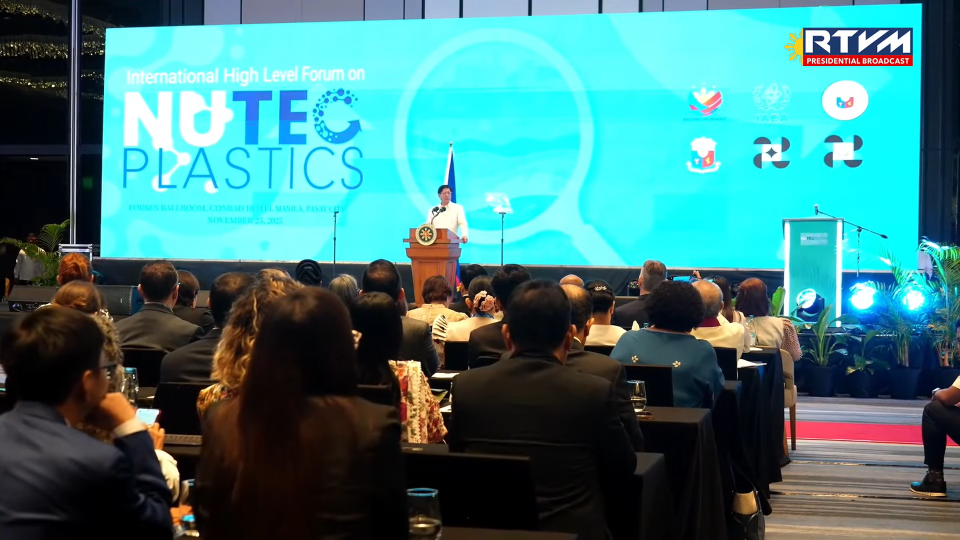
The President moreover noted the Philippines’ growing role in science-based solutions, including hosting the world’s first International Atomic Energy Agency (IAEA) High-Level Forum on Nuclear Technology for Controlling Plastic Pollution (NUTEC Plastics), which advanced public-private partnerships and innovation for circular and sustainable technologies.
President Marcos Jr. concluded his remarks by citing the pivotal role of technology and sustainability in the country’s upcoming chairship of the Association of Southeast Asian Nations (ASEAN), as the Philippines leads the 11-member bloc to bring about harmonious change in the region.
The Chief Executive asserted, “I assure everyone that we will promote a people-centered and future-ready ASEAN, with strengthened cooperation on climate resilience, digital transformation, and the responsible use of emerging technologies, including artificial intelligence.”
He added further, “I look forward to your support in realizing a vision of an ASEAN that is agile, inclusive, and capable of contributing meaningfully to global solutions.”
jpv

