

Prescriptive English Language Grammarian at Work: Grammatical Slips in Movies
by Juan Claudio S. Castro
An avid learner of English language would find movies employing the tongue quite instructive. Apart from entertainment and fun, these films allow one to experience authentic and lively language use, compared to mere textual examples provided by books. In short, one can witness here the English language in action. There are, however, some utterances in these movies that recede from the prescriptive grammar of the language. Here are the ungrammatical statements found.
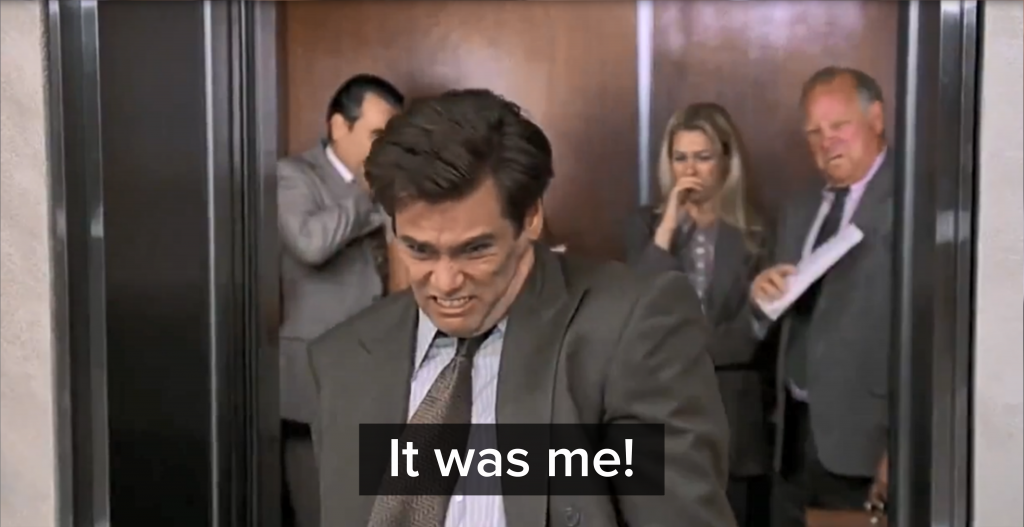
“It was me!” To start off, remember the hilarious, honest guy from the elevator in the 1997 film “Liar Liar”? Under the spell of truth, Fletcher Reede (played by Jim Carey), who anxiously admits to the people in the elevator that he was the one who farted, cried, “It was me!” It sounds normal, isn’t it? Opening an English language grammar book, however, will remind us that the utterance does incur a grammatical infraction. The expression would have been grammatical had it adhered to the rule on the nominative case of personal pronouns: a personal pronoun that complements the linking verb “be” appears in the nominative case, that is, in first person form. Because “me” completes the linking verb “was,” it should have been “I.” Ergo, “It was I” is the correct statement.
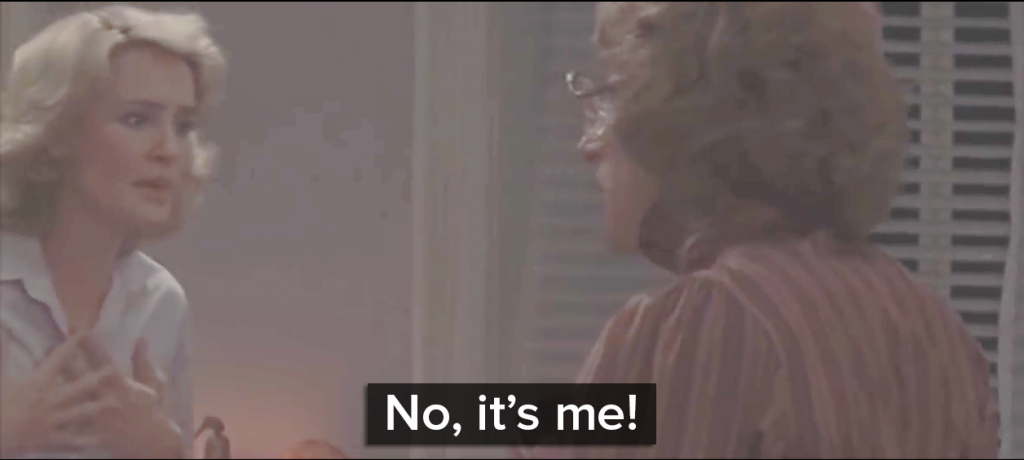
“No, it’s me!” Dorothy Michaels (Dustin Hoffman in real life) and Julie (acted by Jessica Lange) exchange this sentence to each other several times in “Tootsie,” a movie released in 1982. Another event of amiss case of personal pronoun. Following the above-mentioned rule on personal pronouns, “No, it’s I” is the correct utterance.
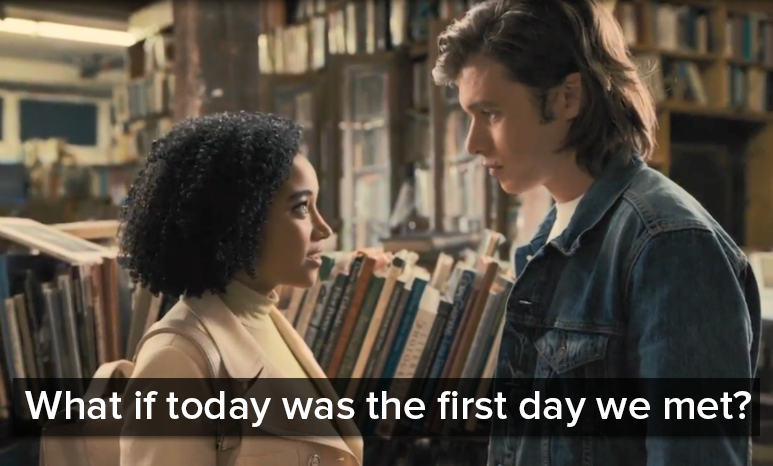
“What if today was the first day that we met?” The next ungrammatical utterance can be noticed in “Everything, Everything,” a motion picture that came to cinemas in 2017. “What if today was the first day that we met?” whispered Madeline “Maddy” Whittier (Amandla Stenberg in reality) to Olly (casted to Nick Robinson) inside the Olde Book Shoppe. As they meet again after an almost breakup, Maddy tries to start anew their relationship, this time, not hindered by her restriction in her house. This particular meet of theirs is not their first time. The statement would have been grammatical had she employed “were” instead of “was.” In English language grammar, whenever the speaker intends to convey a counterfactual meaning that has the verb “be,” the linking verb “were” is used. This is called the subjunctive mood of verb. An example? Yes, there is! Just like in the 2009 film “17 Again,” Mark Gold (starred by Zac Efron) enlightens Naomi (enacted by Nicole Sullivan), “If this were Afghanistan, she’d be dragged to the streets by goats.” They’re in the United States in that scene, not in Afghanistan. Maddy’s rectified statement, therefore, must be “What if today were the first day that we met?”
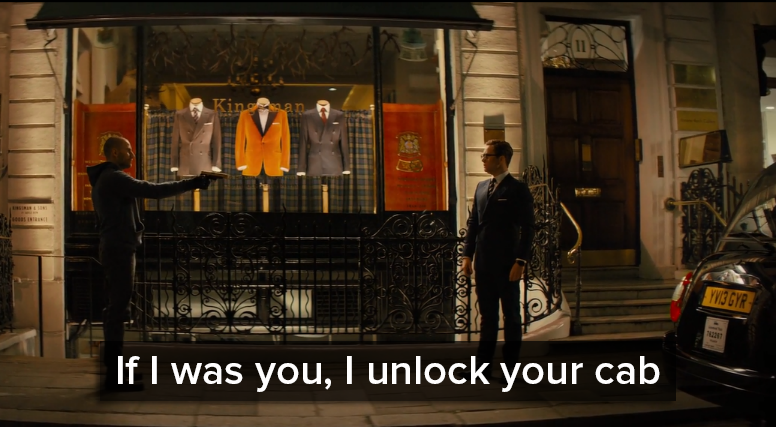
“If I was you, I unlock your cab.” In the very first dialogue in “Kingsman: The Golden Circle,” a movie that likewise came on the big screen in 2017, Charlie Hesketh (Edward Holcroft’s role) threatens Gary “Eggsy” Unwin (assumed by Taron Egerton), “If I was you, I unlock your cab.” This is another case of a verb that should be in the subjunctive mood. The proper statement, then, is “If I were you, I unlock your cab.”
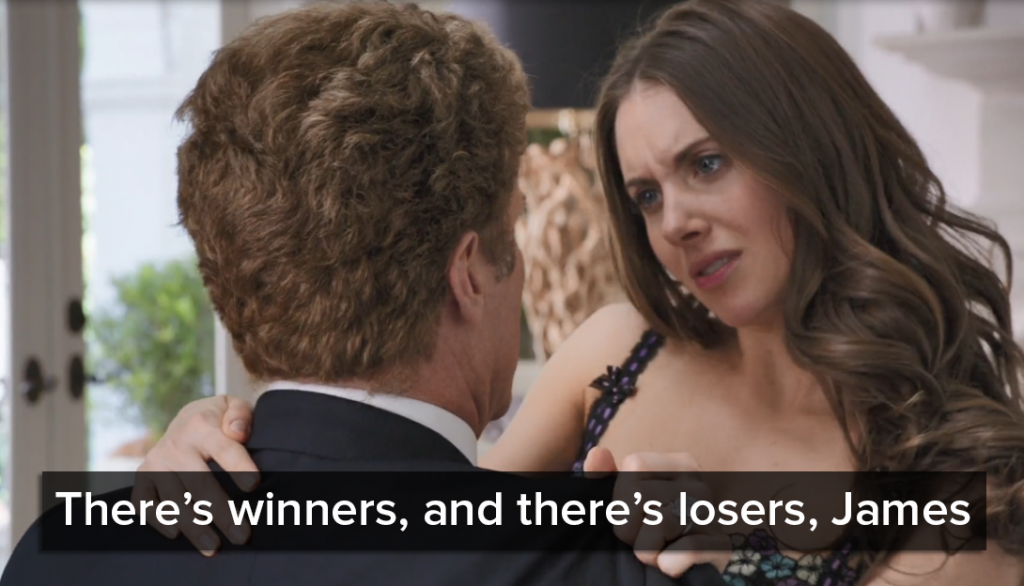 “There’s winners, and there’s losers, James.” Finally, in the 2015 comedy “Get Hard,” as Alissa (done by Alison Brie) convinces James King (carried out by Will Ferrell) to build and live in a mansion with her, rationalizes, “There’s winners, and there’s losers, James.” This compound sentence likewise presents a couple of erroneous subject-verb agreements. The subject of the first clause is “winners,” and “losers” in the second. The singular verb “is,” however, is used in both clauses, which does not adhere to the number of the subjects. Thus, the grammatical expression must that which employs “are”: “There’re winners, and there’re losers, James.”
Briefly, these script lines erred on linking verb-complementary pronouns, subjunctive mood of verb, and subject-verb agreement. The flaws may be attributed to slip of the finger of the scriptwriters, which passed through the lips of the characters, that finally made it all the way to the big screen; or to advertent use of loose, informal utterances. Whatever it is, these are helpful and interesting exercises for English language grammar students. One more thing: these slips are not that easy to spot. It almost requires one to become a grammar nazi to catch them. Therefore, these ungrammatical lines must bring at least a chuckle to one’s lips for being able to detect them.

