
MAMBAJAO, Camiguin — As All Saints’ Day (November 1) approaches, Filipino families flock to cemeteries to tidy up their loved ones’ tombstones, most of them with karit (sickle) on one hand and a walis (broom) on the other — to cut overgrown grass, sweep, and later pray and reflect on the memory of their dearly departed.
But in Camiguin’s oldest and most picturesque site for the dead, the graves are underwater and it is usually visited by tourists instead of relatives.
One of the most prominent destinations on the island, just off the coast of Cagayan de Oro, would be the sunset-lit Sunken Cemetery in Catarman, a portion of the province’s community where one of the first settlers of Camiguin lived and have been buried alive after Mt. Vulcan or Daang Bulkan erupted.
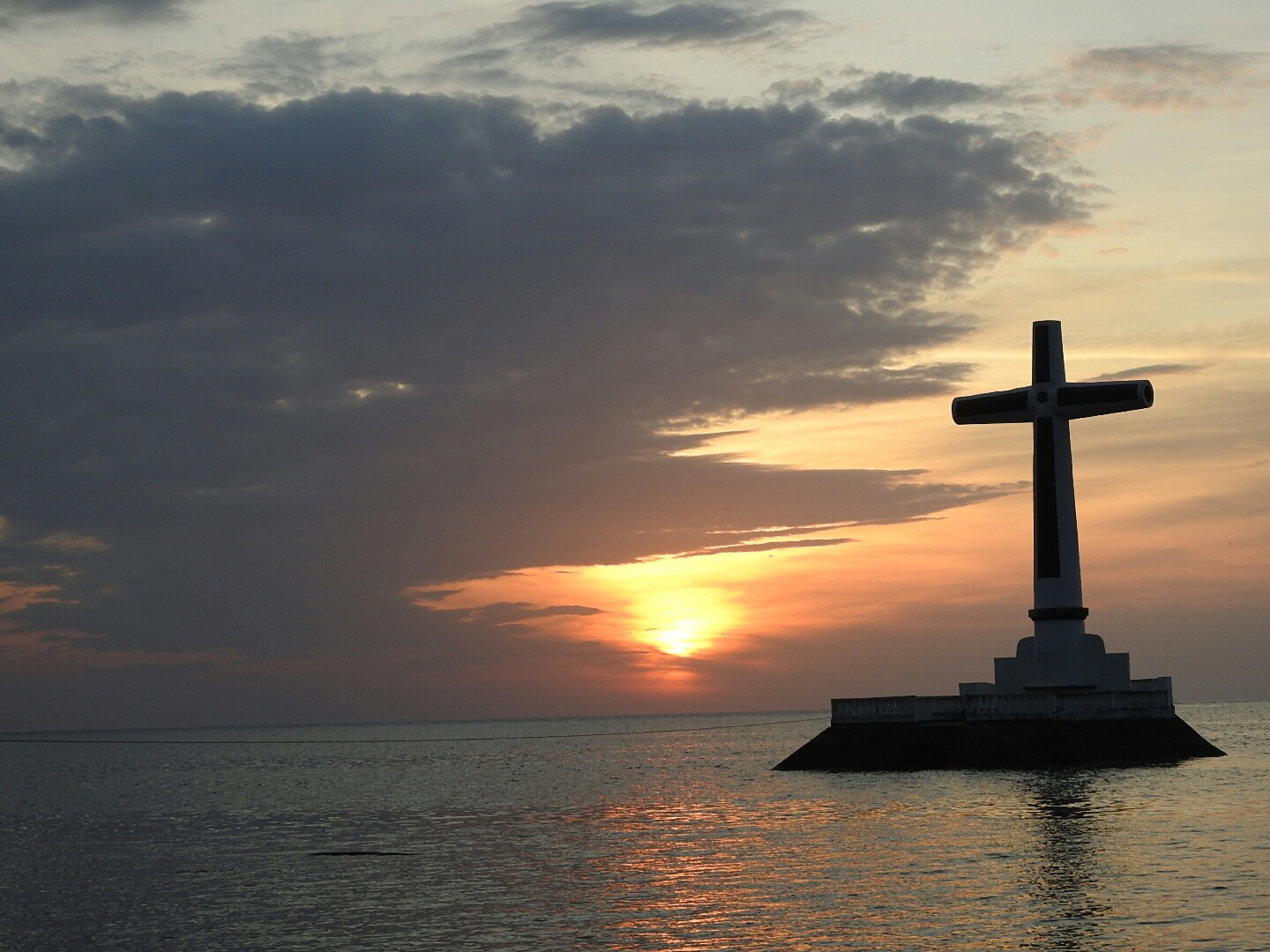
 Candice Borromeo-Dael, Camiguin’s tourism officer, said the white cross that marks the Sunken Cemetery was a replacement of the original, which was made of hard wood and stones that disintegrated over time.
“The white marker, the local government unit put it, but the original was farther to where the current one was placed,” she said.
The underwater tombstones, some still have identifiable features that are now rare from the uniform burial lots and tombs, extend to at least half a hectare from an old church similarly buried by Mt. Vulcan’s lava.
“During low-tide, people could see the tombs surfacing from the water,” Borromeo-Dael said.
The tourism officer, who personally saw the original cross back when she was a child, also noted “there was a time (when) you can see that the church and the graveyard are near each other.”
Aside from the cemetery, what was left of the old Catarman after Mt. Vulcan erupted were three grand structures: the Guiob Church Ruins, a nunnery, and a bell tower.
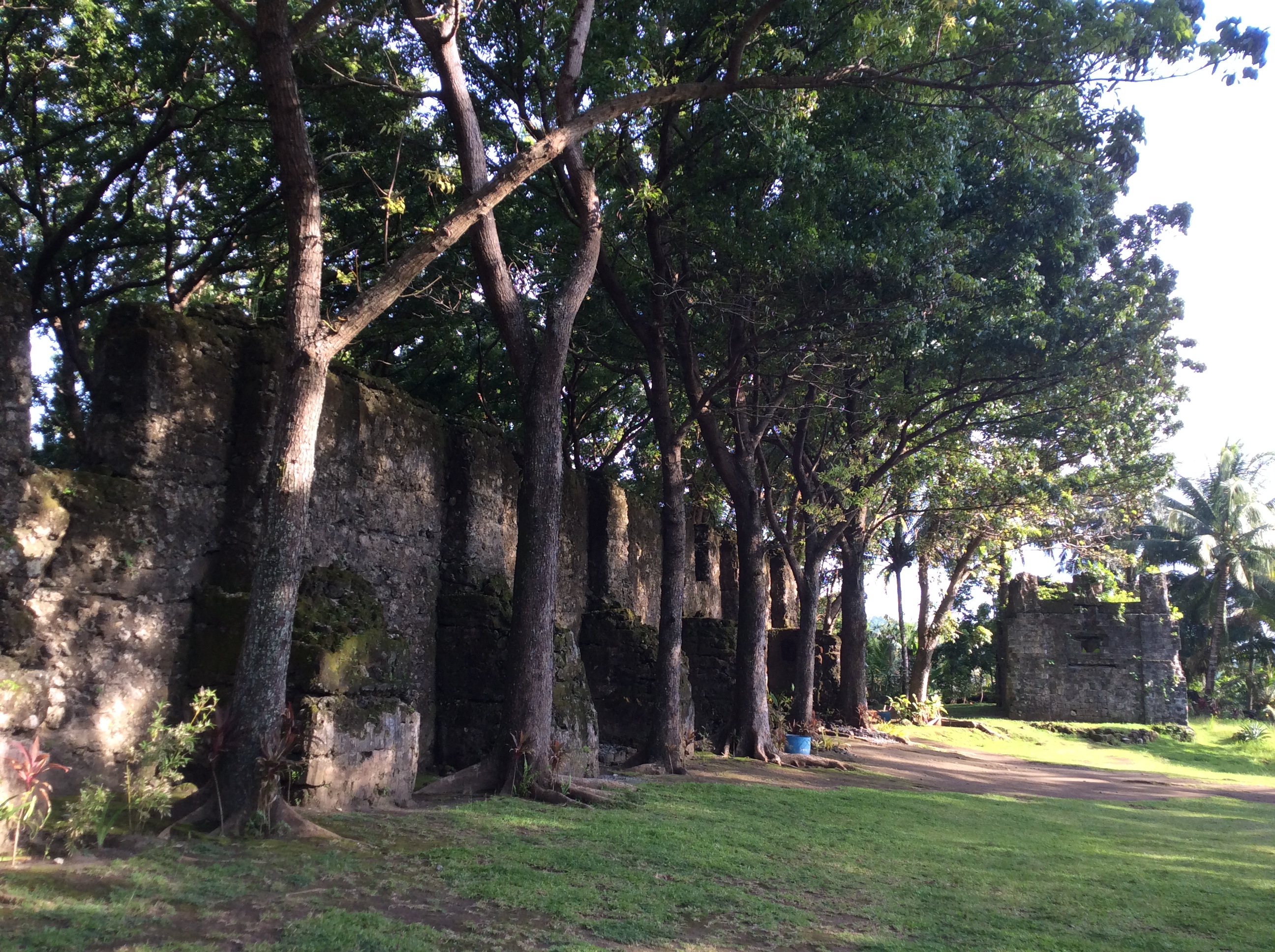
Entering the church ruins, where all four corners of the walls are perfectly intact, one can’t set aside the overwhelming thoughts and imagination of how the space housed what may have been one of the majestic Catholic places in Mindanao.
It is far from the common ruins site left only with little rubble of rocks. From the church entrance and several feet to the altar, it is a peep on the old Catarman before the 1871 eruption, with the Catholic faith proving to be one huge part of the village folk’s lives.
“What you can see now is part of a Spanish church, a convent, and a bell tower. That is only a quarter of its original size, supposedly, it was really big,” Borromeo-Dael said.
“The whole community of that area sunk, what you could see now is the church. Back then, Catarman was the center of Camiguin, those villagers were the province’s first settlers,” she added.
Though the old town’s folk were buried during the volcano’s eruption, the whole Camiguin does not miss November 1 as a time to remember their ancestors, laying a wreath along the shores of Punta Pasil, the vintage graveyard’s site, that may have as well served as the symbolic resting place of old Catarman.
“Every November 1, the old folk would bring flowers along the shores of Pasil or Cape of Pasil, remembering their apohan (grandparents),” she said. (Joyce Ann L. Rocamora/PNA)

