
By Lilybeth Ison/Philippine News Agency
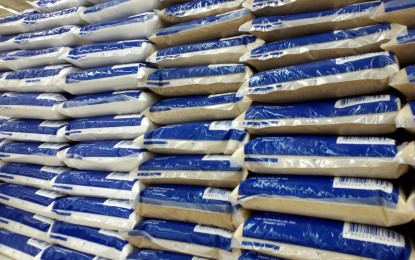 MANILA — The Sugar Regulatory Administration (SRA) has reduced the United States’ sugar allocation to ensure ample supply of the commodity for the domestic market, as production for the crop year 2018-2019 was projected at 2.071 million metric tons (MMT) from 2.083 MMT previously, due to the problems confronting sugar planters.
SRA Administrator Hermenegildo Serafica, in an interview with reporters at the sidelines of the 7th Global Bioenergy Partnership at the Philippine International Convention Center (PICC) on Tuesday, said the industry could only ship 120,000 MT of sugar to the United States, a drop of 12 percent from the previous allocation of 136,201 MT, due to lower sugar output.
The Philippines started shipping sugar to the United States in February as part of its quota under a preferential trade arrangement, which allows the country to sell sugar to the US at a premium.
“The USDA (United States Department of Agriculture) has reallocated the shortfall of our volume to other countries so it will still be served,” Serafica said.
Sugar planters, however, said sugar output by August 31, which is the end of the current crop year, will hit the government’s forecast of 2.071 MMT.
Confederation of Sugar Producers Association (Confed) spokesman Raymond Montinola said in an earlier interview that this will be enough to meet the country’s requirement for the sweetener.
“(Output) will be enough to supply the needs and requirements of the domestic market. As of now, if the production forecast is hit, then there is no need for importation,” he said.
Montinola said sugar planters attribute the lower production output to bad weather conditions and lack of laborers, such as sugarcane cutters.
Despite lower production output expected for the year, the SRA chief said there is no need to import sugar.
Meanwhile, SRA said legislative action is needed for ethanol producers to import molasses for fuel.
Ethanol producers are seeking to import molasses to meet demand as sugar production is low, resulting in higher ethanol prices. Molasses is used in producing ethanol, a colorless volatile flammable liquid that can be blended with gasoline.
Under the Biofuels Law, its components shall be locally sourced. Current molasses local production is only around 1 MMT.
Senate Committee on Energy chairman, Senator Sherwin Gatchalian, during the press briefing, said an oversight committee on biofuels will be convened when the 18th Congress convenes next month to discuss what must be done to allow the importation of molasses.
“Kung kailangan i-amend ang batas, i-amend natin (If there’s a need to amend the law, let’s amend it),” he said.
Gatchalian, however, said there must be a “balancing act” as the importation of molasses could hurt local farmers and at the same time make biofuels cheaper — which benefits end-users.
“If we allow importation (of molasses), it would mean cheaper (biofuels), but the welfare of our farmers will be compromised,” he said.
For the latest updates about this story, visit the Philippine News Agency website

