
By Brian Jules Campued
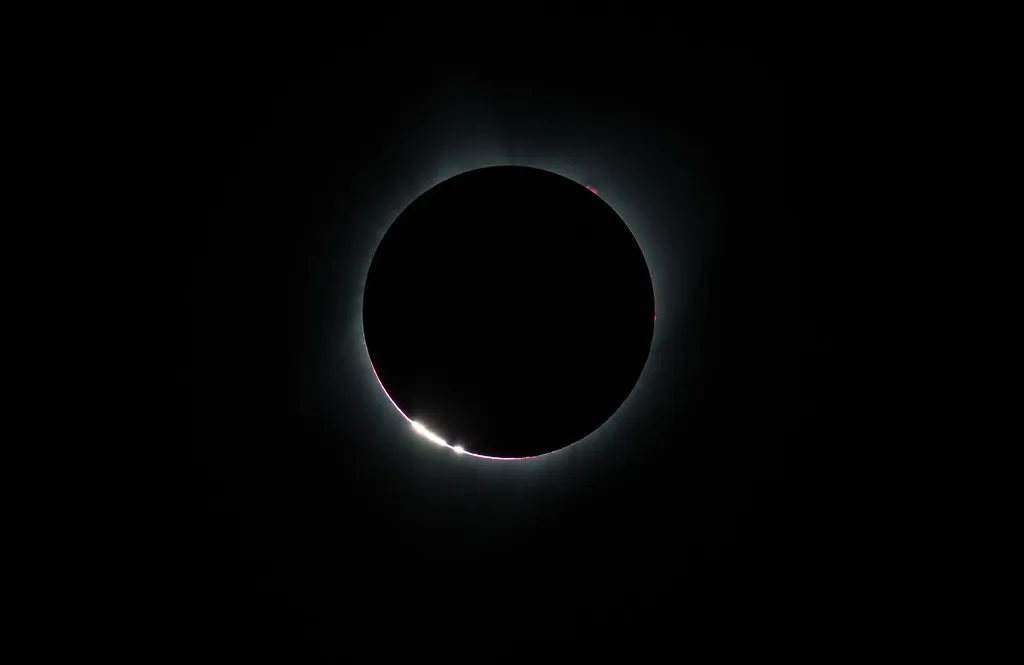
A total solar eclipse will happen on April 8, passing over Mexico, the United States, and Canada; however, it will not be visible in the Philippines, the state weather bureau said in its latest astronomical diary.
The Philippine Atmospheric, Geophysical and Astronomical Services Administration (PAGASA) said the totality of the solar eclipse will only be visible in a narrow strip on the Pacific Ocean and then in North America before ending in the Atlantic Ocean.
“The totality of the solar eclipse will be visible in a narrow strip on the Pacific Ocean passing 200 nm (nautical miles) north of the Marquesas Islands and later in North America, beginning at the Pacific Coast, then ascending in a north-easterly direction through Mexico, the United States, and Canada,” explained PAGASA.
According to the National Aeronautics and Space Administration (NASA), a total solar eclipse occurs when the moon passes between the sun and earth, forming a “ring of fire” by completely blocking the face of the sun.
During the Great North American Eclipse, areas in the mentioned regions will experience temporary darkness as if it were dawn or dusk.
“Weather permitting, people along the path of totality will see the sun’s corona, or outer atmosphere, which is usually obscured by the bright face of the sun,” said NASA.
The state weather bureau, likewise, dismissed the circulating rumors of three-day darkness as a hoax. It added that there is no scientific evidence supporting the “news” that the earth’s passage through Photon Belts leads to any substantial transformations, much less darkness.
“Astronomers have not observed any evidence of a band of high-energy photons surrounding the Milky Way galaxy. It is said that when the Earth passes through this belt, it triggers various transformative effects, both physical and spiritual,” the agency said.
Furthermore, PAGASA clarified that the concept of the Photon Belt is considered more pseudoscientific by the scientific community.
Those who will not be able to physically witness the total eclipse, such as those in the Philippines, can watch it through NASA’s coverage across multiple platforms, including their YouTube channel.
The live stream will start on April 9, 1 a.m. (PhST). – av

