
Agence France-Presse
Surgeons in the United States have transplanted a modified pig kidney into a living person for the second time, a hospital said Wednesday, celebrating an advance in animal-to-human organ transplants.
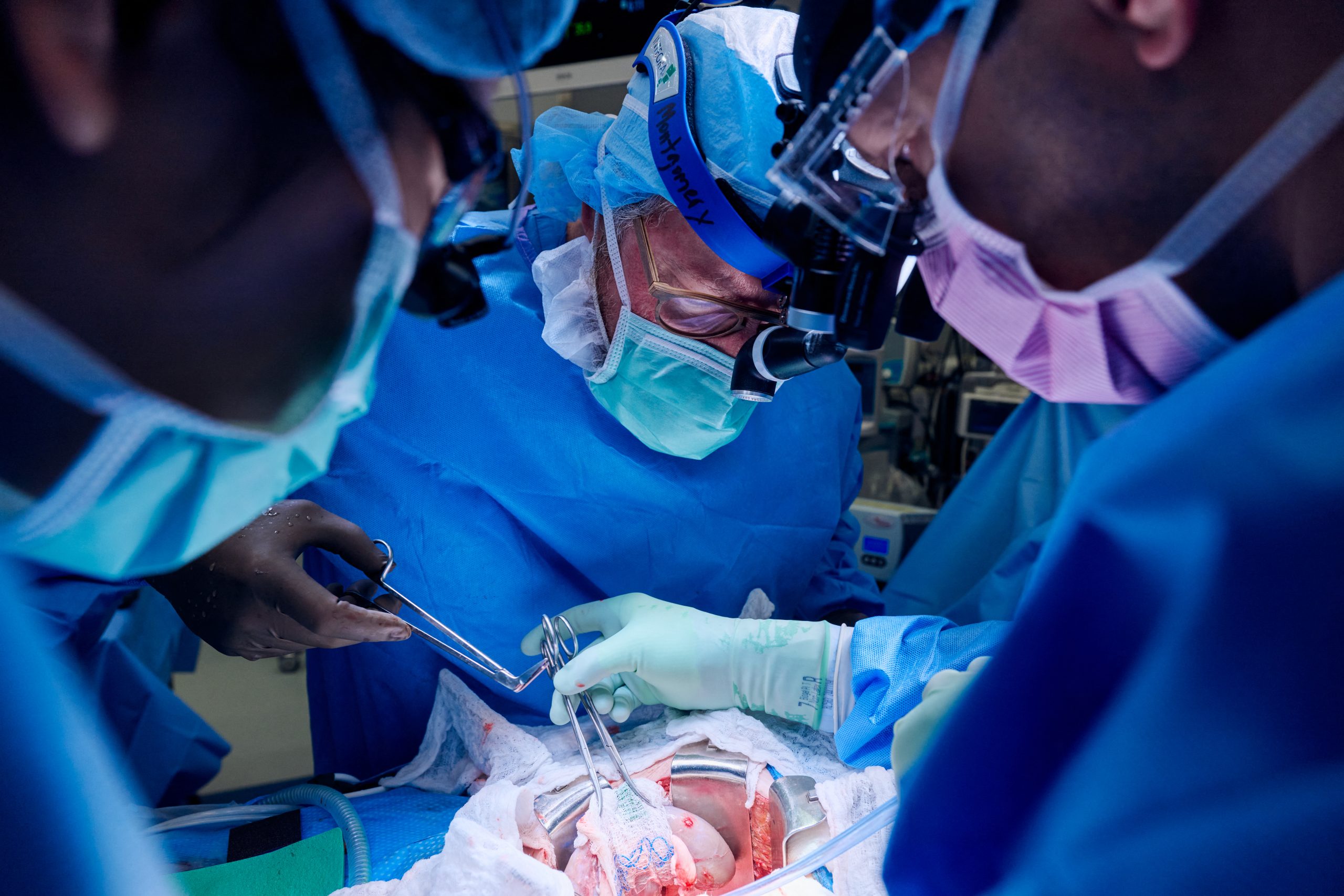
The procedure at NYU Langone Health in New York was carried out in April on Lisa Pisano, 54, who had suffered heart failure and end-stage kidney disease, with doctors giving her just weeks to live barring some kind of medical intervention.
Surgeons implanted a mechanical heart pump in Pisano days before the transplant, which NYU Langone Health said was a world-first for this combined procedure.
In addition to the gene-edited kidney, doctors also — for what the hospital said was the first time on a living patient — transplanted the pig’s thymus gland, which helps “educate” the immune system and reduce the chance of organ rejection.
Lead surgeon Dr Robert Montgomery told reporters Wednesday the operation was a “milestone in our journey to make life-saving organs available to anyone who needs them.”
Montgomery, who also carried out the world’s first gene-edited pig-to-human kidney transplant on a brain-dead person in 2021, said the latest operation will “bring closer the possibility that no one will have to die, waiting for someone else to die, so they can be saved.”
The first-ever transplant of a pig kidney into a living patient was carried out in March at Massachusetts General Hospital on a 62-year-old man.
Xenotransplants — a transplant of an organ between different species — have been hailed as a potential solution for in-need patients amid a chronic shortage of organ donors.
However, the human body can reject animal organs, meaning they must be genetically modified to ensure they will be compatible, reducing risk for the patient.
Genetically modified pig hearts were transplanted in 2023 into two patients at the University of Maryland, but both survived less than two months.
Pisano, a grandmother from New Jersey, said she had “exhausted all other resources” before choosing to go ahead with the procedure.
Doctors said it could have taken years for her to find a match for a human kidney transplant, with her body rejecting available donors, according to a hospital statement.
“I said the worst case scenario, if it doesn’t work, it might work for the next person. You know, at least somebody’s going to benefit from it,” Pisano said.
She has shown no signs of organ rejection almost two weeks later, Montgomery said, adding that her kidney function was “perfect.”

