
By Lilian Mellejor/PNA
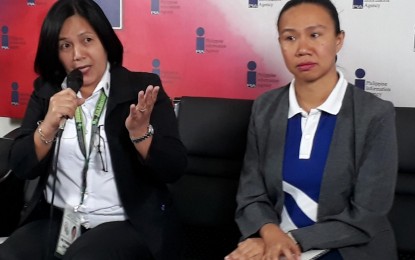
DAVAO CITY — The Department of Agriculture (DA) has warned hog raisers in Region 11 (Davao region) against feeding pigs with food leftovers as these could be the possible source of the deadly African Swine Fever and other animal diseases.
Dr. Armie Capuyan, chief of the DA’s Disease Monitoring and Surveillance Unit, issued the warning on Friday amid the spread of ASF and other swine diseases in other countries.
Capuyan noted that food scrap feeding is a common practice among backyard hog raisers, who make up 65 percent of the national total hog production.
He said some types of food, especially meat, could be contaminated by animal disease.
Felimon Santander, chairperson of the Backyard Raisers Association in Davao, said their members have been told to stop mixing feeds with food leftovers as a “cost efficient” practice.
Santander said some hog raisers collect food leftovers from local restaurants.
“Okay lang kung gikan sa atong balay (It’s okay if it comes from our own home),” he said.
Meanwhile, Dr. Teresa Bacayo, regional veterinary quarantine officer of the Bureau of Animal Industry (BAI), said swill feeding is one important route of disease introduction in the country because animal disease pathogens are resistant to high and low temperatures in meat-based food preparations.
The government has already banned the entry of products from 13 countries affected by swine fever. Filipinos were asked to avoid bringing any pork and pork products from these country into the Philippines.
The African Swine Fever causes severe illness and high death rates in pigs. Death usually occurs within seven to 10 days, but sudden death is possible in newly-exposed herds.
Earlier, Councilor Marissa Salvador-Abella voiced concerns over swine influenza after the disease outbreaks in Africa, Latvia, Romania, Russia, Ukraine, and the People’s Republic of China.
Considering that Davao City already has direct international flights, Abella said government agencies should pool resources to strengthen prevention mechanisms.
She said as of January 2018, the number of hogs in the Davao region reached 904,900 or a slight increase of 4.39 percent compared to previous years.
He said 83.6 percent of the entire hogs raised in the region are grown in the backyard, while 16.31 percent came from commercial growers.

