
By Ma. Teresa Montemayor/Philippine News Agency
MANILA — Persons with limb disabilities due to severe damage in their nervous and muscular systems can now stand or walk again with the Hybrid Assistive Limb (HAL), the first cyborg-type robot which provides support and improves the bodily functions of the wearer.
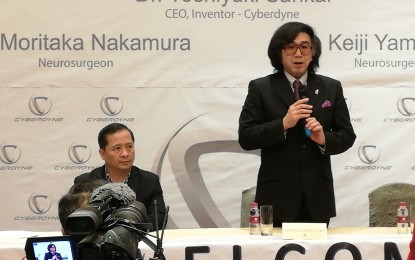
“Severe accidents and diseases can cause lower limb disabilities, and in those cases, the brain cannot use ordinary neural pathways and cannot order the legs to move,” said Dr. Yoshiyuki Sankai, Cyberdyne chief executive officer and HAL inventor, on Wednesday in a press briefing in Manila.
Sankai said HAL is used in the medical field to teach the patients’ brains how to move their legs in accordance with their intention to carry out the movement.
He added such technology has long been used in Japan and he is looking forward to see many Filipinos benefit from his invention.
“Anyway, we want to strengthen our relationship with the Philippines in the medical aspect and Philippines is the perfect venue for the spread of this technology all throughout Asia,” he said.
Life 1 Corporation chief executive officer Dr. Albert Zarate, who was also at the press briefing, said victims of stroke and other cardiovascular diseases could also benefit from HAL.
“Cardiovascular diseases is top three leading cause of death in the country, and we’ve seen a lot of rehabilitation programs related to them, and this technology created by Cyberdyne has actually given for patients with these diseases, and it is with great honor that we’re bringing it to the country,” he said.
Life 1 Corporation is the local partner of the HAL and Cyberdyne technology.
Zarate added people who have been bedridden for a long time could also benefit from such technology as long as they are awake.
“This is per session per patient, the ideal time is between 60 to 90 minutes per session. As a doctor, I’m happy with the improvement I see among the 17 patients who have received the treatment,” he said.
Citing that HAL and the Cyberdyne technology are not exclusive for the rich, Zarate said he plans to collaborate with the government to make them available in private and public hospitals nationwide.
“If we have government support, we can make this assistive technology more affordable and accessible to all Filipinos,” he said, adding that his company is not selling the machine.
Zarate said they offer the HALs to hospitals and individuals on a “rental basis”.
“It is very good because we don’t put too much strain on the hospital, on the patient. Cyberdyne has designed it to affordable to all nations and peoples of the world and the first installations are already in our Zarate General Hospital in Las Piñas and we already have the showroom,” he said.
For the latest updates about this story, visit the Philippine News Agency website

