
By Perla Lena/Philippine News Agency
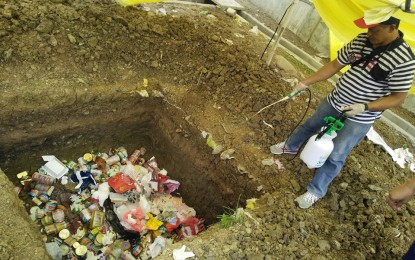
ILOILO CITY — Authorities destroyed canned and processed meat products confiscated from arriving passengers of two international airports in Panay, believed to have come from countries where there is an outbreak of the African Swine Flu (ASF) virus.
Dr. John Rhoel Hilario, Regional Veterinary Quarantine Officer of Veterinary Quarantine Region 6 (Western Visayas), in a phone interview Friday, confirmed that 244 pieces of canned pork meat along – with other raw and processed confiscated meat products, were buried in a dumpsite in the town of Cabatuan, Iloilo on Tuesday.
These were confiscated from arriving passengers, coming most especially from Hong Kong.
“Hong Kong as you know is one of the areas experiencing an outbreak of African Swine Flu,” he said.
The confiscated goods did not necessarily come from arriving overseas Filipino workers but from other foreign tourists. He said that Asian people, including Filipinos, share the culture of bringing “pasalubong” or gift.
Moreover, some 118.45 kilograms of meat and meat products confiscated from passengers arriving through the Kalibo International Airport were disposed of in Aklan on Thursday.
The disposal, through burning and burying, was facilitated by the Veterinary Quarantine- Kalibo International Airport Station, Office of the Aklan Provincial Veterinarian, local government unit of Kalibo and the Bureau of Customs.
The items were confiscated during the entire month of May.
Hilario added that in addition to strict monitoring being done in airports, they also monitor ports of entries.
“We are also doing domestic monitoring. More than outgoing, we are very particular with the incoming because these are the real risk for our local animal industry. We are very strict when it comes to incoming products,” he said.
At the Caticlan Jetty Port in Aklan, he said the confiscation is done not for animal products and by-products but live animals, especially with the recent outbreak of bird flu in Luzon.
“The Caticlan Jetty Port is on guard when it comes to incoming commodities,” he said.
He also lauded airline companies, which he said, are very compliant when it comes to the transport of animals and animal commodities.
Hilario explained that even if the food coming from areas with ASF is processed, the risk is still present.
“Regardless of the size of meat or of the processed meat, as long as it is infected, it still has the capacity to affect an area,” he said.
He added that while eating food potentially affected by the ASF has no risk for people because the disease is only for pigs, yet “meat that is contaminated with the virus or any hazardous element is recommended to be destroyed and not fit for human consumption”.
For the latest updates about this story, visit the Philippine News Agency website

