
By Dean Aubrey Caratiquet
Moving beyond public schools, the government has enacted a legislation that would provide qualified students from vulnerable and underprivileged households with an opportunity to enroll in participating private basic education institutions.
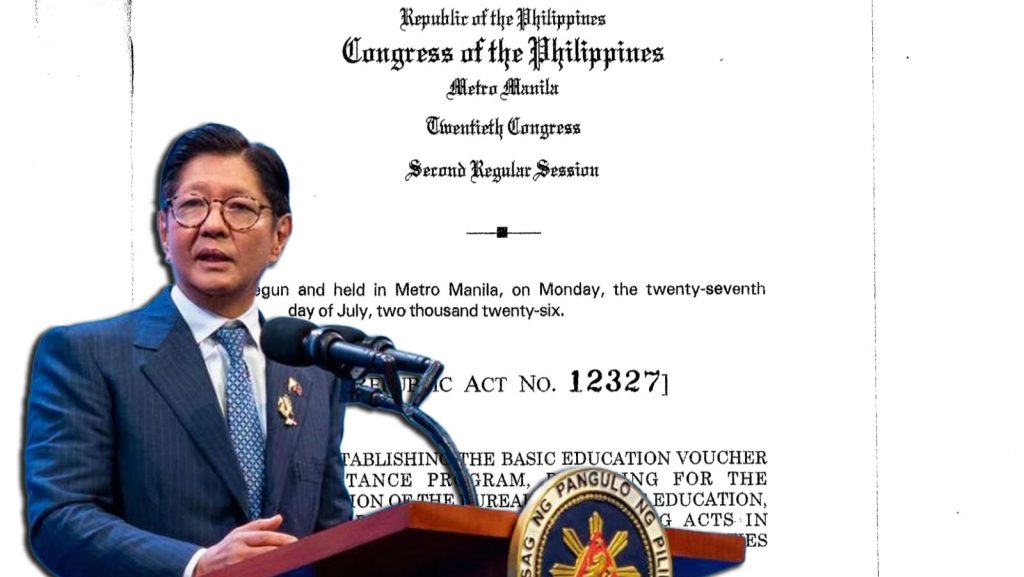
By virtue of Republic Act No. 12327 signed by President Ferdinand R. Marcos Jr., these learners will receive assistance that would help cover the cost of their education.
Also known as the Basic Education Voucher Assistance Act, the law seeks to bridge gaps in financial capacity that create a divide between those who can enroll in private schools and those who cannot do so, as well as aid in the decongestion of public schools.
Tasked with providing inputs and oversight on the implementation of the Act is the Department of Education (DepEd), which shall determine the voucher amounts based on commissioned research and review them at least every three years to account for inflation and other factors.
Section 6 added, “The DepEd shall establish and maintain a publicly accessible system that shall enable qualified beneficiaries and their families to make an informed and meaningful choice of school, giving primary consideration to the learner’s welfare, accessibility, affordability, and quality of education.”
Section 11 also calls for the creation of the Bureau of Private Education, which will supervise the quality assurance, policy formation, and developmental support of private basic education institutions covered by this program.
Apart from the DepEd-issued vouchers, local government units, private sponsors, and other scholarship providers may still continue to provide assistance that would cover the difference between the voucher amount and the total cost of schooling.
The law further provides for other forms of assistance to participating private schools and their teachers, including in-service training, teachers’ salary subsidies, and scholarship opportunities for qualified educators.
bjlc

