
By Darryl John Esguerra | Philippine News Agency
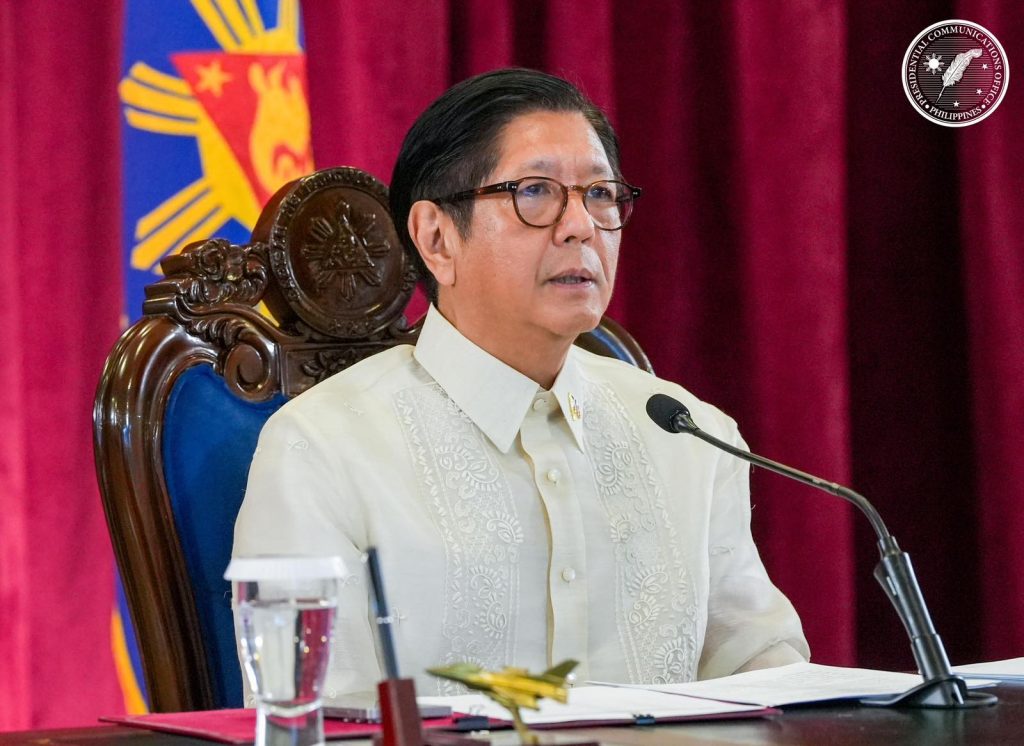
President Ferdinand R. Marcos Jr. on Wednesday called for stronger regional cooperation to address energy supply disruptions, as he joined the Asia Zero Emission Community (AZEC) Plus Online Summit hosted by Japan.
In his message delivered via teleconference, Marcos underscored the Philippines’ vulnerability to global oil supply shocks, citing the closure of the Strait of Hormuz in February as a major disruption that triggered fuel price increases.
“As an archipelagic nation… we are mostly dependent on imported petroleum,” he said, noting that global supply chain disruptions are “felt severely” in the country.
The President said rising diesel and liquefied petroleum gas (LPG) prices have placed pressure on key sectors, including transport, food supply, and manufacturing, amid imported inflation.
In response, the government declared a national energy emergency and rolled out the Unified Package for Livelihood, Industry, Food and Transport (UPLIFT) Program to mitigate the impact.
Marcos, however, emphasized that national measures alone are insufficient.
“No single country in Asia can insulate itself from supply chain shocks of this scale by acting alone,” he said.
He highlighted ongoing government efforts to strengthen energy resilience, including diversifying oil sources, increasing fuel stock requirements, and developing a Strategic Petroleum Reserve.
The Philippines is also accelerating transport electrification, expanding biofuel blending, and promoting energy efficiency to reduce dependence on imported fuel.
At the regional level, Marcos backed the implementation of the ASEAN Petroleum Security Agreement (APSA), which provides mechanisms for coordinated emergency response and fuel sharing among member states.
He proposed the early activation of the agreement’s emergency response system, a regional study on joint oil stockpiling, and the establishment of standardized protocols for emergency fuel allocation.
Marcos also welcomed Japan’s initiative to strengthen regional supply chain cooperation, noting its experience in maintaining robust petroleum reserves.
“The Philippines stands ready to work alongside every economy represented here,” he said, stressing the need for secure, affordable, and resilient energy systems across Asia.

