
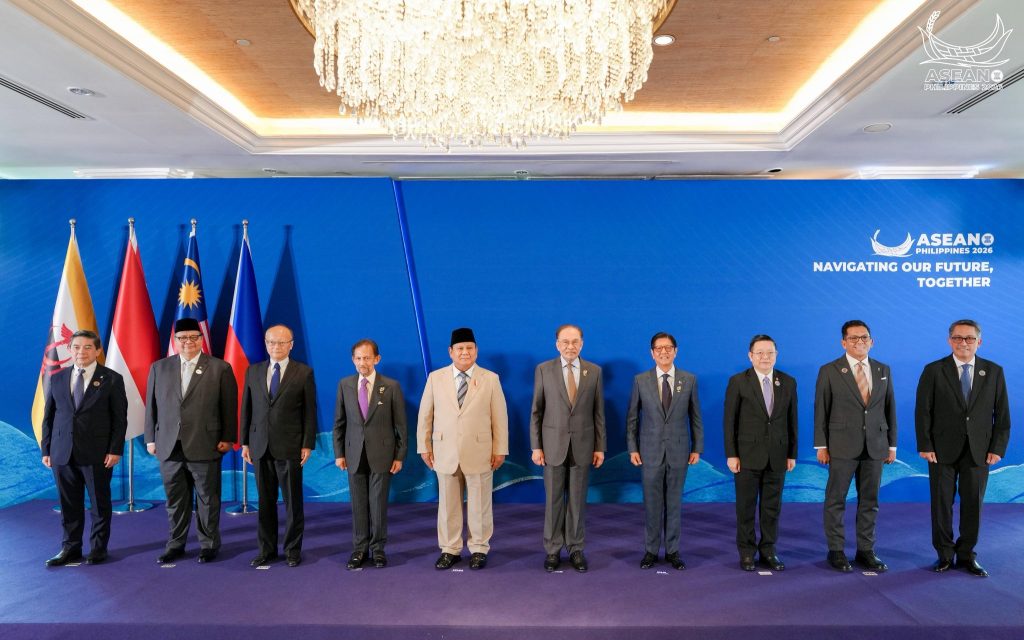
President Ferdinand R. Marcos Jr. on Thursday called on the leaders in the Brunei Darussalam-Indonesia-Malaysia-Philippines East ASEAN Growth Area (BIMP-EAGA) to boost public-private partnerships (PPPs) within the sub-region following the adoption of the Vision 2035 (BEV2035) that will serve as a strategic roadmap for the next decade.
The President underscored the benefits of PPPs to the Philippines in fast tracking the implementation of high-impact priority projects, citing ongoing efforts of Mindanao Development Authority (MinDA) to facilitate PPPs in Mindanao, a focus area of the BIMP-EAGA.
One of the identified priority Philippine-EAGA Projects include the Laguindingan Airport Development and the Mindanao-Visayas Interconnection grid.
As to the adoption of the roadmap during the Special BIMP-EAGA Summit led by President Marcos Jr. in Cebu, proponents said it will be guided by the vision of a Socially Inclusive, Open, Aligned and Resilient (SOAR) BIMP-EAGA for Shared Economic Prosperity and Sustainability.
“Yesterday, the four leaders of the four countries approved the way forward for BIMP-EAGA, BPEV 2035, or the BIMP-EAGA Vision 2035, which aligns with the reason why this BIMP-EAGA cooperation was created,” Mindanao Development Authority (MinDA) Secretary Leo Tereso Magno said in a press briefing in Cebu on Friday.
“This is to make sure that underserved areas within the four countries, particularly the whole of the Sultanate of Brunei, and for the Philippines, Mindanao and Palawan, areas in Indonesia and in Malaysia.”
Under Vision 2035, a 10-year framework aligned with ASEAN Vision 2045, BIMP-EAGA will scale up growth, focusing on connectivity, food and energy security, digital transformation, and sustainability.
BIMP-EAGA is positioned as a dynamic single production base, integrating economies into regional and global value chains.
The Philippines reaffirms its strong commitment to advancing BIMP-EAGA as a platform for inclusive growth, resilience, and regional stability.
BIMP-EAGA is a sub-regional economic cooperation initiative established in 1994 designed as a building block for ASEAN integration.
It aims to accelerate socioeconomic development, narrow regional disparities, and boost trade, tourism, and investment in less-developed, geographically remote areas. (PR)

