
By Brian Campued
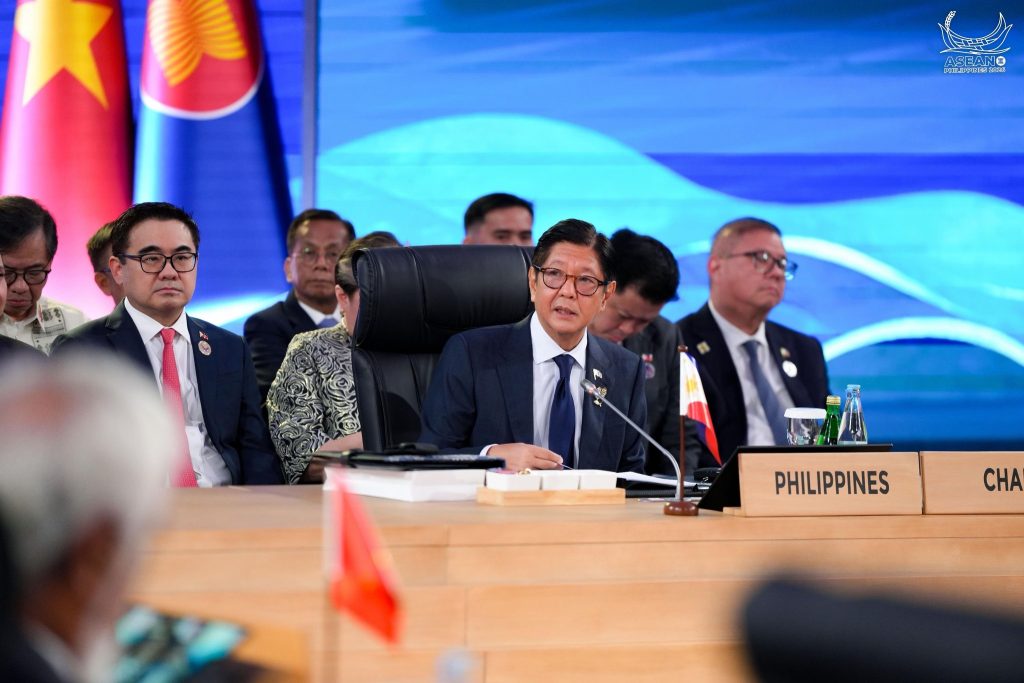
President Ferdinand R. Marcos Jr. described the 48th Association of Southeast Asian Nations (ASEAN) as a “defining moment” for the bloc to reaffirm its shared commitment to address the impacts of heightened tensions in the Middle East through coordinated and concrete actions.
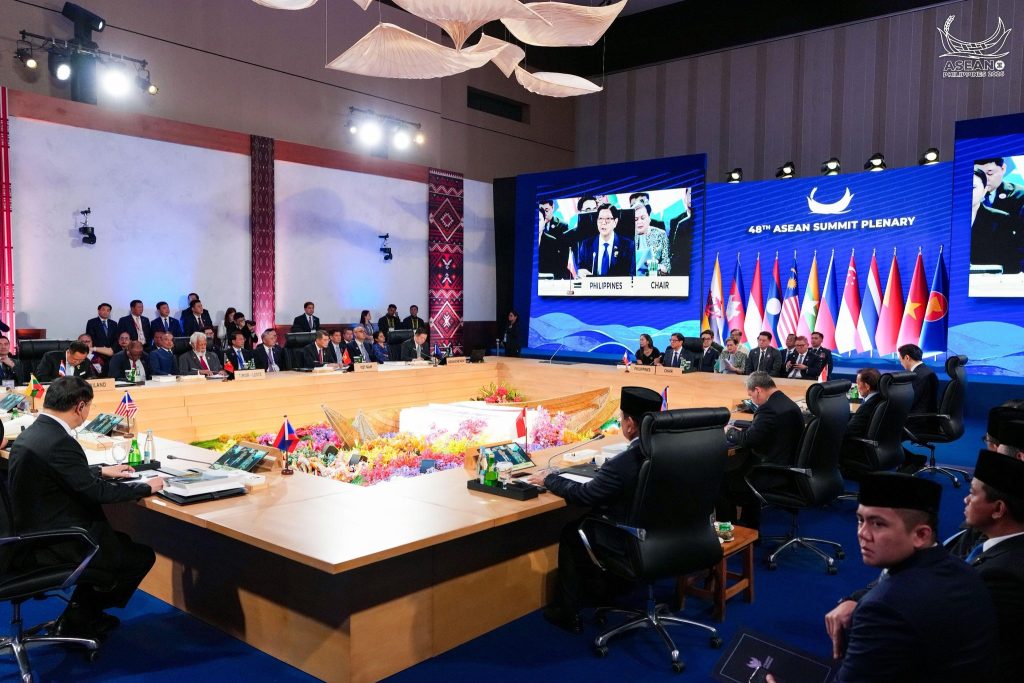
“Today, we gather to confront, with unity and resolve, the repercussions of the situation in the Middle East, and seek to advance our common commitment to peace, stability, and prosperity while ensuring that the benefits of our cooperation are felt by all our peoples,” President Marcos said as he opened the 48th ASEAN Summit Plenary in Cebu on Friday.
He noted that the international geopolitical landscape continues to disrupt maritime and air transport routes, threaten the safety of merchant and non-combatant vessels and aircraft, and affect the flow of energy and essential goods.
“For ASEAN, these challenges are deeply felt by our people—through higher living costs, supply disruptions, threatened livelihoods, economic strain, [and] growing vulnerability, both in our homelands and amongst our nationals in the Middle East,” he said.
“It is a stark reminder that, in an increasingly uncertain world, we call for our collective action and it has never been more urgent so we must continue to uphold the principles of ASEAN Centrality and solidarity and pursue practical cooperation.”
Against this backdrop, Marcos reiterated ASEAN’s collective position for the immediate cessation of hostilities, peaceful settlement of disputes, protection of civilians and civilian infrastructure, and the restoration of safe, unimpeded, and continuous transit passage in the Strait of Hormuz.
Key priorities
On energy security, the President called for “practical collective measures” to safeguard regional supply and improve interconnectivity amid the continued volatility in global energy markets.
He also pushed for alternative and renewable energy sources “to protect our economies from further shocks and to respond to the urgent challenge of climate change.”
He also underscored the role of innovation and artificial intelligence in improving energy forecasting, grid management, and system flexibility.
To stabilize food supply across the region, the President emphasized the need to expand intra-ASEAN trade and strengthen regional food systems.
“Digital innovation can help us anticipate shortages, improve agricultural productivity, and support responsive decision-making so that our peoples in vulnerable situations are better protected,” he said.
Aside from economic resilience and regional stability, the safety of Southeast Asians is also paramount to ASEAN’s priorities.
“In moments of crisis, ASEAN solidarity must be measured by our ability to act in concert to safeguard our peoples, wherever they may be,” the Chief Executive said.
To protect its peoples, Marcos Jr said, ASEAN needs to bolster its early warning systems, enhance consular coordination, and ensure the timely delivery of assistance through the “prudent” use of new technologies.
Meanwhile, the President noted the importance of regional maritime coordination and looked forward to the adoption of the ASEAN Leaders’ Declaration on Maritime Cooperation, including the proposal to establish an ASEAN Maritime Center in the Philippines.
“As we push forward the first year of the implementation of the ASEAN Community Vision 2045, we are reminded that our region is strongest when we turn shared challenges, however daunting they may be, into shared purpose,” he said.
The Philippines is the chair of ASEAN for 2026.
-jpv

