
By Darryl John Esguerra | Philippine News Agency
Leaders of the Association of Southeast Asian Nations (ASEAN) on Friday adopted the Cebu Protocol to Amend the ASEAN Charter, marking the first revision to the bloc’s charter since it was signed in 2007.
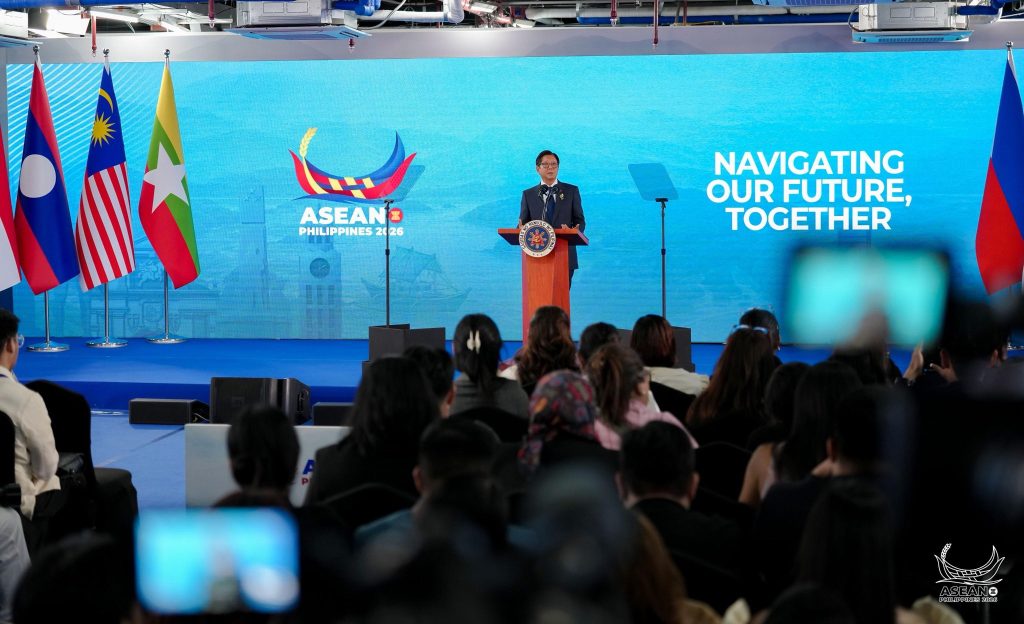
At a press conference following the 48th ASEAN Summit in Cebu, President Ferdinand R. Marcos Jr. described the development as a significant milestone for both ASEAN institutional reform and the full integration of Timor-Leste into the regional bloc.
“Another significant outcome was the adoption of the Cebu Protocol to Amend the Charter of the Association of Southeast Asian Nations,” Marcos Jr. said.
“This marks the first amendment to the ASEAN Charter since its signing in 2007,” he added.
The amendment comes nearly two decades after ASEAN leaders signed the charter in Cebu, which formally transformed ASEAN into a rules-based regional organization with legal personality.
Marcos Jr. said the protocol reflects ASEAN’s continuing evolution “as a stronger and more inclusive regional community.”
ASEAN officials earlier said the amendment supports Timor-Leste’s full integration into the bloc after it formally became ASEAN’s 11th member in October 2025.
The President also noted ASEAN’s progress across the Political-Security, Economic, and Socio-Cultural Community pillars as the bloc begins implementation of the ASEAN Community Vision 2045.
The long-term roadmap seeks to position ASEAN as an “epicenter of growth” in the Indo-Pacific region over the next two decades.
Climate action, disaster response, and digital innovation
ASEAN leaders have also adopted several key agreements, including the ASEAN Declaration on the Empowerment of Youth in Climate Action and Disaster Resilience, which highlights the role of young people in climate-risk reduction and disaster preparedness efforts.
Another key outcome was the adoption of the ASEAN Leaders’ Statement on ASEAN Convergence in Disaster Response, which introduced the ASEAN Strategic Protocol for Emergency and Comprehensive Transformation (ASPECT) Framework aimed at strengthening regional emergency coordination and disaster response mechanisms.
Marcos Jr. said ASEAN leaders likewise recognized the growing role of innovation, including artificial intelligence and digital tools, in improving energy forecasting, food-system monitoring, and social-protection delivery while ensuring that these technologies remain anchored on accountability and international standards.
The President also cited the support of the Asian Development Bank for ASEAN programs involving regional connectivity, energy security, capital markets, food security, AI readiness, blue economy, social protection, and public health.
“We look forward to enhancing our cooperation with ADB through its planned support for major ASEAN initiatives such as the ASEAN Power Grid, ASEAN Capital Markets Initiative, AI readiness, blue economy, and resilient rivers,” Marcos Jr. said.
The 48th ASEAN Summit in Cebu gathered leaders from Southeast Asia amid growing regional focus on economic resilience, geopolitical stability, energy security, and institutional cooperation.

