
By Ruth Abbey Gita-Carlos | Philippine News Agency
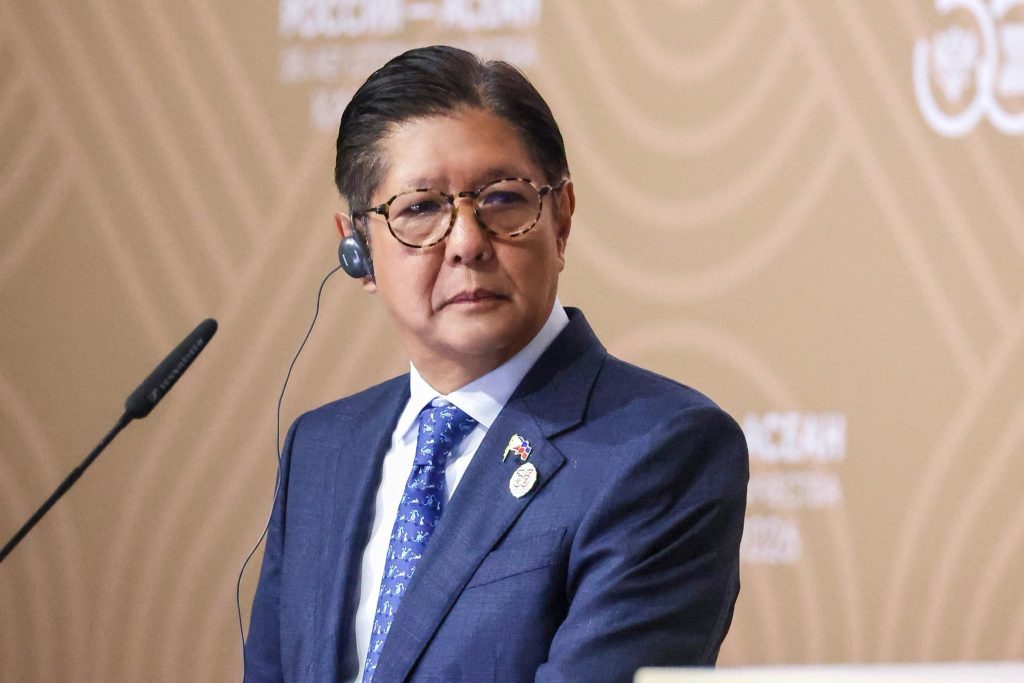
The Philippines will continue strengthening defense cooperation with its allies while ensuring that such engagements remain “purely defensive” and do not provoke conflict, President Ferdinand R. Marcos Jr. has said.
In an interview with Russia Today (RT) uploaded on its website on Friday, Marcos said the Philippines is conducting annual joint military exercises with countries such as the United States and Japan to enhance the country’s defense readiness as it safeguards its territory.
“The policy of the Philippines is really very simple in those terms. The government of the Philippines is duty-bound to protect its territorial integrity and the exercise of our sovereign rights,” Marcos Jr. said.
Marcos Jr. stressed that the Philippines is not promoting the foreign policy of any other country and has no intention of engaging in or initiating confrontation.
He noted that while the country continues to modernize its defense posture, it remains a non-aggressive state focused on protecting its territorial integrity.
“We are simply trying to make sure that the defense of the Philippines, should it come to that, is solid. And we, of course, we welcome any partners and allies who will help us in that regard,” he said.
“And we certainly have no interest in starting any kind of confrontation with anyone. And in this particular case, I don’t think that it could be said that the Philippines has been aggressive in any way. We are simply defending our territoriality. We are simply defending our sovereignty and the exercise of our sovereign rights,” Marcos Jr. added.
He acknowledged that the Philippines “is not a powerful country militarily.”
He also rejected the idea of returning to a bipolar global order, saying global dynamics are now moving toward multipolarity, which allows for more balanced cooperation among nations.
Marcos said the new approach helps maintain stability and manage differences peacefully, particularly amid ongoing territorial disputes in the region.
He said the Philippines’ foreign policy is anchored on national interest and peace.
“The Philippine foreign policy is national interest first and peace. And that is all that the Philippines is interested in,” Marcos said.
PH potential as regional logistics hub
Meanwhile, the President also said that the Philippines is positioning itself as a regional logistics hub, citing the country’s strategic geographic location in Asia and the ongoing efforts to enhance connectivity and attract investments.
Marcos noted that Manila sits at the center of major Asian capitals, making it an ideal transshipment and distribution point for regional trade.
“It’s natural for the Philippines to be that hub. Our geographical location puts us literally in the center. Manila is four hours or less flight away from every single major Asian capital,” Marcos Jr. said.
“And immediately, that gives us an advantage. And in fact, that is part of our economic planning, to take advantage of that geographical location,” he added.
The Chief Executive said the Philippine government is aligning economic policies to maximize this advantage, including reforms in investment incentives, taxation, and regulatory frameworks to improve the country’s attractiveness to foreign investors.
“We’ve changed some of our tax structures. We’ve encouraged certain aspects of that investment atmosphere. And we have tried to make the Philippines a more attractive investment destination,” he said.
He said these efforts are already yielding results, with “a great deal of interest” from non-traditional partners, including emerging engagements with countries like Russia, along with long-standing trading partners such as the United States, Japan, and Europe.
He stressed that positioning the Philippines as a logistics hub could support broader regional supply chain development within ASEAN and the wider Indo-Pacific.
“It is one of the plans that we have for our own country. And we try to incorporate it into the plans of ASEAN as we try to develop those supply chains, we try to develop an interdependency between member states, not only within ASEAN, but of course, now we talk about Asia and the Indo-Pacific region,” Marcos Jr. said.

