
By Brian Campued
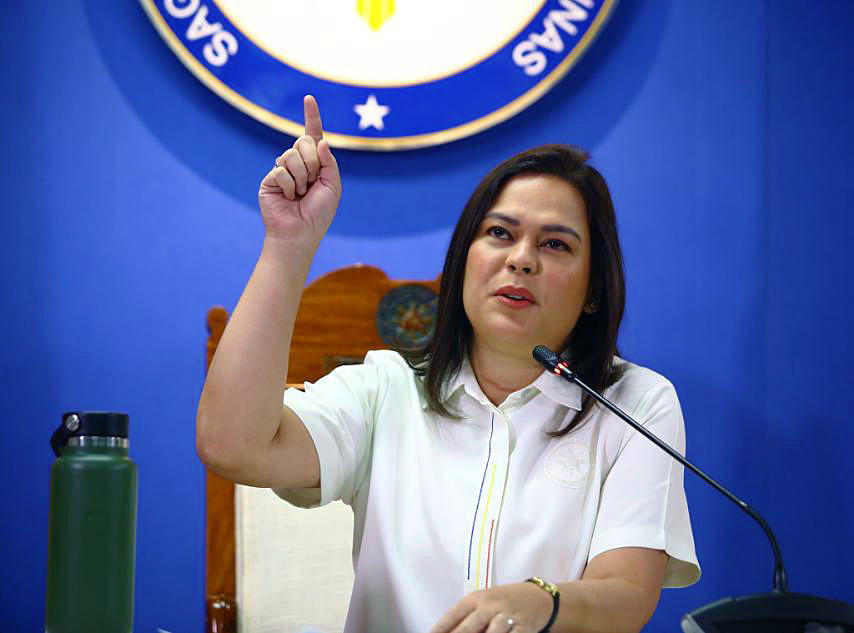
About five months since the second series of impeachment complaints against Vice President Sara Duterte was formally initiated, the House prosecution panel and Duterte’s defense team will face each other as the Senate Impeachment Court commences the trial on Monday.
According to a 15-page Pre-Trial Order signed by Senate President Sherwin Gatchalian on June 29, the trial begins on July 6 at 2:00 p.m. on Mondays, Tuesdays, and Wednesdays until July 27 or the 5th State of the Nation Address (SONA) of President Ferdinand R. Marcos Jr.
After that, the trial shall begin at 3:00 p.m. on Tuesdays, Wednesdays, and Thursdays until its termination.
The first day of the trial will focus on resolving motions on procedural and evidentiary issues as well as the opening statements from both sides, with presentation of evidence expected to begin on the second day of proceedings.
In a notice dated July 2, the Senate directed Duterte to appear before the impeachment court on July 6 pursuant to Rule 7 of the Rules of Procedure on Impeachment Trials and in accordance to the writ of summons issued against her on May 19.
However, the Vice President can choose not to appear personally at her trial as the court’s rules allow her to be represented by her legal counsel.
Articles of Impeachment
Duterte was impeached by 257 members of the House of Representatives on May 11 over allegations of culpable violation of the Constitution, graft and corruption, betrayal of public trust, bribery, and other high crimes.
She is facing the following articles of impeachment:
- Article I: Misuse and Misappropriation of Confidential Funds
- Article II: Unexplained Wealth, False SALNs (Statement of Assets, Liabilities and Net Worth) and Continued Business Interests
- Article III: Bribery and Corruption within the Department of Education
- Article IV: Assassination Plot, Grave Threats, and Inciting Sedition Against the Government
The Articles of Impeachment were formally transmitted by the House of Representatives to the Senate on May 13, with the latter convening as an impeachment court on May 18.
From June 18-25, the Senate Impeachment Court held a pre-trial conference, which largely focused on the marking and evaluation of documentary evidence submitted by both the House prosecution panel and Duterte’s defense team.
Who are the prosecutors and defense?
On May 12, the House of Representatives elected 11 of its members who will serve as prosecutors:
- Batangas 2nd District Rep. Gerville Luistro (Lead Prosecutor)
- Bicol Saro Party-list Rep. Terry Ridon
- 1-Rider Party-list Rep. Ramon Rodrigo Gutierrez
- San Juan City Rep. Ysabel Maria Zamora
- Iloilo 3rd District Rep. Lorenz Defensor
- Akbayan Party-list Rep. Chel Diokno
- Mamamayang Liberal Party-list Rep. Leila de Lima
- Dinagat Islands Rep. Kaka Bag-ao
- Bukidnon 2nd District Rep. Jonathan Keith Flores
- Cagayan de Oro City 1st District Rep. Lordan Suan
- Manila 3rd District Rep. Joel Chua
On June 11, Luistro bared a roster of veteran litigators, former government lawyers, law firm partners, and legal academics who will serve as private prosecutors in the impeachment trial. The group of private prosecutors got a boost before June ended, having gone from 11 to 15 members, now consisting of:
- Atty. Marforth Fua
- Atty. Lorna Kapunan
- Atty. Amando Virgil Ligutan
- Atty. Erwin Matib
- Atty. Justine Anne Lamarca
- Atty. James Bryan Ibrahim
- Atty. Sonya Margarita Benemerito Castillo
- Atty. Deanne Melissa Lorenzo-Singian
- Atty. Bettina Zamora
- Atty. Lino Chris Kapunan
- Atty. Benjamin Tolosa Jr.
- Atty. Arnold Labay
- Atty. Reynaldo Robles
- Atty. Mae Divinagracia
- Atty. Theodore Te
Tolosa will also serve as legal spokesperson alongside Lanao del Sur 1st District Rep. Zia Alonto Adiong, Kabataan Party-list Rep. Renee Co, and former Surigao del Norte Rep. Ace Barbers, who will also serve as an impeachment adviser.
Meanwhile, Duterte’s defense team will be composed of:
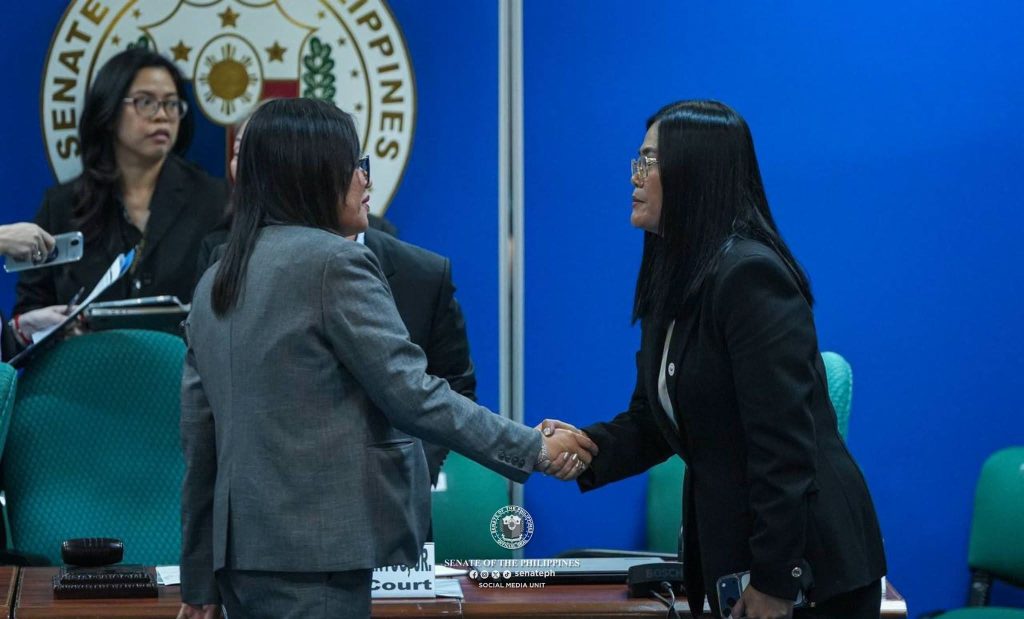
- Atty. Sheila Sison (Lead Defense Counsel)
- Atty. Michael Poa (Defense Team’s Spokesperson)
- Atty. Philip Sigfrid Fortun
- Atty. Gregorio Y Narvasa II
- Atty. Kristine Ferrer
- Atty. Carlo Joaquin Narvasa
- Atty. Justin Nicol Gular
- Atty. David Ronelll Golla VII
- Atty. Lindon Miguel Bacquel
- Atty. Karol Grace Oroceo
- Atty. Clarlaine Radoc
- Atty. Francesca Marie Flores
- Atty. Miguel Carlos Fernandez
- Atty. Mark Vinluan
- Atty. Ralph Bodota
- Atty. Roberto Batungbacal
Common witnesses, breakdown of trial days
The prosecution will present 57 witnesses, while the respondent will likewise have 45 witnesses.
Of these, both parties have 17 common witnesses, including alleged bagman Ramil Madriaga, former Sen. Antonio Trillanes IV, National Bureau of Investigation (NBI) Director Melvin Matibag, Ombudsman Jesus Crispin Remulla, and Anti-Money Laundering Council (AMLC) Executive Director Ronel Buenaventura.
The Impeachment Court’s Pre-Trial Order said prosecutors reserved the right to present additional or substitute witnesses as the circumstances may warrant.
The proposed number of trial dates is 62 for the prosecution and 30 for the respondents.
For the prosecution, 31 days were allotted to prove Article I, followed by 12 days for Article II, 11 days for Article IV, and eight days for Article III.
Verdict
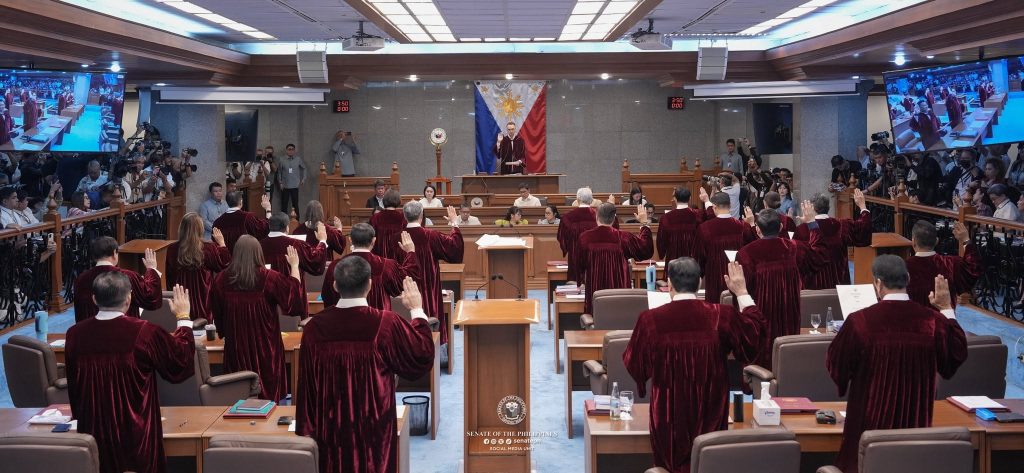
After the trial of all the articles is completed, the senator-judges shall vote on whether or not the impeachment is sustained.
If at least two-thirds of the senator-judges vote guilty on one article, it will result in a conviction. However, if not a single article receives the required number of votes, the official will be acquitted.
When an impeached official is convicted by the Senate Impeachment Court, the official will be removed from office and may get permanently disqualified from holding any future public office.
Additionally, the convicted official can be held criminally and/or civilly liable after their removal according to regular laws.
Motions to reconsider the vote on any article of impeachment are likewise prohibited—meaning, the Senate’s decision to convict or acquit cannot be appealed to the courts.
-avds

