
By Dean Aubrey Caratiquet
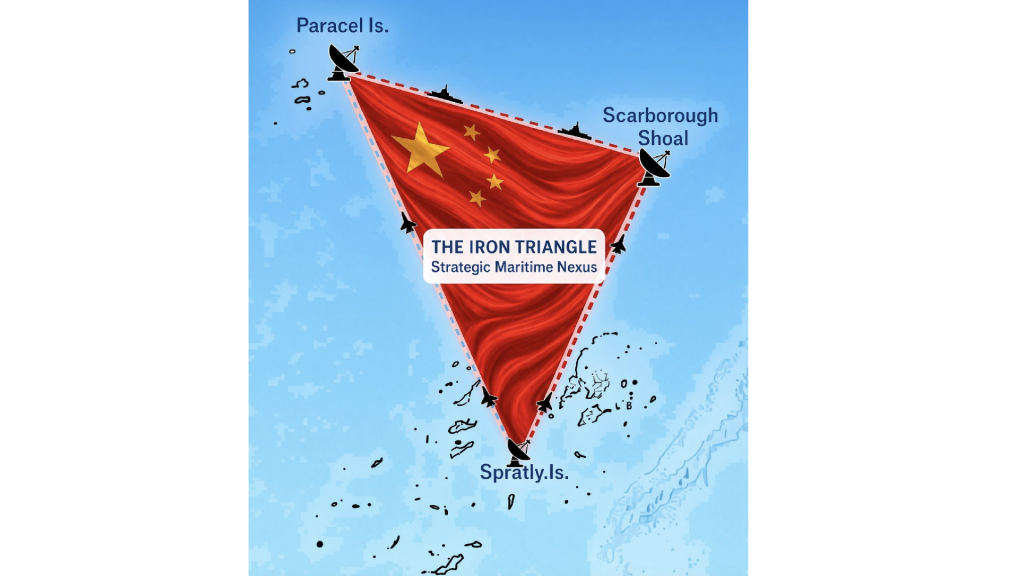
Recognizing the gravity of the repercussions brought about by China’s ‘Iron Triangle’ to national and global trade, Philippine Coast Guard (PCG) Spokesperson for West Philippine Sea Rear Admiral Jay Tarriela condemned Beijing’s latest plan to establish a large-scale presence in the area.
“This is disturbing because for China, they claim indisputable sovereignty in the entire waters of South China Sea. For China to take over Bajo de Masinloc is not just a concern for the Filipino, it’s a concern for everybody wherein more than 60% of the global trade passes in this area.”
RAdm. Tarriela noted that China’s geographic target leaves the militarization of the Bajo de Masinloc (Scarborough Shoal) as the only goalpost that remains unaccomplished in its bid to dominate the Indo-Pacific Region, which may affect a third of global shipping, put freedom of navigation in jeopardy, and may set a precedent for controlling the Bashi Channel.
The Chinese Embassy countered his pronouncements, citing such as “alarmist rhetoric” and even accusing the PCG official of being a foreign agent mimicking the U.S. playbook and unnecessarily placing Filipino lives in the line of fire.
In response, RAdm. Tarriela said, “We know our facts, and historically, we were able to monitor kung ano talaga ang pagkilos ng China—so they can just always deny and ignore kung anong mga warnings na ipinapakita natin sa publiko. But definitely alam natin ano talaga ang intention ng China—to be an imperialist state sa Indo-Pacific region.”
He concluded his statement by asserting that the PCG, Armed Forces of the Philippines (AFP), and Bureau of Fisheries and Aquatic Resources (BFAR) remain unfazed by China’s provocations, and will continue to conduct patrols in Bajo de Masinloc to put the brakes on the formation of the ‘Iron Triangle.’
Unified condemnation
Meanwhile, the Philippines has recorded a total of 27 diplomatic protests lodged against China over various West Philippine Sea incidents since January 2026, with none of these being acknowledged or even recognized by Beijing.
National Maritime Council (NMC) Spokesperson and Undersecretary Alexander Lopez expounded, “Ganun naman ang China, they do not really respond. But at least we have put on record our protest, our displeasure, by coming about with those diplomatic protests.”
Moreover, the Philippines continues to monitor activities in the northernmost waters of the country, which has seen increased presence of Chinese research vessels through land-based sensors in coordination with other government agencies.
The Department of National Defense (DND) likewise lamented the latest pronouncements of the Chinese Embassy, citing such as a tactic to divert attention from illegal activities conducted by certain Chinese nationals in the Philippines.
Defense Spokesperson Arsenio Andolong said in a statement, “Attempts by the Chinese Embassy to dismiss legitimate national security concerns as mere “political rhetoric” or “inflammatory language” do not erase the documented, ongoing Philippine law enforcement operations against illegal activities by Chinese nationals within the Philippines’ sovereign territory and jurisdiction.”
He concluded, “We have posed questions to the Chinese Embassy on these illegal activities. The Filipino people demand unequivocal answers, not evasive questions and concocted narratives that are clearly intended to mislead the general public and misdirect their attention away from the core issues at hand.” (with report from Patrick de Jesus | PTV News)
av

