
By Dean Aubrey Caratiquet
Wary of the possible effects of super El Niño on sectors such as water, food, power, health, and public safety, Malacañang said that it is hard at work to prepare for the expected prolonged dry spell and water scarcity in the coming months.
This, as Presidential Communications Office (PCO) Undersecretary and Palace Press Officer Claire Castro reiterated the directive of President Ferdinand R. Marcos Jr. to concerned government agencies to shield Filipinos from this phenomenon.
The DOST-PAGASA earlier warned of an active El Niño in the tropical Pacific that will intensify into a “very strong” event between September and December 2026 and persist through the first half of 2027.
In response to this, the National Irrigation Administration (NIA) has laid out its mitigation action plan to protect farmland nationwide, which includes the following:
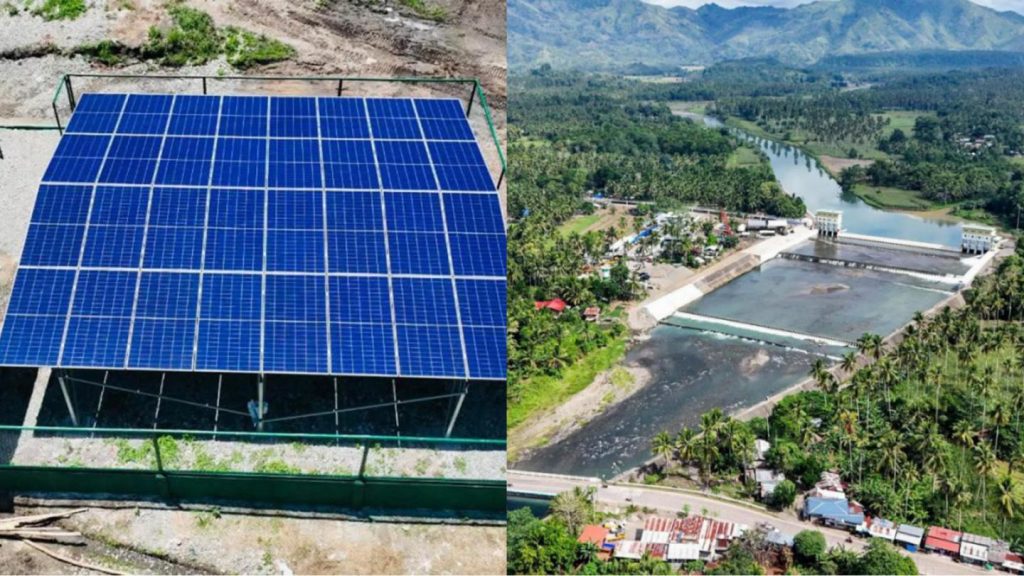
- Identifying possible groundwater sources using maps from the Mines and Geosciences Bureau to support Solar-Powered Pump Irrigation Projects (SPIPs)
- Intensified inventory and maintenance efforts for SPIPs
- Repair and rehabilitation of old irrigation systems to ensure uninterrupted operation
- Deployment of mobile solar pumps in drought-prone and water-stressed areas
- Desilting and clearing operations on irrigation canals to improve flow and provide additional water-carrying capacity
For its part, the Department of Budget and Management has allocated P6.2 billion for the fuel and fertilizer subsidies of affected farmers and fisherfolk, as well as P3.5 billion for additional solar irrigation facilities.
The Department of Environment and Natural Resources will focus on water security and prevention of forest and grassland fires, with small water impounding structures and rainwater harvesting systems already erected by the agency to boost water storage capacity.
The Department of Health has pledged to intensify health monitoring and assistance for vulnerable residents—particularly children, adults, outdoor workers, and people with existing health vulnerabilities—who have the highest risk from exposure to extreme heat.
Meanwhile, the Department of Energy doubles down on energy conservation measures and preparations to avoid power interruptions, while the Department of Agriculture leads the way in irrigation system assessments, studies on drought-resistant crops, and adjustments to the planting schedule of farmers.
As for the education sector, Usec. Castro said that Malacañang will also coordinate with the Department of Education to address concerns on the welfare and safety of learners.
jpv

