
By the Climate Change Commission
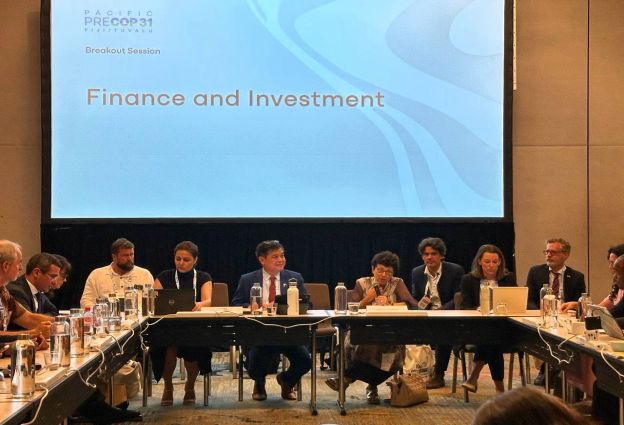
At the Pacific Pre-COP31 in Nadi, Fiji, the Philippines was appointed co-facilitator for the Finance and Investment sessions, part of a broader, minister-led climate-finance process aimed at advancing practical discussion on how finance can support countries’ climate priorities and implementation.
Climate Change Commission (CCC) Vice Chairperson and Executive Director Robert E.A. Borje co-led discussions with United Nations Framework Convention on Climate Change (UNFCCC) Parties, helping guide the exchange toward a practical balance: delivering on existing finance commitments while addressing barriers to access and mobilize complementary investment.
Following several consultations and discussions with participants, Borje reported back to the Pacific Pre-COP31 plenary on the priorities raised, bringing implementation concerns into the wider discussion on how global commitments can translate into support for projects and communities.
The report-back reflected broad convergence among participants that the UNFCCC’s 31st Conference of the Parties (COP31) should focus on implementing existing commitments and agreed outcomes, including the New Collective Quantified Goal on Climate Finance, and translating pledges into results on the ground. Participants identified debt pressures, limited fiscal space, high costs of capital, slow approvals, complex accreditation, and limited direct access as barriers to implementation.
Participants also discussed practical responses, including simpler and more harmonized procedures, faster processing, grants and highly concessional finance for adaptation, and stronger engagement with multilateral development banks and other international financial institutions.
They also raised guarantees, risk-sharing, climate-resilient debt clauses and debt-for-climate swaps as possible tools. The report-back emphasized that aligning financial flows under Article 2.1(c), including efforts to mobilize private finance, can complement but must not substitute for developed-country obligations under Article 9.1 of the Paris Agreement.
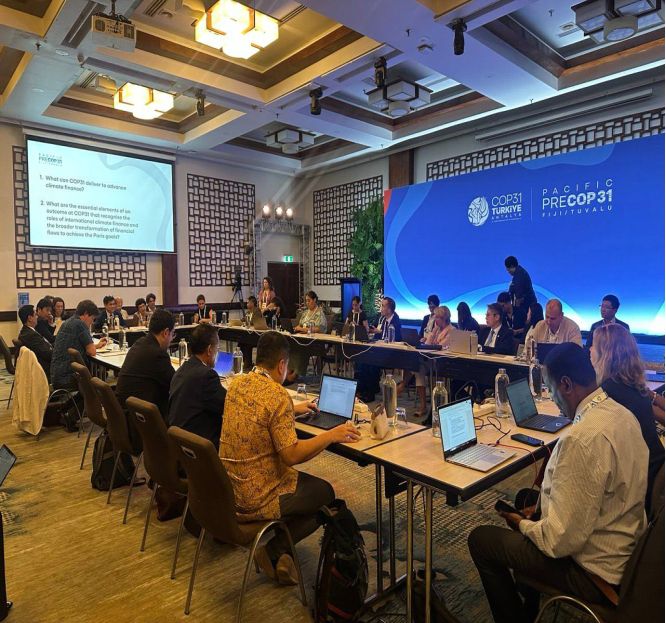
Borje was paired with France’s Minister for Ecological Transition, Biodiversity, and International Negotiations on Climate and Nature, Monique Barbut, in the minister-led finance process.
“I thank Australia’s COP31 Presidency for its confidence in the Philippines. We worked to keep the discussion grounded in practical ways to make climate finance support implementation,” Borje said.
In his plenary finance intervention, Borje cited UN Environment Programme (UNEP) estimates that developing countries will need US$26 billion in international public adaptation finance in 2023.
“A large share of an inadequate pool remains inadequate,” he said, calling for finance that is adequate, predictable and accessible to national and local institutions.
Philippine Ambassador to Fiji Noel Novicio underscored the same implementation test for COP31 in his session intervention: “a COP of implementation, moving from pledges to predictable flows and from access barriers to actual access.”
The Philippines’ contribution is grounded in its climate policy agenda under President Ferdinand R. Marcos Jr., including the country’s first National Adaptation Plan for 2023–2050 and updated Nationally Determined Contribution, or NDC 3.0, submitted to the UNFCCC in September 2026. Borje also took part in the 2026 UNFCCC Standing Committee on Finance Forum in Sydney, which focused on financing climate action for water systems and the ocean. (PR)

