
By Dean Aubrey Caratiquet
Amid a growing push towards sustainability and longer-term planning for the future of the national grid, President Ferdinand R. Marcos Jr. championed nuclear energy as a complementary addition to solar, wind, geothermal, and hydropower technologies in the shift from burning fossil fuels to generate electricity.
Moreover, he cited the adoption of nuclear energy as the key to lowering electricity costs for consumers and power generation costs for the energy sector, which rank among the highest in Southeast Asia.
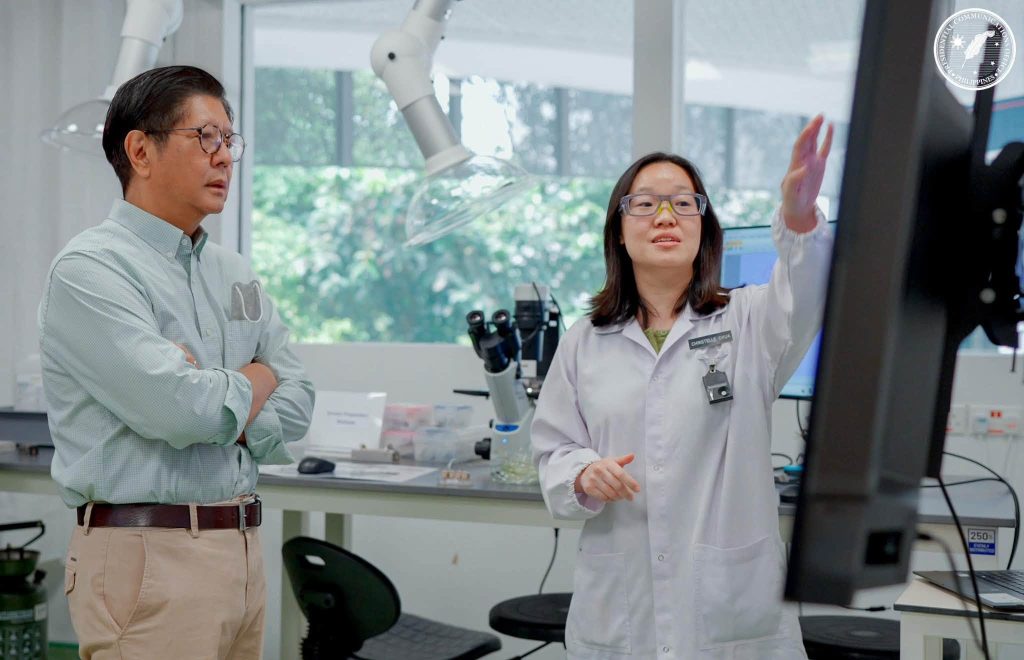
Reaffirming his earlier pronouncements during the 5th State of the Nation Address in July, the President paid a visit to the Singapore Nuclear Research and Safety Institute (SNRSI) on Saturday—a respected institution that continues to develop Singapore’s capabilities in nuclear technology.
Upon his arrival at the institute, the President was briefed by SNRSI CEO Low Xin Wei on Singapore’s nuclear research, which is new in Southeast Asia, especially after its establishment in 2014.
According to President Marcos Jr., public perception of the adoption of nuclear power in the Philippines has changed in the past few years, especially regarding safety issues, with more Filipinos now more receptive to such electricity sources.
This, as he reaffirmed the seriousness of the Philippines in embracing nuclear power in a media statement Sunday, “Yes, we’re serious about nuclear power because even as we stand now, we’re okay in terms of power generation for the Philippines.”
Benefits
Moreover, the President said that nuclear power would not only energize households and industries, but would also help the nation to cope with the expected energy demand of data centers, with the latter expected to help the Philippines earn its spot among the leading players in the digital economy.
Should the adoption take place, the Southeast Asian nation would maintain parity with peers such as Vietnam, China, and South Korea, who have all made significant strides in developing and harnessing nuclear technology for the benefit of their peoples.
Nuclear power would also increase the nation’s energy resilience, for it will serve as a power source that is relatively independent of other countries and immune to geopolitical developments in other parts of the world, thus reducing the Philippines’ vulnerability to supply disruptions.
Established in 2014, the SNRSI consolidates studies related to nuclear safety, science, and engineering, with the aim of expanding expertise in related activities that would prove beneficial not only to Singapore, but also to other countries in the diaspora. (with report from Clay Pardilla | PTV News)
jpv

