

ISLAMABAD — Afghan President Ashraf Ghani allowed national security forces Saturday to resume counterinsurgency operations, marking the end of an 18-day cease-fire with the Taliban.
The government had unilaterally halted anti-Taliban operations in the country for a week, beginning two days before the June 15 annual Muslim festival of Eid al-Fitr.
Ghani later unilaterally extended the truce for 10 more days, hoping it would encourage the insurgency to end the violence and seek a negotiated end to the Afghan war.
A first for the Taliban
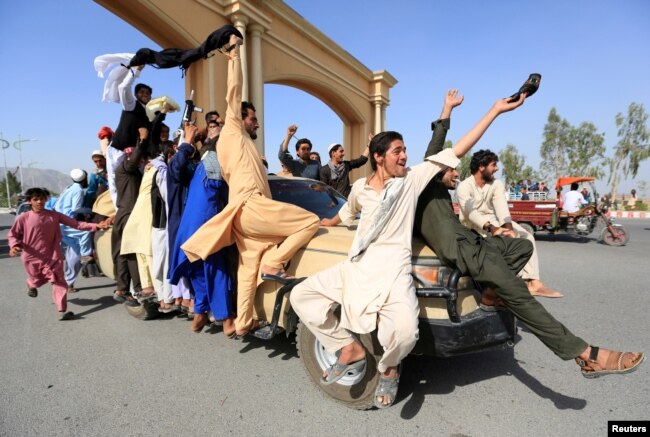
The Taliban also had for the first time in the 17-year-old war suspended battlefield attacks during the three-day Eid festivities. But the insurgents ignored Ghani’s calls for extending their truce and have since resumed deadly attacks against Afghan forces.
“The cease-fire has ended and our security and defense forces are allowed to resume their operations,” Ghani announced at a news conference in Kabul.
However, he emphasized government efforts to seek peace and political reconciliation with the Taliban will also continue in parallel with security operations. Ghani asserted the Eid truce has proved many Taliban fighters are tired of war and seek peace.
The U.S. military also had halted its airstrikes against the Taliban in support of Afghan forces while the government’s cease-fire was in place. Ghani again called on the insurgent group to come to the table for talks.
“I am ready for a (future) cease-fire with the Taliban whenever they require me to do so because the cease-fire is a national demand. I leave it for them (insurgents) to decide whether they want to have a cease-fire truce for 10 days or one year,” the president said.
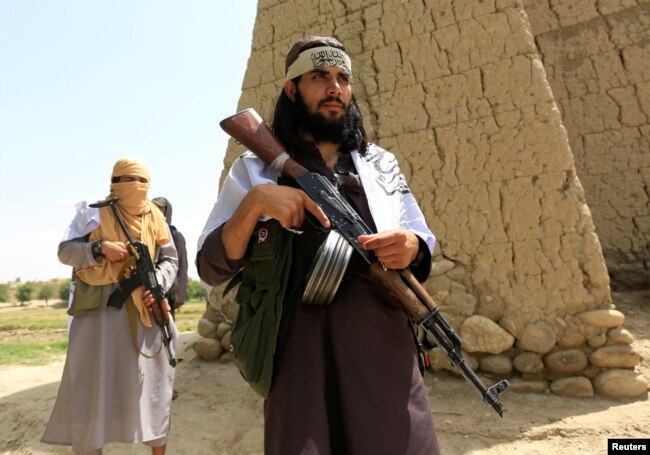
Afghans and independent watchers have noted the temporary cessation of hostilities over the Eid holiday resulted in an unprecedented movement of Taliban fighters and government soldiers into territories controlled by the other. Media was flooded with pictures and videos of combatants from both sides fraternizing with each other and with Afghan civilians.
Taliban says cease-fire own initiative
But the Taliban dismissed claims its cease-fire was a response to Kabul’s temporary cessation of security operations. The insurgent group also dismissed official Kabul’s assertions its fighters are tired of war. It insisted the successful implementation of its truce proved “baseless” claims the Taliban is not a “unified force” and it is being “governed by foreign powers.”
The Taliban also has reiterated it would negotiate peace only with the United States and not with representatives of what it dismisses as the American “puppet” Afghan government.
Washington has so far turned down Taliban calls for direct negotiations, emphasizing the need for the peace process to be led by Afghans. But the U.S. has promised to join intra-Afghan talks once they are launched.
Hurdles to Afghan peace talks
As part of his comprehensive plan, Ghani has offered to recognize the Taliban as a political party, allowing them to open an office in Kabul and participate in the upcoming Afghan elections. The president has said he is also ready to engage in direct talks with the Taliban leader, Hitbatullah Akundzada “anywhere he wants.”
But observers have been and remain skeptical of Afghan government-led efforts to engage in a peace process with the Taliban, saying the group sees the U.S. as its main adversary in the war and it has also been campaigning to be recognized a “political party to the conflict” by the United Nations.
“For all these reasons, it is impossible to imagine the Taliban taking up Ghani’s offer to function as a political party and participate in the elections in the current political system,” noted Afghanistan Analysts Network (AAN) in its a post-cease-fire study explaining hurdles to Afghan peace talks.
“They (the Taliban) want to be recognized as a party to the conflict, on a par with the U.S. and without saying so, as officially the Kabul government is for them just a puppet of the Americans, the Afghan government. This role, they believe, gives them the option of playing their military hand, including their still expanding control of territory and population in a future political deal that necessarily would include a sharing of power,” observed the Kabul-based AAN. (Voice of America)

