
By Lilian Mellejor/Philippine News Agency
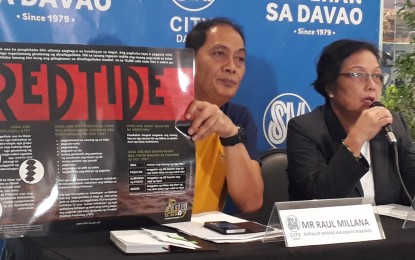
DAVAO CITY — The Bureau of Fisheries and Aquatic Resources-Region 11 (BFAR-11) has warned the public against buying and eating shellfish products harvested from the coastal waters of two Davao region towns that were found positive for “red tide” toxin.
Maria Loida Avorque, the regional head of the Bureau of Fisheries and Aquatic Resources (BFAR)-11 Chemistry Laboratory, on Monday said the coastal waters of Santa Maria in Davao Occidental and Balite Bay in Davao Oriental were found positive for red tide toxin or paralytic shellfish poisoning (PSP).
Based on the results of the samples of shellfish taken from Santa Maria and Balite Bay in Mati City, Avorque said the paralytic shellfish toxin levels were higher than the regulatory limit. Avorque said toxins are caused by Harmful Alga Blooms (HABs) and pollution.
Due to the high shellfish toxin level, BFAR-11 advised the public to refrain from eating, gathering or harvesting, transporting and marketing shellfish from the coastal towns of Santa Maria and Balite Bay.
But Raul Millana, chief of the Fisheries Production Support Services Division-Bureau of Fisheries and Aquatic Resources (BFAR)-11, made it clear that fish from the two areas are safe for human consumption provided that they are fresh and washed thoroughly.
Fish should also have their internal organs such as gills and intestines removed before cooking, he said. As to shrimps, he added, its head must be removed.
Millana noted the presence of mariculture cages particularly in Tanglad and Mamakaw in Santa Maria, as well as the 117-hectare mariculture cages of Bangus or milkfish in Malalag Bay in Davao Occidental.
Transporting of products from these two areas are banned to prevent the contamination other coastal waters, he said.
Millana said a person consuming shellfish products from areas with red tide will feel numbness of face, severe headache, vomiting and difficulty in talking or swallowing, and faster pulse rate.
Avorque said the high temperature of the sea water due to El Niño has made the waters — especially concentrated water — conducive for organisms to reproduce.
“We don’t know if there are existing organisms or carriers. So when typhoon Chedeng came there was leaching out of nutrients from the upland areas to the sea, giving them more nutrients,” Avorque said.
For the latest updates about this story, visit the Philippine News Agency website

