
The Commission on Higher Education (CHED) brings higher education opportunities beyond Philippine shores, helping overseas Filipino workers (OFWs) in Kuwait explore ways to earn college degrees, develop new skills, and continue their education while working abroad.
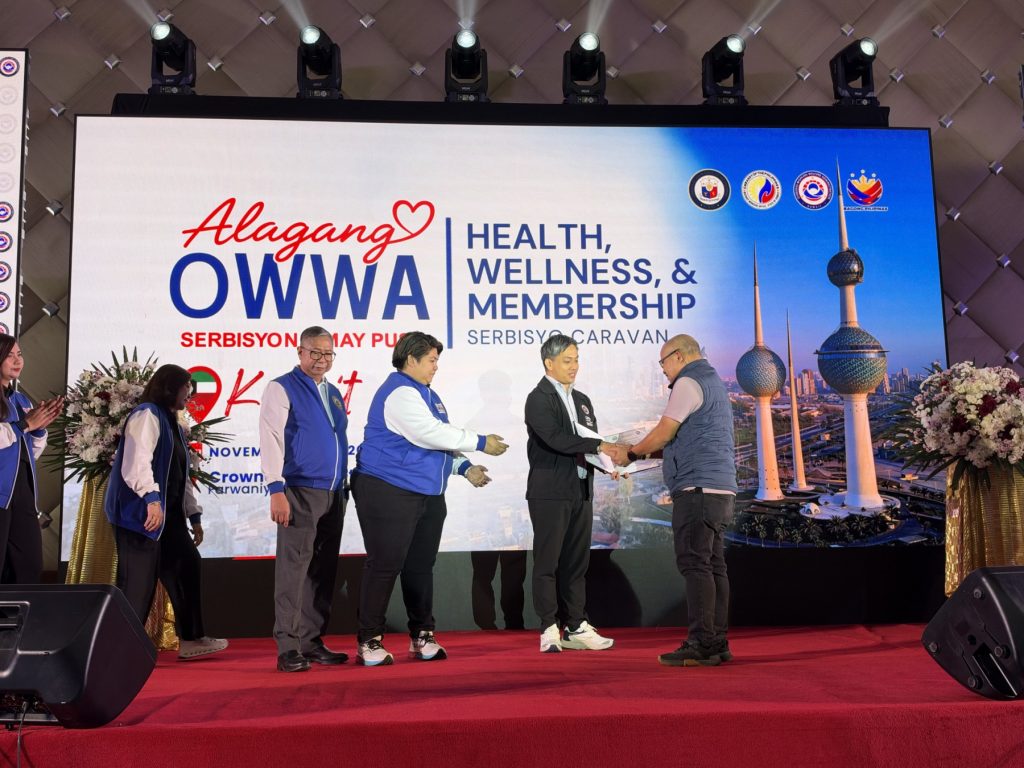
Through its participation in the Alagang OWWA Serbisyong May Puso Caravan from November 20 to 22, 2026, at the Crowne Plaza Hotel in Farwaniya, Kuwait, CHED provided access to the Expanded Tertiary Education Equivalency and Accreditation Program (ETEEAP), micro-credential courses, Open Distance and e-Learning (ODeL), and other essential higher education services.
The initiative supports President Ferdinand R. Marcos Jr.’s directive to ensure the effective implementation of the ETEEAP Act, which recognizes knowledge and skills acquired through work experience and prior learning.
The law enables qualified Filipinos, including those working overseas, to pursue college degrees through alternative learning pathways.
At the three-day caravan, CHED joined 15 other government service providers in serving approximately 12,000 OFWs. CHED assisted workers with initial eligibility evaluations for ETEEAP, registration through the ETEEAP Online Enlistment System, and information on the assessment of their work experience and prior learning for possible academic credits.
“We recognize the valuable skills and experience our overseas Filipino workers have gained through years of service abroad. Through ETEEAP and other flexible learning pathways, we aim to translate these competencies into recognized qualifications and greater opportunities for academic and professional advancement,” said CHED Chairperson Shirley Agrupis.
Through ETEEAP, qualified OFWs can have their professional experience and competencies formally assessed by CHED-deputized higher education institutions (HEIs).
This offers experienced workers an alternative pathway to complete a bachelor’s degree without having to repeat learning they have already acquired through years of employment.
The initiative also leverages the ETEEAP Online Enlistment System, which enables OFWs to undergo initial eligibility evaluation and begin their application process even while working overseas.
Improved employment opportunities
Meanwhile, micro-credential courses provide opportunities to gain specialized skills, while ODeL offers flexible learning arrangements that can help workers balance their studies with employment.
Eleven OFWs from Kuwait have been accepted into their chosen degree programs and awarded financial assistance through the Lifelong Learning Education Assistance Program for OFWs (LEAP-OFWs), a joint initiative of CHED and the Overseas Workers Welfare Administration (OWWA). The assistance enables beneficiaries to continue their education while working in the Middle East.
CHED’s participation advances the CHED ACHIEVE Agenda, which promotes inclusive, flexible, and lifelong learning opportunities.
Through its partnership with OWWA, the Commission seeks to make higher education more accessible to Filipino workers whose professional experience can serve as a foundation for further academic and career advancement.
The CHED delegation was welcomed by Philippine Ambassador to Kuwait Jose Cabrera III, OWWA Welfare Officer Lorna Obedoza, and OWWA officers and personnel from neighboring countries. OWWA Administrator Patricia Yvonne Caunan was also present during the caravan.
By bringing higher education services closer to Filipino communities overseas, CHED aims to help more OFWs translate their years of hard work into recognized qualifications, improve their employment prospects, and prepare for greater career opportunities both abroad and upon their return to the Philippines. (PR)

