
By Darryl John Esguerra | Philippine News Agency
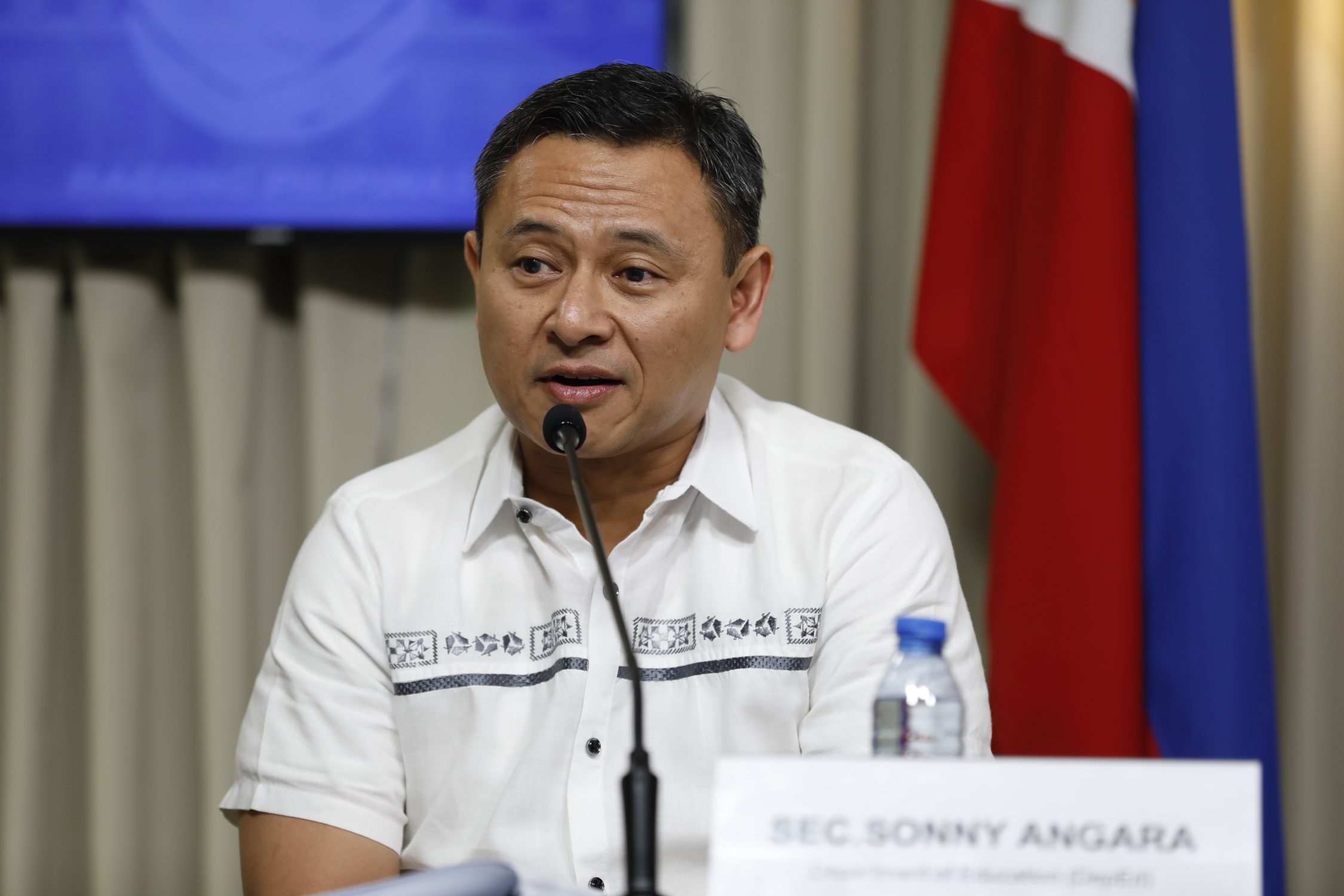
Education Secretary Sonny Angara on Tuesday said the 2026 national budget marks a historic turning point for Philippine education, citing record increases that will fund nationwide tutoring, a massive classroom build-up, and the hiring of more teachers alongside the largest promotion program ever approved.
Angara welcomed the signing of the 2026 General Appropriations Act (GAA), saying the education sector not only received the biggest allocation but also met global benchmarks for the first time.
President Ferdinand R. Marcos Jr. signed the P6.793-trillion national budget for 2026 on Monday, with education getting a record-high P1.345-trillion allocation.
“Makasaysayan… not just because it’s so big at 30% increase ito over last year,” Angara said, adding that education spending now falls within the United Nations Educational, Scientific and Cultural Organization’s (UNESCO) recommended 4% to 6% of gross domestic product.
The education chief said the scale of funding is “the biggest increase that I have seen in my time in politics,” stressing that the budget prioritizes learning recovery and long-standing gaps in basic education.
One of the biggest jumps is in school feeding, which Angara said increased from just P3 billion in 2022 to over P25 billion in 2026.
The former senator also highlighted the Academic Recovery and Accessible Learning (ARAL) Program, which will receive P9 billion for the first time.
“For the first time, binigyan po tayo ng P9 billion so lahat po ng tutors—lahat po ng eskuwelahan mayroon na tayong tutor under the ARAL Program,” Angara said, citing efforts to help students catch up in reading and math after years of learning loss.
Classroom construction will also be expanded significantly, with around 24,000 classrooms eyed to start construction to address the country’s long-standing classroom backlog.
Angara acknowledged, however, that not all classrooms will be completed within a year due to funding release schedules and construction timelines.
“We don’t expect all of those 24,000 to be constructed in 365 days,” he said, explaining that some projects typically take two to three years to finish.
To improve efficiency and avoid delays, the Department of Education (DepEd) will no longer rely solely on the Department of Public Works and Highways (DPWH) for school construction. For the first time, the GAA allows DepEd, local government units (LGUs), and even qualified civil society organizations and non-government groups to undertake classroom projects.
“Hindi lang DPWH ang puwedeng gumawa ng classrooms,” Angara said, adding that most of the projected 20,000-plus classrooms are expected to be built or bid out by LGUs.
He said DepEd is looking at partnerships with up to 80 provinces, 160 cities, and several municipalities, as well as organizations with a proven track record in school construction, particularly for schools in geographically isolated and disadvantaged areas.
Beyond infrastructure, Angara said the 2026 budget delivers long-awaited gains for teachers, including the creation of about 65,000 new plantilla positions to further address teacher shortages nationwide.
He said continuous hiring over the past few years has already helped reduce gaps in staffing, while the new plantilla items will strengthen schools as enrollment grows and learning recovery programs expand.
Angara also cited a major expansion of promotions under the Expanded Career Progression (ECP) system.

