

By Brian Campued
The “Safer Cities” initiative of the Department of the Interior and Local Government (DILG) is meant to instill discipline among the youth and enhance public safety, Malacañang stressed Friday, dismissing criticisms that the policy is “anti-poor.”
In a press briefing Friday, Palace Press Officer Claire Castro noted that the ordinances being strictly enforced under the initiative have long been in place.
“Unang-una po, ito ay matagal nang mga ordinansa. Pinapatupad lamang po ng DILG,” Usec. Castro said.
“Hindi naman po ibig sabihin na ang pagdidisiplina sa mga kabataan para mas maging safe sila at protected ay anti-poor na. Hindi po lahat ng pagdidisiplina ay sasabihing anti-poor, ito po ay para sa proteksiyon ng bawat Pilipino,” she added.
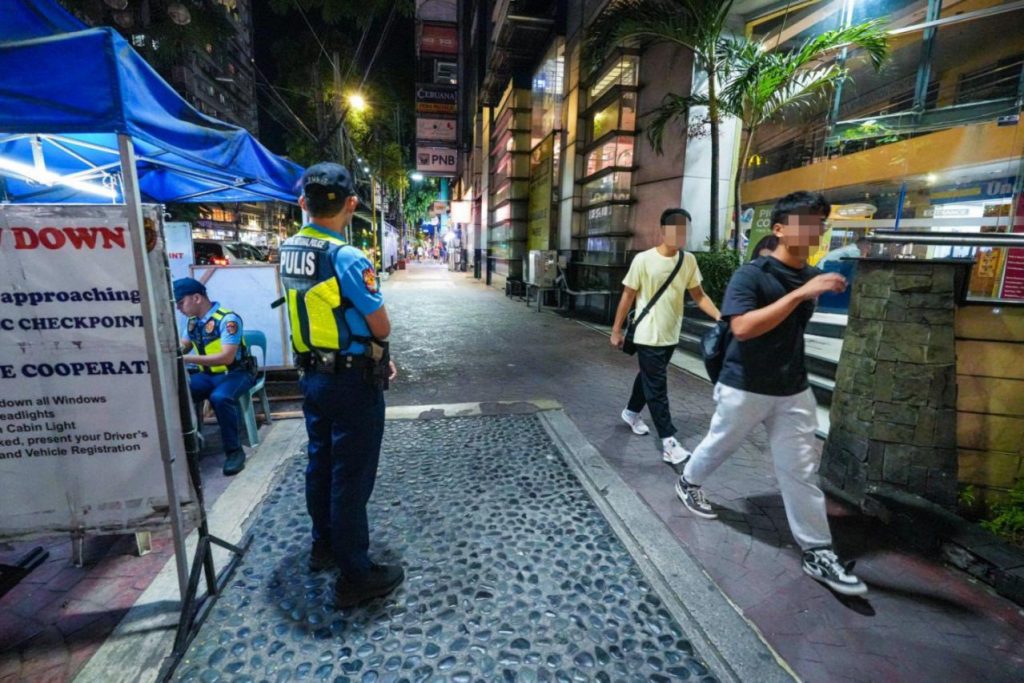
Under the policy, local ordinances banning street drinking, shirtless roaming, late-night videoke sessions, and the 10:00 p.m. curfew for minors are being strictly enforced.
However, various groups criticized the program, calling it “anti-poor” and may negatively impact the youth.
Usec. Castro, nonetheless, reminded law enforcement agencies to exercise their authority lawfully and urged the public to report cases of abuse.
“Sa lahat ng nang-aabuso, ngayon pa lamang po ay isumbong ninyo po agad para po maproteksiyonan din ang mga inaabuso at mapanagot ang mga awtoridad na nang-aabuso ng kanilang kapangyarihan,” she said.
On possible youth shelter strain
During the first four days of the Safer Cities Initiative, a total of 53,293 violators were recorded by the Philippine National Police (PNP).
Data from PNP showed that 9,810 individuals were found violating local ordinances on April 10 alone. Of this number, the most common violations were drinking and smoking in public places (2,857), followed by roaming without shirts (886), curfew violations among minors (802), and karaoke beyond allowed time (220), while 5,045 were recorded under other ordinance violations.
In a news release Saturday, PNP Chief PGen. Jose Melencio Nartatez Jr. said the figures reflect the continuing impact of visible and consistent enforcement on public behavior.
“Makikita po natin na habang tuloy-tuloy ang presensya ng pulisya sa komunidad, unti-unti ring tumataas ang pagsunod sa mga ordinansa,” the PNP chief said.
Meanwhile, Nartatez Jr. said that the PNP would coordinate with the Department of Social Welfare and Development (DSWD) to prevent potential overcrowding in youth shelters amid the strict enforcement of curfew hours for minors.
This came after the Children’s Legal Rights and Development Center (CLRDC) expressed concern over the possible congestion of local Bahay Pag-asa centers and mistreatment of children.
The CLDRC also urged the DILG to reconsider its blanket curfew for minors in Metro Manila, warning it could lead to arbitrary arrests and abuse.
Nartatez clarified that the PNP views the curfew as a protective measure, rather than a punitive one.
“The curfew is a preemptive shield. It reduces the window of opportunity for syndicates to exploit minors and keeps our youth away from environments that breed criminality,” he reiterated. (with report from Ryan Lesigues / PTV News)
-jpv

