

There could soon be a major change in what Americans see on the internet after federal regulators voted Thursday to scrap traditional “net neutrality” rules.
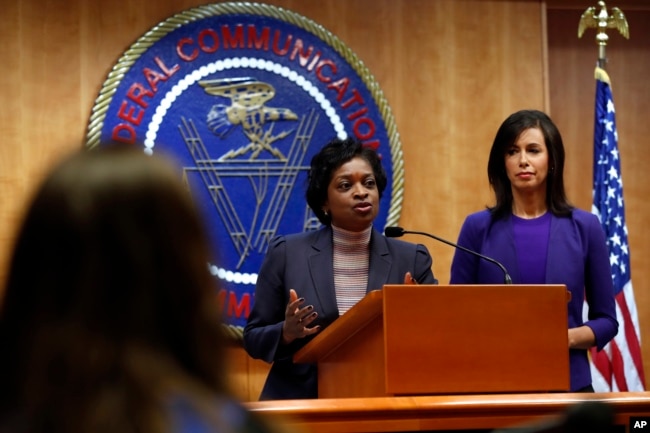
Thursday’s 3-2 vote by the Federal Communications Commission went along party lines, with Republican members voting to end the regulations and Democrats dissenting.
Individual states will also be barred from enacting their own rules governing the internet.
Net neutrality has been the norm since the internet was created more than 30 years ago. The FCC under former President Barack Obama formalized net neutrality rules in 2015.
The idea of net neutrality is for giant internet providers to treat all content equally. The Obama-era rules prevented them from giving preferential treatment to their own services and blocking and slowing down content from rivals.
Consumer groups and internet companies like net neutrality.
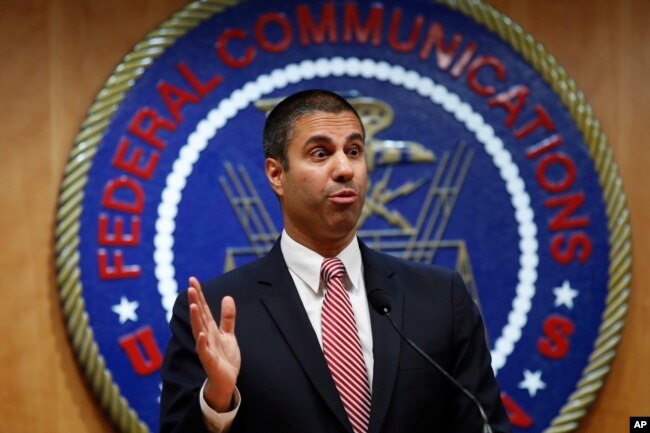
But FCC Chairman Ajit Pai, who was appointed by President Donald Trump, said the internet needs what he calls a “light touch” instead of what he believes is unnecessary government regulation.
“Prior to 2015, before these regulations were imposed, we had a free and open internet,” Pai told NBC ahead of the vote. “That is the future as well under a light touch, market-based approach. Consumers benefit, entrepreneurs benefit. Everybody in the internet economy is better off with a market-based approach.”
But Democratic FCC member Mignon Clyburn said the FCC was “handing the keys to the internet” to a “handful of multibillion-dollar corporations.”
British engineer Tim Berners-Lee, creator of the World Wide Web, said this week that getting rid of net neutrality rules meant internet service providers “will have the power to decide which websites you can access and at what speed each will load. In other words, they’ll be able to decide which companies succeed online, which voices are heard — and which are silenced.”
Officials in several states, including New York and Washington, said they would challenge the new rules in court. | via VOANews

