
By Brian Campued
Recognizing the challenges brought by rising fuel prices in the agriculture sector, President Ferdinand R. Marcos Jr. assured the public of continued government measures to help farmers and traders cope with surging fuel and logistics costs amid the energy emergency.
During his visit to the Benguet Agri-Pinoy Trading Center (BAPTC) in La Trinidad, Benguet on Friday, Marcos lamented how farmers’ produce was no longer being brought down from the Mountain Province and other mountainous areas due to the increase in fuel prices.
He stressed that the various government interventions are in place to help the agriculture sector, such as the P10 per liter discount on diesel, removal of toll fees for trucks transporting agricultural commodities, and the temporary waiver of local government fees.
These measures, he added, will help ensure the flow of supply while preventing sharp increases in food prices.
“Patuloy ang aming pag-aaral at patuloy ang aming pag-monitor para tiyakin na lahat ay makakaramdam ng tulong ng pamahalaan ngayon sa dinadaan natin na problema at sa krisis na naging bunga ng giyera sa Middle East,” Marcos said.
The Department of Agriculture (DA) said the temporary toll fee waiver for accredited cargo vehicles hauling agricultural goods will take effect on April 20 and will run for one month, subject to review for possible extension.
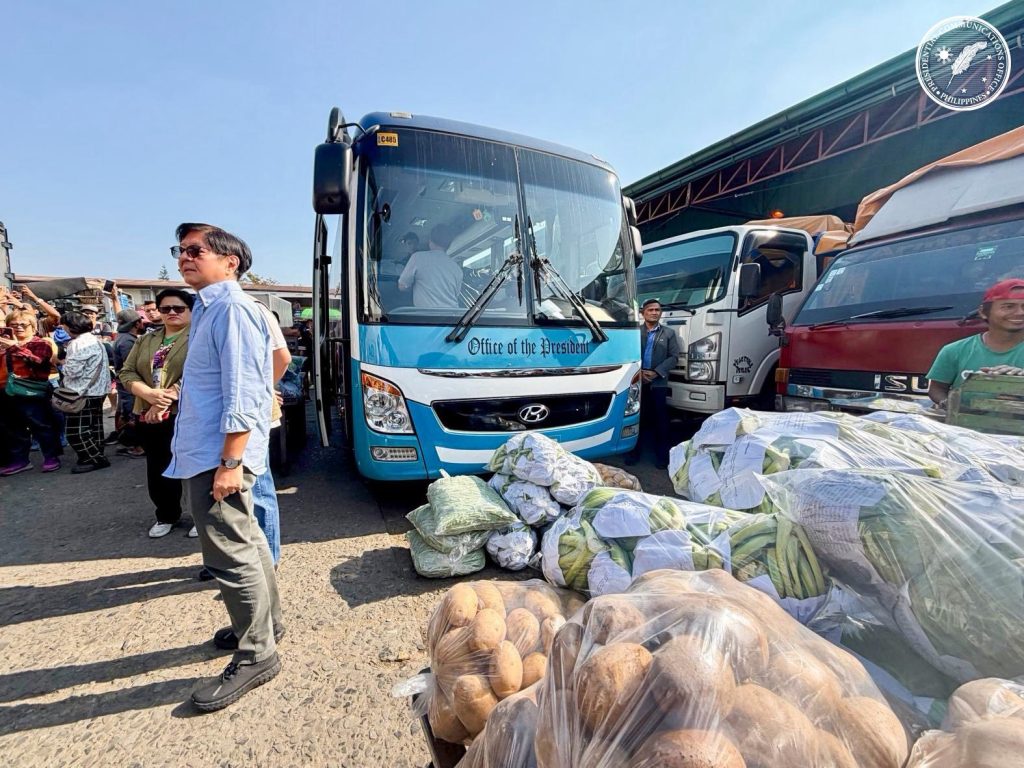
To boost farmers’ income in La Trinidad and Urdaneta, the Office of the President (OP) also bought around 20 tons of vegetables directly from farmers to be distributed in Metro Manila.
According to the Presidential Communications Office (PCO), communities in Caloocan City, Navotas City, Malabon City, Quezon City, Pasay City, Manila City, as well as the Walang Gutom Kitchen of the Department of Social Welfare and Development, New Bilibid Prison in Muntinlupa City, Manila City Jail, and several orphanages will receive the fresh produce.
Boosting farmers aid in Cordillera
During his visit to BAPTC, the President inspected P15.4-million worth of farm inputs and equipment for distribution to at least 45 farmer cooperatives and associations (FCAs) under the Department of Agriculture’s High Value Crops Program.
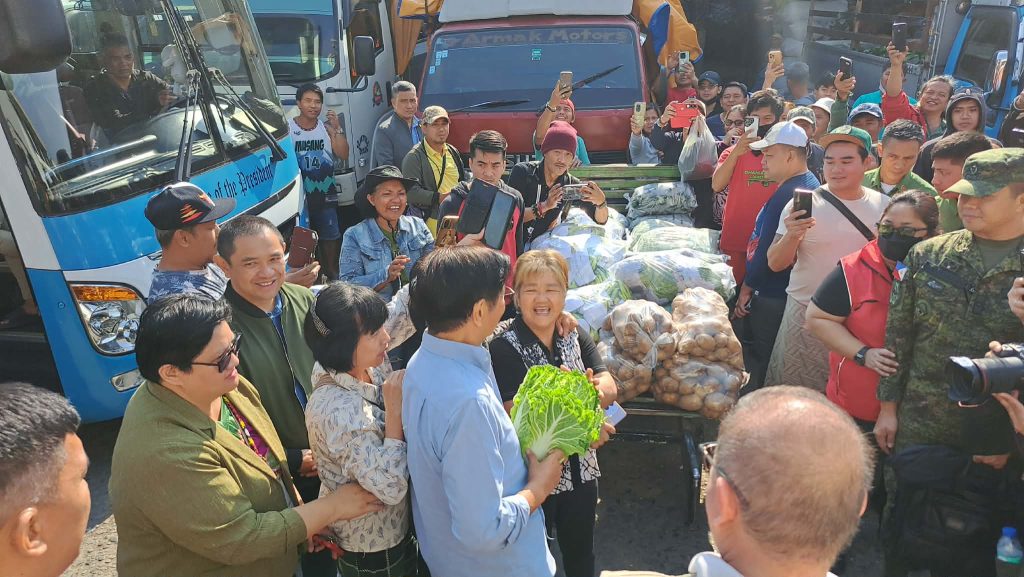
He also toured the Spot Trading Building 2 (Wholesale Area) and engaged with farmers and key stakeholders in the Cordillera highland vegetable industry.
The BAPTC is one of the three major trading hubs for highland vegetables, including cabbage, carrots, potatoes, lettuce, broccoli, and bell peppers—linking farmers to buyers in Metro Manila and other demand centers.
Agriculture Secretary Francisco Tiu Laurel Jr., who accompanied Marcos during the visit, underscored the urgency of stabilizing supply chains as continued disruptions are affecting both the incomes of farmers and the availability of food in key markets.
“Highlands farmers are at the heart of our vegetable supply chain, ensuring a steady, reliable flow of highland produce not only for everyday consumers in wet markets but also for institutional buyers such as supermarkets, restaurants, and food service providers across the country,” Laurel said.
“When they are affected, the entire supply chain feels the impact, which is why sustaining their productivity and market access is a top priority,” he added.
To address the challenges, the DA, upon the directive of the President, provided market assistance and deployed its own trucks to haul produce from farms to markets, reducing bottlenecks and preventing post-harvest losses.
As of mid-April, the DA said it has facilitated the transport and sale of nearly 28 metric tons of vegetables, with additional shipments of about 57 metric tons lined up for delivery to various markets.
-jpv

